

Welsh farmers face final slurry spreading deadline
 © Tim Scrivener
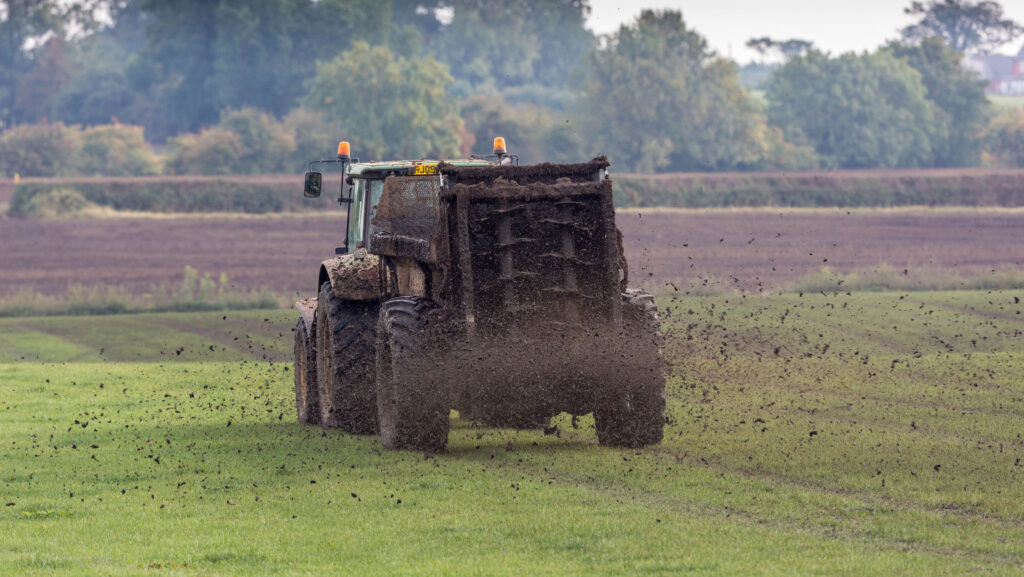
Farmers across Wales have until Saturday 14 November to spread slurry and other high-nitrogen organic manures before the winter closed period begins.
Natural Resources Wales (NRW) has reminded producers that spreading must stop from Sunday 15 November, following a one-off extension granted by the Welsh government earlier this autumn.
See also: Welsh slurry closed periods set for overhaul
The extension was announced in September by cabinet minister for rural resilience and sustainability Llyr Gruffydd, in response to the dry summer and difficult growing conditions.
Continued dry weather into November has provided opportunities for farmers to empty slurry stores ahead of winter, although spreading must still comply with pollution prevention rules.
NRW has warned that applying slurry to waterlogged, flooded, frozen or snow-covered ground, or ahead of forecast heavy rainfall, risks nutrient losses and breaches regulations.
The regulator said suspected breaches and pollution incidents would be investigated, with enforcement action taken where sufficient evidence was available.
Calls for greater flexibility
Farming unions welcomed the temporary extension but have continued to press for a permanent move away from fixed calendar dates, arguing that spreading decisions should reflect actual weather and ground conditions.
Mr Gruffydd has now pledged to accelerate work on reforming the rules. Speaking at the NFU Cymru conference on 5 November, he acknowledged that the existing approach had proved impractical.
“That sort of farming by calendar approach doesn’t work.
“And in the years since those regulations have been implemented on the ground, the weather hasn’t played well, proving the point.”
He said the Bolton review of the regulations had reinforced the need for a more flexible system.
“And the Bolton review, looking at the regulations, basically vindicated what many of us have been saying – that we need to move away from that approach to something that’s a bit more dynamic, something that’s a bit more flexible, something practical that’s a bit more sensible.”
Mr Gruffydd confirmed he had instructed the task and finish group responsible for taking forward the review’s recommendations to prioritise changes to the closed periods.
Previously considered a medium-term objective, the work has now been brought forward as a short-term priority, with the aim of ending the current calendar-based approach as soon as possible.