

Welsh vets warn SFS changes risk animal health gains
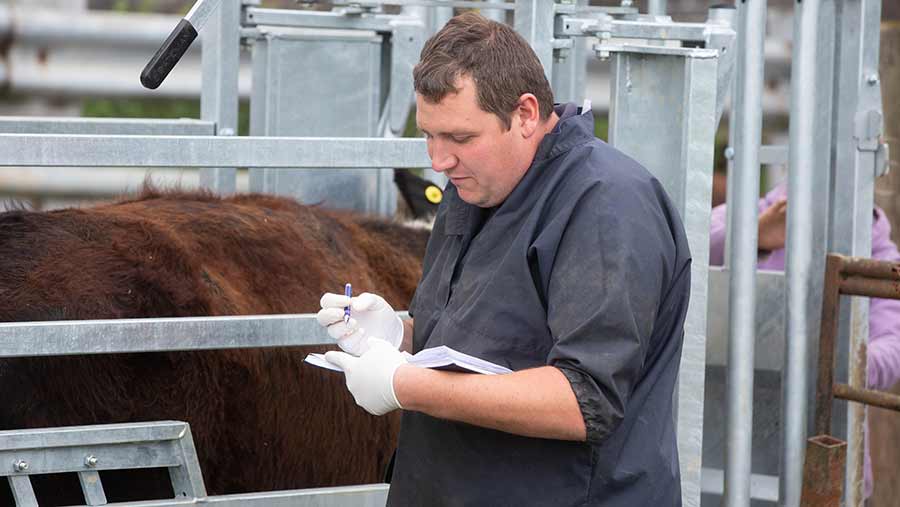 © Tim Scrivener
 Welsh vets have warned that changes to Sustainable Farming Scheme (SFS) animal health requirements could weaken disease prevention efforts and leave veterinary practices carrying the financial cost of a government policy shift.
The British Veterinary Association (BVA) has written to rural affairs minister Llyr Gruffydd seeking an urgent assessment of revised arrangements for the Animal Health Improvement Cycle (Ahic).
See also: Farm assurance farmers spared duplicate SFS health paperwork
Under transitional arrangements, farmers in qualifying farm assurance schemes can meet elements of universal action 12 (UA12) through existing assurance requirements rather than a separate Ahic visit.
Removing duplication
The Farmers’ Union of Wales had previously raised concerns about Ahic costs, after some farmers received high or inconsistent quotes for the work.
One south Wales veterinary practice reportedly quoted £500 plus VAT, while others were unable to provide prices because of limited guidance.
NFU Cymru welcomed the changes, arguing they remove unnecessary duplication between SFS requirements and existing farm assurance schemes.
‘Moving goalposts’
While supporting efforts to cut duplication, however, the BVA warned against treating farm assurance as equivalent to UA12.
BVA president Rob Williams and Welsh branch president Phoebe McCarter said Ahic was designed as a veterinary-led programme providing regular input on disease prevention, productivity and continuous improvement.
“Assurance-based compliance models are valuable, but cannot deliver all the outcomes the Ahic was designed to achieve,” they said.
The association said Ahic encouraged positive engagement between farmers and vets and supported practical improvements on farms.
However, members feared “moving the goalposts will discourage [farmers] from carrying out recommendations from our initial plan”.
The BVA said the change could also undermine confidence in the SFS and make veterinary practices more reluctant to invest in future government-led initiatives.
Financial consequences
Practices had already invested in training, recruitment and additional capacity in preparation for the expected Ahic workload after being asked by the Welsh government to prepare for delivery from 2026.
The BVA has also challenged government estimates of how many farm-assured holdings had already completed Ahic work.
Officials reportedly told the association just eight had done so.
However, an informal BVA survey of 17 practices found at least 120 completed Ahics, with an estimated 75% involving farm-assured holdings.
“Veterinary practices should not carry the financial consequences of government policy decisions,” the letter said.
The BVA has asked ministers to explain who was consulted, what evidence informed the changes and whether their effect on veterinary practices was assessed.
Welsh government response
A Welsh government spokesman said the changes were intended to reduce bureaucracy rather than dilute animal health standards.
“Veterinary expertise remains central to the delivery of improved animal health and welfare outcomes in Wales,” he said.