

‘I knew nothing’: Zeichner lifts lid on IHT fallout in FW exclusive
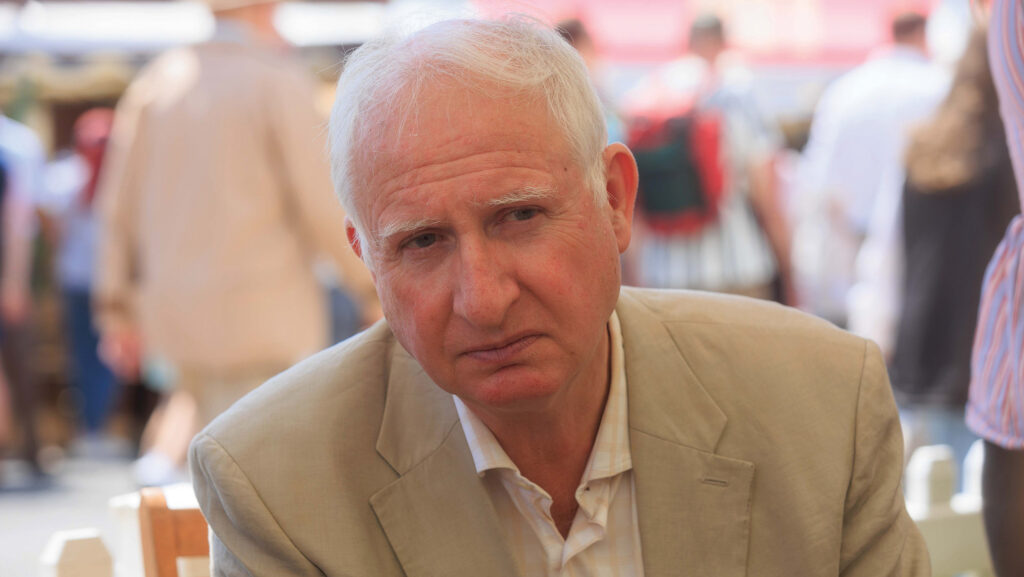 Daniel Zeichner © Tim Scrivener
 Former farming minister Daniel Zeichner has revealed he knew nothing of Labour’s explosive inheritance tax change until after the 2024 Budget – before being “dutifully dispatched to defend it” to furious farmers.
In a candid interview with Farmers Weekly one year after leaving Defra, Mr Zeichner also admitted Labour had not been sufficiently prepared for government, said he was unable to tell farmers the “full story” about problems with the Sustainable Farming Incentive (SFI), and described feeling “man-marked” by Treasury officials he had never met.
See also: When Daniel Zeichner fielded questions from farmers
But despite being angered by the later partial retreat on inheritance tax, he said he would not now advise prime minister Andy Burnham to reopen the issue and scrap the changes altogether.
The disclosures offer a striking account of the constraints facing the minister nominally responsible for farming – and the extent to which some of the biggest decisions affecting the sector were shaped elsewhere in Whitehall.
Inheritance tax
Asked when he first knew the Treasury was going to change agricultural property relief (APR), Mr Zeichner’s answer was clear: “After the Budget was announced.”
He added: “I think that’s probably true for the secretary of state as well.
“It was only after the Budget had been announced that we saw what was likely to happen, and then I was then dutifully dispatched to defend it.”
The experience was particularly galling because Mr Zeichner had already warned then-prime minister Keir Starmer that Labour was vulnerable to a rural backlash.
Shortly after taking office, he told Mr Starmer that he expected the Conservatives’ political fightback to emerge through what he called the “rural prism”.
When APR subsequently handed Labour’s opponents exactly such an opportunity, he concluded: “I think it was prescient, but the warning just didn’t land perhaps strongly enough.”
Mr Zeichner said his overriding aim on taking office had been to give farmers stability through agricultural transition. Before the budget, he felt that approach was working.
“It almost felt like we had the Ming vase perched on top of the apple cart,” he said.
“But at that Budget, it was like the cart had been unhitched and was allowed to roll down the road.”
While acknowledging the Treasury had legitimate concerns about tax abuse and needed to raise money, his verdict on how government handled the issue was stark.
“We should never have got ourselves into that position in the first place in my view,” he said.
Mr Zeichner stopped short of saying the Treasury would definitely have changed course had Defra been consulted, but he believes his experience of the sector could have helped ministers foresee what was coming.
“If someone had quietly sought my advice, I could have given it, I hope in a way that would have been helpful to them, because in the end, it was no help to Treasury, having farmers driving tractors up Whitehall and having big demonstrations.
“They should have seen it. They should have spotted it.”
Wider weakness
He suggested this exposed a wider weakness in government decision-making.
“I think ministers don’t always have sufficient involvement in decision-making and too much is left in the hands of special advisers, who are very good, but I’m not sure they always know the wider context.”
The row took a personal as well as a professional toll on Mr Zeichner. He said he felt “very torn” between loyalty to his Labour colleagues and the distress he saw among farmers.
“One of the hardest moments was receiving an email from a farmer near Cambridge who he regarded as a friend, who told him he felt “so betrayed”.
“I haven’t seen him since,” he said of the farmer.
But when the government eventually softened its position, Mr Zeichner – by then out of office – was hardly celebrating.
He recalled being “fairly grumpy that day”, having watched the government endure months of political damage before changing course.
“I found it kind of extraordinary that we’d gone through so much pain, to then roll back. I was very surprised,” he said.
Mr Zeichner believes Mr Starmer’s personal intervention ultimately drove the change.
“I did find myself thinking it would have been very helpful if that could have been done a lot earlier,” he said.
But he does not believe new prime minister Andy Burnham should now complete the retreat by reversing the policy altogether.
“I think we should see how it works out now,” he said.
Preparation for government
Mr Zeichner’s reflections also go beyond individual policy mistakes.
Having spent four years shadowing the farming brief before entering Defra, he admitted the transition into government had still been more difficult than expected.
The Labour manifesto, he explained, was “fairly high level, to put it mildly” and did not prepare incoming ministers for the detailed machinery they suddenly had to operate.
“Do I think we were sufficiently prepared? Probably not,” he said.
“I think better training and induction for potential ministers in opposition is something I would strongly recommend for the future, quite frankly.”
He does not expect the new Burnham administration to face quite the same problem, however, because power has transferred between colleagues within the same party rather than after a long period in opposition.
Once inside government, Mr Zeichner discovered another obstacle – the Treasury’s reach into departmental decision-making.
“I often I felt like I was being man-marked by someone in the Treasury who I’d never met,” he said.
He recalled advisers warning that “the Treasury won’t like this and won’t like that”, despite him having no direct conversation with the officials making those judgements.
Eventually he asked to meet them himself and found the discussion constructive.
“But I don’t think that was the norm,” he said.
He believes frequent ministerial churn makes the problem worse, because expertise repeatedly drains away while institutional power stays with officials and those controlling government spending.
Sustainable Farming Incentive
The consequences of the Treasury’s dominance were particularly visible during the Sustainable Farming Incentive (SFI) crisis last year, when the scheme was abruptly closed.
Mr Zeichner said he arrived at Defra to discover a scheme that had rapidly switched from undersubscription to oversubscription, supported by computer systems never designed for its complexity and reliant on “endless workarounds”.
But during difficult spending review negotiations, he explained he was discouraged from being as open as he wanted to be about those problems.
“I was not encouraged to do that, because we were in the spending round, and the negotiations with the Treasury were very difficult,” he said.
There was concern that admitting Defra had created systems that were hard to manage financially would “not land well with the Treasury” when the department was fighting to protect its budget.
“I wasn’t able to tell, at that time, the full story about SFI,” he said.
Mr Zeichner also revealed “many, many robust discussions” with the then SFI delivery chief, Janet Hughes, despite stressing his “huge admiration” for her.
He nevertheless questioned the unusually prominent role played by a civil servant in publicly fronting the policy.
“I found myself on platforms with Janet. I remember being at Groundswell and thinking to myself, this really ought to be the minister,” he said.
A year after leaving Defra headquarters in Marsham Street, Mr Zeichner remains supportive of the farming transition he helped oversee.
But his account offers a less than comfortable lesson about government itself.
Farming ministers can understand the sector, fight for policies and build relationships with farmers – and still discover that some of the decisions with the greatest power to blow that relationship apart are not theirs to make.
Battle continues over EU ‘reset’ negotiations
Not all of Daniel Zeichner’s battles in his time as Defra farming minister were lost.
One of his key fights inside government was to protect “carve-outs” for agriculture as the UK moved towards a closer relationship with the EU, with precision breeding a particular priority.
“That was something I fought very hard for,” he said, arguing the UK needed to retain access to innovations that could give farmers alternatives as crop protection products were withdrawn.
Crop protection itself, however – including retaining the use of glyphosate as a pre-harvest desiccant – could prove a harder battle, with Mr Zeichner warning that securing bespoke UK rules would become “a much tougher negotiation” once farming interests were weighed against wider priorities.
He remains “certainly very hopeful” about the eventual sanitary and phytosanitary agreement, particularly around precision breeding and novel foods, saying the previous Downing Street operation had been “very clued up and aligned on that”.
With a new prime minister now in No. 10, Mr Zeichner said “part of what I’m doing is trying to make sure that is maintained”.