

Farmers Weekly Awards 2026: Arable Farmer of the Year
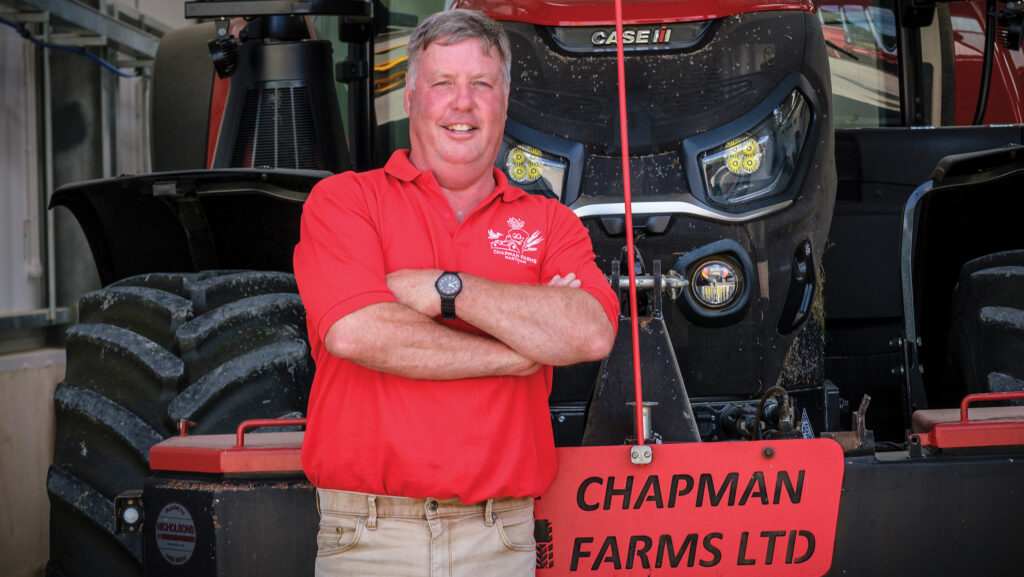 James Chapman © Jason Bye
 Not only has James Chapman successfully doubled the arable cropping area over the past 12 years at Hill Farm, Rollesby, Great Yarmouth, Norfolk, he has also seen wheat yields rise by 12-15% over the same period.
He is achieving high yields in other crops too, with triple-digit sugar beet yields and double-digit vining peas. But what makes him stand out is that he has maintained this high output during the recent challenging years.
See also: FW Awards: Meet the 2026 Arable Farmer of the Year finalists
James is a fourth generation of the family farm, cropping sandy loam soils near the Broads and up to the Norfolk coast.
High yields are key to profitability, but like all UK farmers, this is becoming more challenging with greater weather extremes.
Farm facts
Hill Farm, Rollesby, Great Yarmouth
- Area 845ha of arable cropping
- Cropping Winter feed wheat, winter and spring malting barley, sugar beet, vining peas, fodder beet and lucerne. Potatoes and salad crops grown by third parties
- Establishment Plough and a 4m Pottinger combi drill (power harrow replaced with cultivator). Min-till after peas and potatoes
- Soils Sandy loam and marsh with clay outcrops
- Staff James plus three full-time staff
At the same time, James is looking to reduce chemical inputs and soil health is a key priority. Water quality is also important, as the land is surrounded by the Broads which is a site of special scientific interest and a major source of drinking water.
And finally, the farming operation had outgrown the original site within the village, with limited crop storage and outdated facilities.
The system
James has made changes to the business over the years. He says one key change was going over to liquid nitrogen, which offers greater accuracy and raised yields. He has adopted variable rate P&K too.
There is also a focus on soil health with straw chopped and greater use of manures. Cover crops are grown before potatoes, and dual wheels are used to minimise soil compaction. James has also reduced cultivations where possible, for example min tilling, after peas and potatoes.
James is working with his agronomist to cut crop inputs. The rates of chemical inputs are being reduced by optimising spray timings and the use of rainwater.
However, the biggest change in the last three years has been the new farmyard with 3,600t of grain storage.
This was done with a strong environmental focus with solar energy, rainwater harvesting and top notch sprayer filling area.
Achievements
While many farms have seen wheat yields plateau, James has increased his over the last 10 years and the home farm averages 11t/ha and another farm is over 12t/ha.
He puts these improvements down to having a dedicated team and his attention to detail.
Sugar beet yields are also impressively high with one farm into triple figures and an overall average of 97t/ha. Then just a few months later, the same fields are delivering spring malting barley crops that are approaching 9t/ha.
These increases in yield are being achieved at the same time as he is reducing inputs. For example, James has cut herbicide use in sugar beet by £90/ha with mechanical weeding.
Another example of his attention to detail is the new grain store, where loader operators are never looking into the sun when loading grain lorries.
James is especially proud of his focus on the environment, a Leaf member and also managing land in a range of environmental schemes, including sensitive areas next to two Broads.
Voluntary grass margins double up as riding routes for the locals.
Finally, not only has the new farmyard streamlined operations, it’s also benefiting the wider community and hosting visits.
In conclusion, raising yields through soil and input management has increased margins. This together with the investment in the farmyard has secured the farm’s future.
Winning ways
- Crops looked good in a low rainfall year
- Working with local farmers and businesses
- Consistently high crop yields
- Strong environmental focus
- Surrounded by a strong, dedicated team
What the judges say
“A fourth-generation arable farmer, James’ attention to detail results in crops that have an impressive yield potential. He has created a sustainable arable business and has successfully exploited opportunities working with other local businesses.”
The other finalists
- Colin Chappell, Gander Farm, Brigg, Lincolnshire
- Robert Drysdale, Delab farm, Monymusk, Inverurie, Aberdeenshire
The Farmers Weekly 2026 Arable Farmer of the Year Award is sponsored by Nitrasol

The Farmers Weekly Awards celebrate the very best of British agriculture by recognising hard-working and innovative farmers across the UK.
Find out more about the Awards, the categories and sponsorship opportunities on the Farmers Weekly Awards website.