

Farmers Weekly Awards 2026: Mixed Farmer of the Year
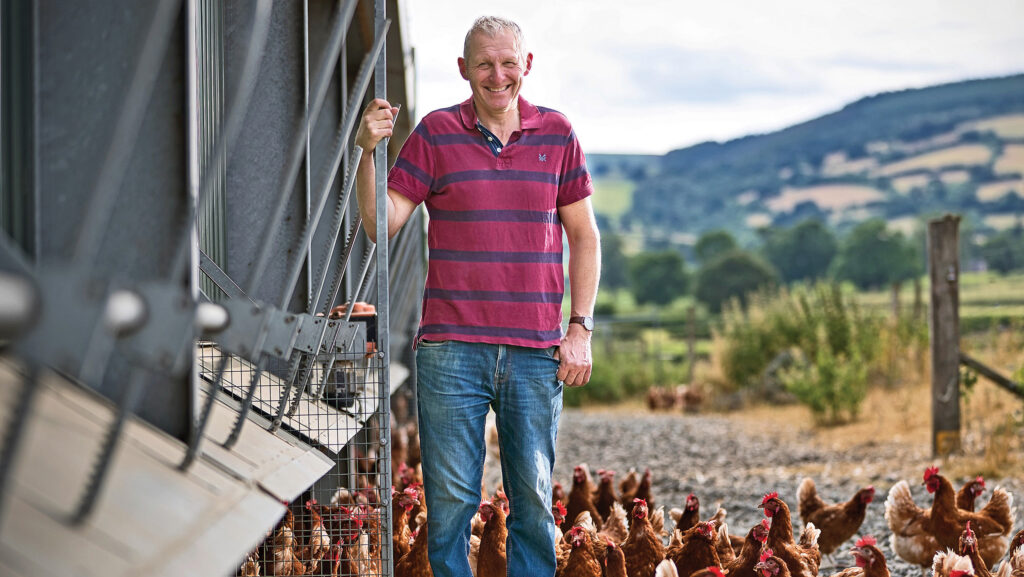 Stephen Matthews-Jones © Richard Stanton
 Welsh farmer Stephen Matthews-Jones has been crowned Farmers Weekly Awards 2026 Mixed Farmer of the Year – a credit to his strong work ethic and significant food output from the modest 170ha Upper House Farm, Powys.
Stephen’s extensive business structure, which encompasses laying hens, beef, sheep, and arable sees him produce 12m eggs in over 80 weeks and fatten more than 1,000 lambs and 30 cattle each year.
See also: FW Awards 2026: Meet the finalists
The business has grown tenfold over the past 10 years – a testament to Stephen’s passion and drive.
With 32,000 laying hens on farm, Stephen is frequently found in the packing shed grading and stacking eggs.
He has a strong focus on health and welfare, proven by the fact his hen flock is taken to plus 80 weeks, with exceptional feather cover. In fact, egg mass is nearly 0.5kg above breed target.
Farm facts
- 170ha mixed farm in Wales, with laying hens, sheep, beef and arable
- Farm produces 12m eggs in over 80 weeks and fattens more than 1,000 lambs and 30 cattle each year
- Probiotics are used in lambing pens to promote beneficial bacteria
- Mixed farming methods mean wheat yields frequently achieve 10t/ha
- The farm installed 57kW of solar panels on shed roofs, reducing electricity costs by one-third
Sheep and cattle
The sheep flock consists of 780 Welsh Mule and Scotch Blackface Mule ewes, which achieve scanning rates of 185%.
Lambs are sold directly to the abattoir via the Dunbia Taste the Difference Gold scheme, averaging 20.2kg deadweight, with a close relationship with the supplier.
During lambing time, Stephen and wife Kate use probiotics, spraying a pruex-type probiotic into individual pens each day to promote beneficial bacteria and reduce harmful pathogens.
Stephen keeps British blue cross dairy suckler cows which are either put to a Limousine or Parthenaise bull. Cattle are generally sold to ABP, and on average, bulls weigh close to 400kg deadweight, hitting grades R and U3L.
Mineral buckets and bolusing has led to noticeable improvements in calf health, including stronger suckling behaviour at birth, better colostrum quality, and a reduction in calf scour cases.
Arable operation
The arable operation supports the wider farm by producing feed and bedding, improving overall self-sufficiency.
The farm grows spring barley, oats, wheat and fodder radish which is grazed by sheep. The arable land receives poultry manure and muck to reduce artificial fertiliser use.
Winter wheat yields frequently hit 10t/ha, thanks to the mixed farming methods which keep weed pressure low and soil biology high.
For the last year beehives have been on site, working with a local beekeeper to produce honey and attract pollinators to the farm.
The farm installed 57kW of solar panels on the poultry shed roofs, which has reduced electricity costs by one third.
Community outreach
Stephen is actively involved in the local community coaching stock judging and public speaking for local Young Farmers’ Clubs. He has welcomed lambing students to the farm to help lambing for more than 20 years.
“Supporting young people – whether through work placements or involvement in Young Farmers is something I value highly,” says Stephen.
Stephen credits his workman Jamie, 33, who has worked at the farm for more than a decade for his help and support, alongside experienced lamber Fred.
His two 14-year old twins Cerys and Owen also actively help on the farm, whether it’s in the poultry shed grading and packing eggs or during lambing.
Winning ways
- Strategic integration of cereal crops, livestock and manures to produce good yields in a simple yet effective system
- Quality laying hen flock with exceptional feather cover
- Strong focus on premium supermarket schemes
- Impressive food output per hectare
- The business was a real family and team effort
What the judges say
Stephen is focused across all enterprises, demonstrated in the health and longer production cycle of the free-range hen crop and the consistency of prime lambs and beef cattle sold. Everything was kept as simple as possible and was done so for a reason. A very good example of a mixed farm working for now and the future.
The other finalists
- Edward Walters, Bower Farm, Berkshire
- JL White & Son, Manor Farm, East Yorkshire
The Farmers Weekly 2026 Mixed Farmer of the Year Award is sponsored by Kirkby Tyres

The Farmers Weekly Awards celebrate the very best of British agriculture by recognising hard-working and innovative farmers across the UK.
Find out more about the Awards, the categories and sponsorship opportunities on the Farmers Weekly Awards website.