

Maize growers keep 100t of soil out of Sussex rivers
 © South East Water
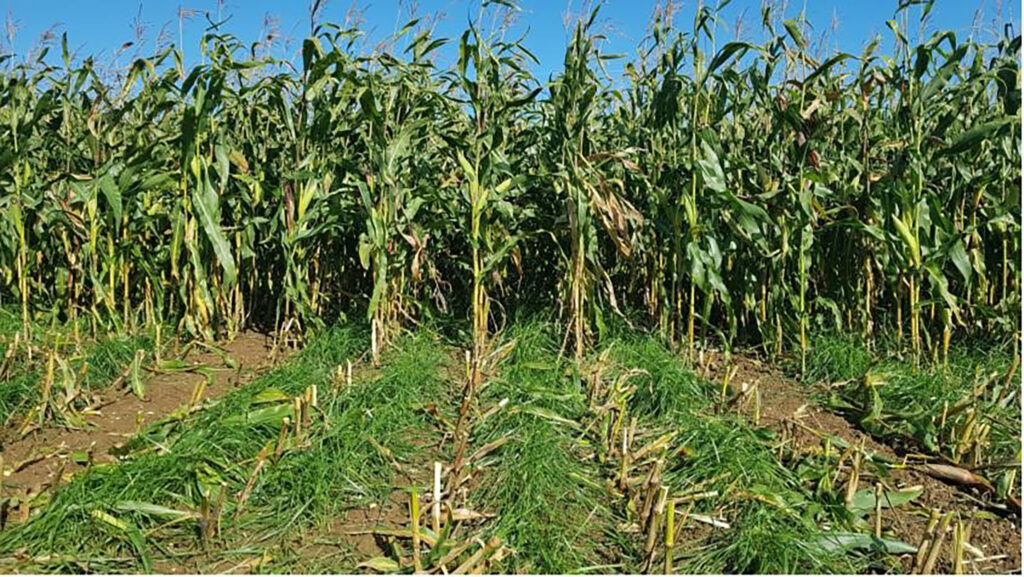
Maize growers in Sussex have prevented 100t of soil entering local rivers by adopting grass-based measures to reduce erosion, supported by funding from South East Water.
The water company worked with the Maize Growers Association (MGA) between 2020 and 2024 to trial inter-row grass and post-harvest grass on farms in the region.
Maize has been identified as a particular risk to water quality in South East Water’s Sussex surface water catchments, where wide crop row spacing leaves large areas of bare soil vulnerable to erosion.
See also: Advice on cropping decisions for 2027 forage maize crops
The late harvesting can also leave fields exposed over winter, increasing the risk of soil washing into rivers and reservoirs.
This can cause turbidity – cloudiness in the water – affecting raw water quality and increasing the demands on treatment works.
South East Water catchment adviser Michael Parsons said analysis undertaken by AtkinsRéalis showed the changes made by participating farmers had prevented 100t of soil entering rivers over the four-year trial period.
“Inter-row grass has been proven to be one of the most impactful measures across our catchment schemes for improving water quality,” he said.
The company supported growers with grants of £125-£185/ha a year to establish grass between maize rows or after harvest, helping reduce soil runoff.
Collaborative achievement
Mr Parsons said the trials had demonstrated the benefits that catchment management measures could deliver for farms, the environment and water quality.
He noted that South East Water would continue working with maize growers in the region to encourage changes that could benefit both farm businesses and the environment.
Dairy farmer Chris Appleton, who farms near Eastbourne, East Sussex, said support through field management schemes and capital grants had helped him make practical changes to farming practices while protecting soil and water quality.
“It is encouraging to see the positive impact these measures are having on our local rivers.”
MGA technical lead Jon Myhill said inter-row and post-harvest grass were practical, low-disruption measures that could be incorporated into existing maize systems.
The project demonstrated what could be achieved through collaboration between growers, water companies and technical organisations, he said.
“We would like to see more catchment schemes offering this kind of support”, Mr Myhill added.
Maize has become increasingly popular in the UK over the past five decades, with 274,000ha planted in 2024, compared with 8,000ha in 1973, now accounting for about 6% of the UK’s cropped area.
Farmers interested in support from South East Water can contact: catchment@southeastwater.co.uk