

Editor’s View: Iran war is yet another food security threat
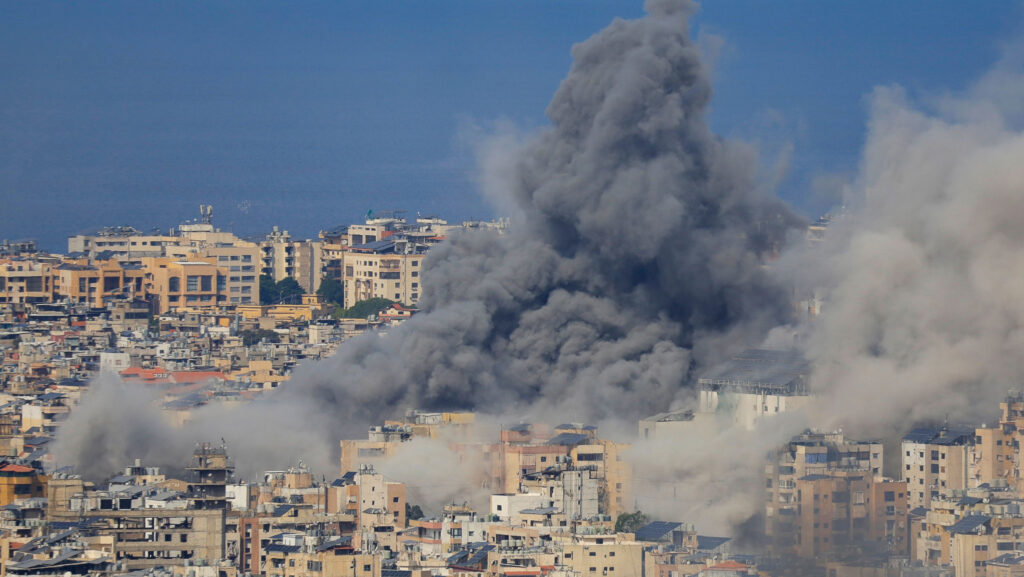 © Abdul Kader Al Bay/ZUMA/Press Wire/Shutterstock
 With less than a week having passed since the US and Israel started bombing Iran, the nation remains gripped by every fresh headline about the conflict and how the effects will trickle down to us.
Already there has been some queueing at the petrol pumps, a spike in the price of farm inputs and new anxieties about what this will mean for arable profitability in particular.
This is reminiscent of the beginning of Russia’s terrible invasion of Ukraine which, although not fully out of the headlines, has now retreated from the front of people’s minds.
See also: Fuel and fertiliser prices soar as Middle East tensions rise
About the author

In my first editorial after that conflict had broken out, I wrote that the return of war to Europe would renew focus on domestic food security.
History shows that war is the fastest way to bring about sudden revisions to what is and is not politically possible.
Yet while the government response in the sphere of food specifically has been mostly limited to warm words, there have been some moves in academia and the private sector, as I wrote last week.
Longer-term supply contracts have become the norm in some sectors, and there is a greater appreciation of at least the financial cost of scarcity that is driving more farmer-friendly decision-making.
But all of this continues to feel like a very limited response to the very real threat of food insecurity which, sooner or later, will see the UK facing a major crisis that could have been avoided.
Following the invasion of Ukraine, world leaders, journalists and others spent a great deal of time searching for a historic comparison – illustrating how people really don’t like feeling they are in uncharted territory.
Was it akin to the complex, around-the-houses slide into the First World War, they wondered, or was Putin akin to Hitler, leading us down a road not dissimilar to the one that ended in the Second World War?
Neither, said acclaimed historian Christopher Clark, who likened it to the conflicts of the 19th century which, owing to the fact they were between a larger number of great powers, were much more unpredictable.
This time round we have, in the Russia conflict, a much more recent parallel to compare with.
That alone speaks to the increasing instability of the world in which we live – even if in some ways they are very different wars.
Once again, the insecurity of our interconnected world is laid bare and there are acute fears about access to energy, and at what price.
Once again, mystification over the timing and motive of the conflict has created enormous uncertainty about how and when this ends.
And if it is prolonged it will, once again, leave a fragile food supply chain wearily responding to yet another emergency that will ultimately punish taxpayers and consumers with even higher bills.
But let us end on a hopeful note – those who seek by their actions to diminish the importance of food security now have even less room to hide.
This unpredictable world is here and we must deal with it as it is, not as we would like it to be.