

Opinion: Blackgrass fight could be lost if key chemicals go
 © Blackthorn Arable
 There are a few contenders for the pest, weed or disease that causes the most problems on our arable and beef farm in Lincolnshire.
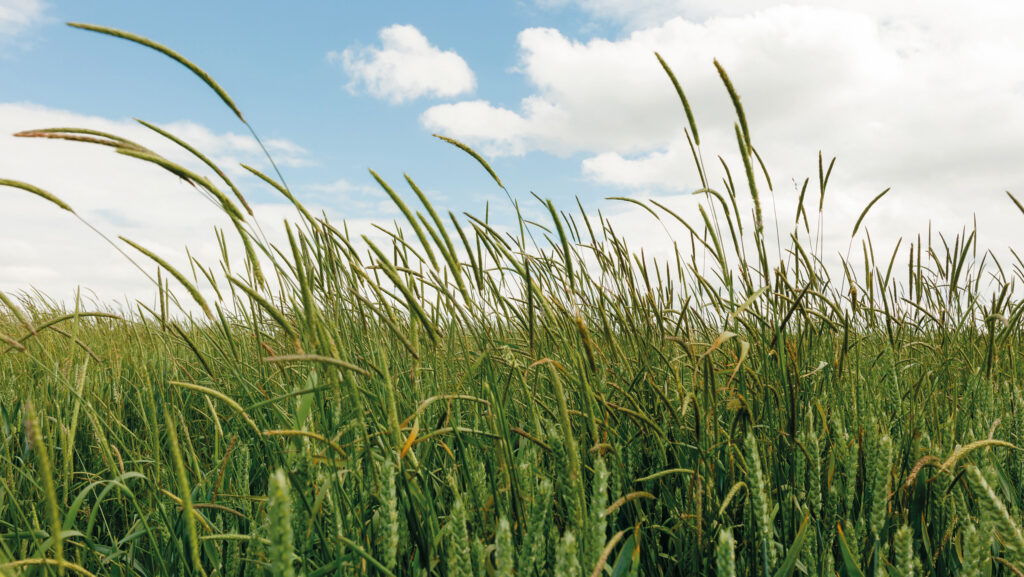
Cabbage stem flea beetle is one, septoria is another and TB could be on the list too, but the one with the biggest effect on how we farm has to be blackgrass.
Blackgrass pressure is probably the biggest determinant of our cropping rotation, our drilling date, our cultivations and our pesticide spend, while also having potential to affect the final yield.
See also: Opinion – it’s the farmer who carries all the risk of regen
About the author

We drill autumn crops as late as possible and switch to spring crops where necessary, we stack herbicides before and after emergence, hand-rogue where possible and spray off particularly bad areas.
We can keep blackgrass to a manageable level if we use all of these methods in conjunction.
The problem is that the system is fragile. We are always one bad year or one bad decision away from blackgrass levels getting out of control.
We have seen this in fields where we have had the legume fallow environmental option. Being unable to spray for a year or two has created blackgrass problems in fields that were fine beforehand.
Furthermore, in the wet 2023-24 season, where crops were thin and early herbicide applications were missed, blackgrass flourished.
Without a doubt, the best way to combat blackgrass is to have a good, competitive cash crop but conversely, the worst way is to have a poor, thin crop.
I visited a really interesting trial site run by Agrovista at Lamport called AgX.
The site was chosen due to its bad blackgrass burden and their aim is to investigate ways to manage it.
Their systems trials found that alternating winter wheat and a spring crop with a cover crop sown in between was highly effective.
The key was to lightly cultivate ahead of a thinly sown cover crop that was designed to allow as much blackgrass as possible to germinate.
They then destroyed the cover crop ahead of winter and, in the spring, drilled the cash crop, moving as little soil as possible to avoid further blackgrass germination.
The results were impressive and it is a strategy that I am going to try to replicate on our worst fields next season.
There was also a herbicide trial with an untreated plot that showed how bad the blackgrass could potentially be on the site.
The wheat (or lack of) was almost completely outcompeted, proving that given any chance the weed will come back and dominate.
That is why I am particularly worried by the possibility that we will lose access to flufenacet and cinmethylin (Luxinum Plus) in the coming years.
By realigning with the EU, these chemicals are at risk, as they are currently not available there.
This will cause a very large problem for arable cropping in this country.
Flufenacet is effective and affordable and has a place in pretty much every pre-emergence cereal mix and, in my experience, Luxinum is the most effective blackgrass herbicide in high-pressure situations.
Without either of these herbicide options or an effective alternative, I fear we will begin to lose the battle against blackgrass, even while doing everything else within our power.
Our integrated pest management becomes less integrated if we lose a large part of the chemical control.
In many cases, spring cropping, late drilling and ploughing alone will not be sufficient.