

Opinion: Food is the ‘common language’ of my Nuffield travels
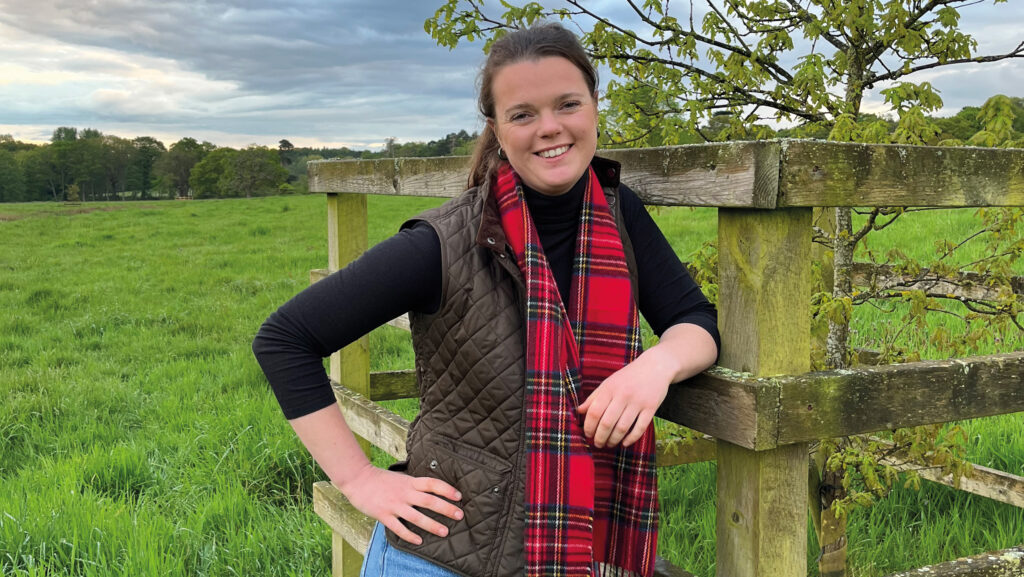 © Molly Biddell
 I am writing this sat in a small airport in the southern state of Andhra Pradesh in India.
It’s where I have been for the past couple of weeks learning from amazing farmers who are leading the country’s transition to regenerative agriculture.
It has been an inspirational fortnight filled with coconuts, chillies, curries and chai (buffalo and paddy harvests, too).
See also: Opinion – why we need to redefine the word ‘productive’
About the author

Before that, I was learning about farming in Japan, travelling between vegetable, dairy, kiwi and fish farms, volcanic grazing entrepreneurs and consumer co-operatives, eating my bodyweight in noodles, sushi and beef.
I am gallivanting around Asia because I was fortunate to be awarded a 2026 Nuffield Farming Scholarship, joining a cohort of 90 scholars from 18 countries.
We’ve all received support to travel to research different farming-related topics.
We will then return to our home countries armed with new knowledge, inspiration and determination to enhance our businesses and sectors.
The aim of my study is to better understand what it is that is driving change towards more resilient agricultural systems, in particular looking at top-down and bottom-up approaches.
The scholarship is named after the man who started it – Lord Nuffield, aka William Richard Morris, whose trip to Detroit to learn about how to make cars from the likes of Henry Ford led him to create the Morris Cowley.
He believed in travel and study, and set up a fund in 1943 to advance the nation’s health and was later persuaded to include agriculture too, with food a prerequisite to improving health.
Thus began a programme that provides support for people to study agriculture in all corners of the world.
So, which insights will I share in my postcard from India?
It’s just the start of my travels and I have already learned so much.
The role of women in scaling food systems change, the impact of Hinduism and Shinto beliefs in protecting nature, tribal and tectonic-driven collaboration, how to enable people to engage with nutrition, the power of small-scale farming and agritourism to regenerate rural communities, the worldwide desire to get young people into land management, and the universal need for diversity to create resilience.
It inspires me that I’ve encountered far more similarities than differences, despite the huge variety of cultures, landscapes and businesses I’m visiting.
I’m still composting my experiences, but one thing is incredibly clear to me.
That is the importance of food. It’s not rocket science, and it’s not just because I love eating, but food is the common language of my trip.
I have shared many meals where language is a barrier (sadly I’ve not become fluent in Telugu or Japanese), but food unites us.
LPG shortages mean that a lot of the food I’ve enjoyed has been cooked over bamboo fires, carefully prepared and so generously shared.
Food is the ultimate way to unlock culture and history.
The pride that growers and farmers have for their food, the way it is celebrated, sacrificed, offered, traded, gifted and enjoyed, is a wonder to behold.
I have been completely bowled over by the unbelievably caring and generous hospitality I have been shown by strangers – who have quickly become friends over a banana leaf of cashew curry or a plate of squid sashimi.
I feel damn lucky to work in the sector that is responsible for such joy.