

Opinion: Help sought on stopping deer deaths at mowing time
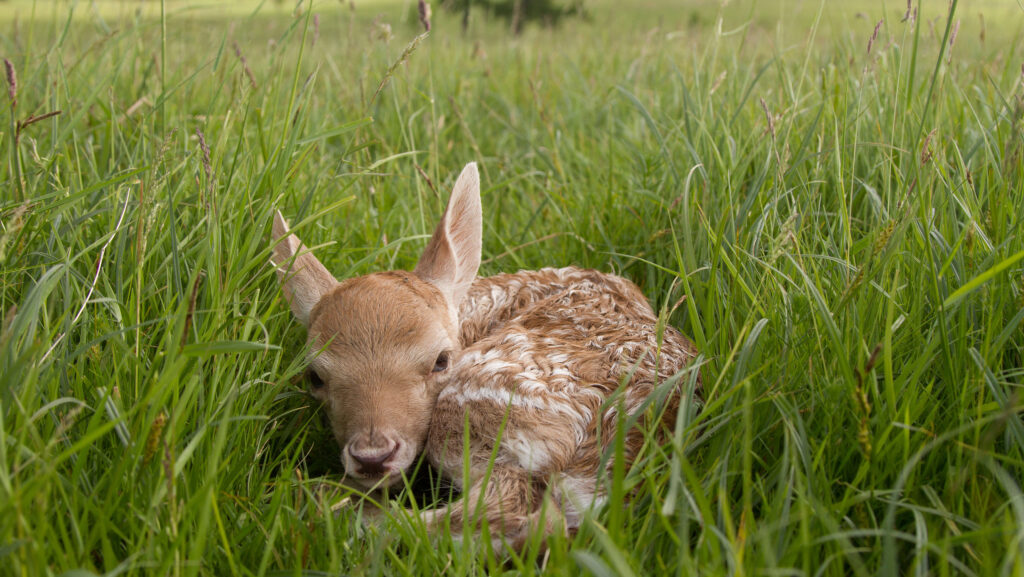 © Vince Burton/Alamy Stock Photo
 My good friend and farm wildlife guru, David White, once remarked: “I like your kit… before you took over here the contractors used to come flying in on massive machines and the wildlife didn’t have a chance to get out of the way.
“With your tractors, they can hear them coming a mile off – and they don’t move very fast.”
As backhanded compliments go, this is something of a gem. It was on my mind the other day as, mowing a field for silage, a roe doe jumped up in front of the mower.
Rather than running away, she hovered nervously on the headland.
See also: Opinion – all my organic preconceptions have been overturned
About the author

From experience, it was pretty obvious what that meant. Yep, a newborn kid in the long grass. When mowing waist-high forage at running speed, deer calves are almost impossible to spot.
Their standing orders from mum appear to be “stay still, no matter what”.
Time to summon the wife and kids, a somnambulant terrier and a slightly dim spaniel puppy to start quartering the field to see if we could find it.
But newborn deer have no scent, so the best you can hope for is to literally trip over it.
I had a chat with my landlord’s deer manager about this. He agreed it’s a massive problem and nobody really likes to mention it.
Towards the end of May – peak grass-cutting time for many of us – deer give birth and, in the case of the roes we have here, almost always have twins.
Despite the debate about the overpopulation of deer in this country, dismembering their young with a mower is no way to keep numbers in check.
Quite apart from the moral aspect and the gruesome picking-up job for whoever is on the rake, contaminating your bales or clamp with shredded animal parts is not a recipe for healthy stock.
Looking for ideas, I found that German farmers who fail to take sufficient precautions to avoid killing wildlife with a mower can be fined up to €10,000 (£8,650).
Austrian manufacturer Pottinger has even developed an infrared device that detects deer and automatically lifts the mowers, though I don’t know anyone here using such a system.
The obvious answer is a thermal imaging drone, so I rang a well-regarded supplier to find out that they are very expensive and need skill to operate effectively, not to mention becoming yet another operation at a busy time of year.
However, for a little under £4,000 the sales director says he can rig up a tractor with a thermal imager that will not only spot deer on a hot day but – thanks to artificial intelligence – will warn the operator that there is something in the long grass ahead.
This company is a highly respected supplier to rescue services and the Ministry of Defence, so I trust that he knows what he is talking about.
I am hoping to develop this idea and get some funding. The sums involved may be paltry when put against the expense of large contracting kit, but actually cost rather more than my trusty mower conditioner.
For a contractor wishing to get ahead in the market, advertising yourself as “wildlife safe” may give you an edge.
If anyone is interested in supporting this project, it would be brilliant if you felt like getting in touch.