

Opinion: How to navigate the shifting sands of rural land use
 © AdobeStock
 Historically, the price of farmland has been assessed through yield, soil quality and long-term stewardship.
Increasingly, however, it is being valued through a more complex lens: future optionality. What land could become is now often as important as what it produces today.
This is reshaping UK land use into a multi-layered negotiation between food production, renewable energy, housing demand, and rapidly expanding digital infrastructure.
This will demand tighter co-ordination and a genuine “meeting of minds” between landowners and tenants.
See also: 10 things farmers need to know about Defra’s land use plan
About the author

Lindsey Nolan is legal director and co-head of agriculture and rural land with Goughs Solicitors.
Here she sets out the need for landlords and tenants to respond to land use change in partnership.
UK land policy is in constant motion. Net zero commitments, planning reforms, agricultural subsidies, environmental incentives – all evolve with shifting political priorities.
A Labour-led policy environment is generally associated with stronger emphasis on net zero delivery, renewable energy expansion, and strategic spatial planning, alongside continued pressure for housing delivery.
By contrast, Conservative or Reform-led approaches are more commonly associated with greater emphasis on agricultural productivity, reduced regulatory burden, and caution toward large-scale conversion of farmland for energy infrastructure.
Importantly, none of these directions are fixed. Future governments or leadership changes could significantly alter land-use priorities or reshape planning policy entirely.
Uncertainty
A further layer of uncertainty comes from Defra’s Land Use Framework for England, published in March of this year, which signals a direction toward “multifunctional” land use combining food production, housing, environmental recovery, and energy.
While non-binding, it may still influence planning interpretation, lending decisions, and investment behaviour and could itself be revised or replaced by future governments.
For landowners and tenants, this will require caution before entering into long-term commitments against a backdrop of shifting policy signals.
Farmland is no longer valued solely for agricultural output. It now sits at the intersection of multiple competing national priorities.
This includes food security, which remains central amid global supply instability and geopolitical risk.
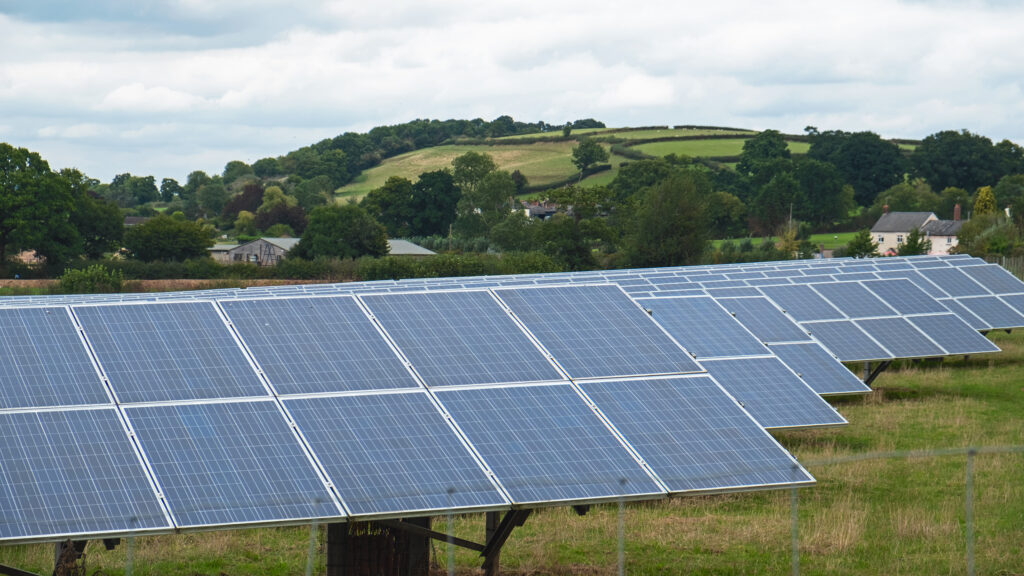
However, renewable energy schemes offer long-term income potential for landowners, while housing demand continues to push development into rural and peri-urban areas.
Alongside this, digital infrastructure is emerging as a fourth major pressure point.
Data centres supporting artificial intelligence and cloud computing are increasingly treated as strategic national infrastructure, with policy attention growing through initiatives such as AI Growth Zones and planning system recognition of their importance.
Farming impact
For tenant farmers, these shifts are not theoretical. They affect livelihoods, communities, and generational continuity. This is why decisions must be handled with sensitivity and long-term awareness.
Landowners and tenants must therefore work together, starting with open disclosure, sharing intentions early, including any interest from energy, housing, or infrastructure developers.
They should map all land-use options together – agricultural, renewable, residential, and digital infrastructure uses should be assessed side by side, not in isolation.
Before any agreement is made, they should evaluate how proposals affect farming operations, continuity, and long-term viability.
And they should test out policy scenarios, considering how land use would perform under different political directions – strong net zero policy, deregulation, or agricultural prioritisation.
It is important to protect flexibility in contracts and avoid agreements that permanently restrict future options, unless compensation reflects lost opportunity.
And any decisions on land use change should be phased rather than committed to all at once, perhaps by introducing pilot areas.
Finally, tenants and landowners should review agreements jointly and regularly, as policy, market demand, and technology evolve.
The idea of a “golden ticket” beneath our feet is real, but it is not a windfall. It is a responsibility. The best outcomes will come from collaboration, with shared judgement between tenant farmers and landowners.