

10 things farmers need to know about Defra’s land use plan
 © Tim Scrivener
 England’s first Land Use Framework, published by Defra on 18 March 2026, promises that the same finite land area can deliver more of everything at once: food, nature, housing, clean energy and climate resilience.
It sets out an ambitious vision to 2030 and 2050, based on a “multifunctional” approach that means managing the same land to deliver several outcomes at once – from food production to habitat creation, flood management and clean energy.
See also: Food production pledge in Defra land plan questioned
Backed by national mapping and new data tools, the framework (opens in PDF) signals a shift towards more directed, data-led land use. But farm leaders say the practicalities, trade-offs and funding gaps remain largely unresolved.
Here are 10 key takeaways for farmers and landowners:
1. Food production is ‘protected’, but only if farmers become more efficient
Defra insists domestic food output will not fall. But that hinges on farming becoming more productive and using land more efficiently, as competing demands intensify. That productivity requirement is ambitious, given recent years of volatile weather, tight margins and rising costs.
2. Best farmland gets stronger protection – in theory
Best and most versatile (BMV) land is to be safeguarded from development and long-term land use change. Updated land classification maps, due later in 2026, will be critical in planning battles over housing, solar and tree planting.
3. Solar and wind expand, but farming stays underneath
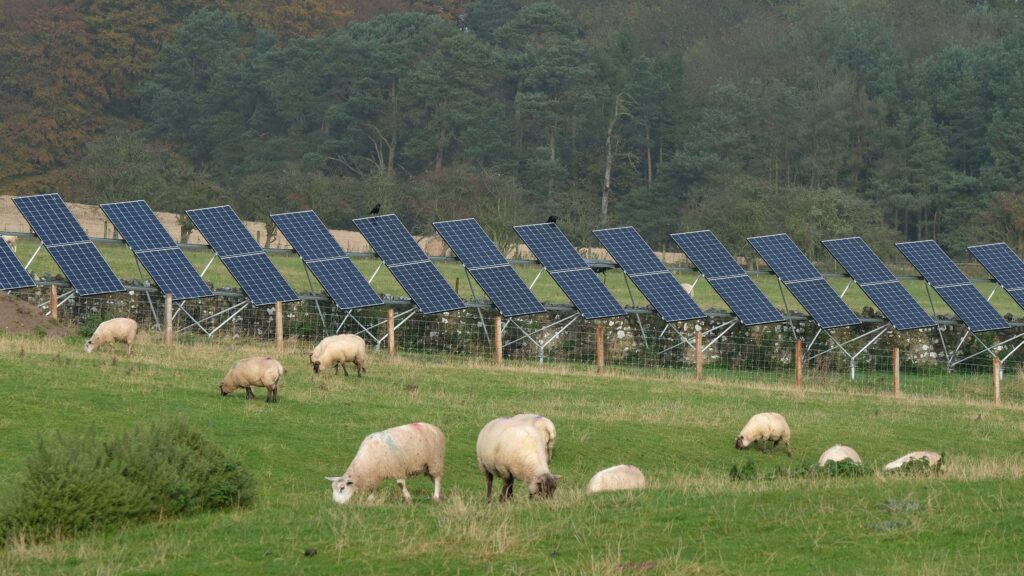
Renewables – solar and onshore wind farms – are expected to take up about 1% of land in England, or 2% of the Utilised Agricultural Area (UAA), with policy backing for dual use, including grazing under solar and agrivoltaics. A new permitted development right for small wind turbines could also unlock on-farm energy.
4. Tenant farmers promised a bigger voice
Tenants manage one‑third of England’s farmland yet historically have lacked the security to diversify or commit to long‑term schemes. Defra has promised reforms, a strengthened Farm Tenancy Forum and fairer compensation. But without legislative change and landlord buy‑in, tenants may see little difference on the ground.
5. Uplands face the biggest shift – and the biggest uncertainty
The uplands are marked out for peat restoration, carbon storage and water management. Grazing will continue, but the direction of travel is clear – more environmental use. Upland farming groups warn this could marginalise livestock systems and undermine food production.
6. Housing to avoid prime farmland – unless councils intervene
The push for 1.5m new homes will steer development away from high-quality farmland and flood-risk areas. New planning tools aim to show where building, farming and nature can coexist. Yet local planning decisions often bend under political pressure, land availability and viability demands. Whether councils actually follow national guidance is an open question.
7. Data will drive decisions on your land
Defra is rolling out the most detailed land-use mapping yet, covering soils, climate impacts, water, biodiversity and “suitability” for different uses. This data will increasingly shape planning, payments and business decisions. This will be helpful for some – but others fear it could become a de facto zoning system, guiding planners and payment agencies more than Defra admits.
8. Environmental payments become more targeted – meaning winners and losers
Future schemes will focus funding where it delivers most impact. Some actions may be encouraged – or effectively steered – into specific locations, although core Sustainable Farming Incentive (SFI) options remain widely available. This means some farmers may lose access to higher‑value payments.
9. Farmers will shoulder more responsibility for water and flooding
Expect greater involvement in managing flood risk, water storage and nutrient runoff through catchment-level planning – with more support, but also more scrutiny. Producers in sensitive catchment areas could face tighter nutrient controls before long.
10. Planning reform aims to unlock diversification – but farmers have heard this before
The framework pledges faster applications, better digital tools and clearer rules. If delivered, that could help diversification – farm shops, reservoirs, renewables and more. But past attempts to “simplify planning” have done the opposite. Many will reserve judgement.
Conclusion
The Land Use Framework doesn’t impose rules, but it signposts a future where land is more tightly mapped, assessed and directed, and where multiple outcomes are expected from every hectare.
For many farmers, the unanswered questions on funding, trade-offs and food production will matter far more than the glossy maps.