

Opinion: Work experience shouldn’t be just for youngsters
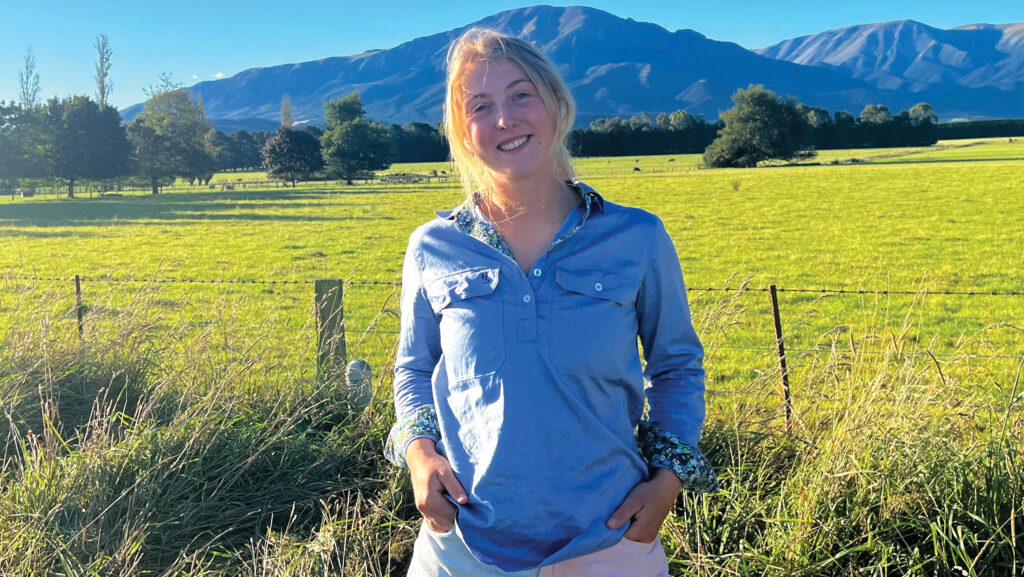 Kate Tomlinson © Kate Tomlinson
 When I was younger, I thought I could explore a career in midwifery. Why? Because I could lamb a sheep. Solid logic, right? Wrong.
After spending a few days in the local hospital with a doctor, I realised that hospitals were nothing like Call the Midwife and that the life of a medical professional was not at all what I was expecting.
See also: Opinion – a ‘wild’ group can help farming women prosper
About the author

Long shifts, blinking lights in windowless corridors, bureaucracy, paperwork – the invisible parts to a role I only associated with saving lives and delivering babies.
When you’re young, work experience helps you test your assumptions before you judge a career.
Turns out, adults need it too – just for a different reason. Not “could I do this?”, but “what’s really happening here?”
Leadership programme
Recently in Wellington, I learned about politics and agricultural leadership as part of a leadership programme.
I had little prior knowledge or interest in politics.
From others’ opinions and brief scans of news articles, it seemed that most politicians and public servants are paid too much to do very little. That I’d have little influence, even if I tried.
However, for a week I listened to deeply passionate individuals within New Zealand’s Parliament and political space who (for the most part) wanted to do their best and make a positive impact on their country.
Some of these people were farmers and only had the agricultural industry’s best interests at heart.
It shocked me that some were working 100-hour weeks – because in my mind, farmers were the only hard-working people out there.
Challenge preconceptions
My closed-mindedness embarrassed me. It made me wonder, if I’d got this so wrong, what else was I misjudging? And what else might others be wrong about too?
I’ve heard farmers dismiss consultants because “they have never run a farm before”, the vet who is “only out for money”, the greenies planting up the neighbour’s farm.
Have we actually spent time understanding any of these people, the context of the situation, their drivers and pressures?
Or are we just assuming based on one side of the story? I’m not saying these judgements are wrong.
I’m asking how much time we spend understanding the problem from a rounded perspective and considering our own biases.
So, what’s the easiest way to do this? An agricultural work experience day. Not a conference or seminar – an actual day in someone else’s world.
You drop cattle at the mart weekly? Ask to spend a day behind the scenes. Your nutritionist visits monthly? Go out with them and see what they’re juggling.
Your solicitor? Spend a morning watching what lands on their desk. Your vet? Go and spend a weekend on call with them.
But what about client confidentiality? If you could spend a day in a solicitor’s office when you were 16, why not when you’re 26 or even 66? It’s about being curious and collaborative.
If I hadn’t spent time in Wellington, I would still have a skewed perception of politics.
If I hadn’t spent time in that hospital (and come to realise midwifery isn’t lambing ewes), who knows where I could have ended up?
Challenge your preconceptions. Immerse yourself in someone else’s world. Learn about another part of the sector.
An industry divided by assumptions is weaker than one united by understanding.