

TB sequencing points to greater risk from cattle movement
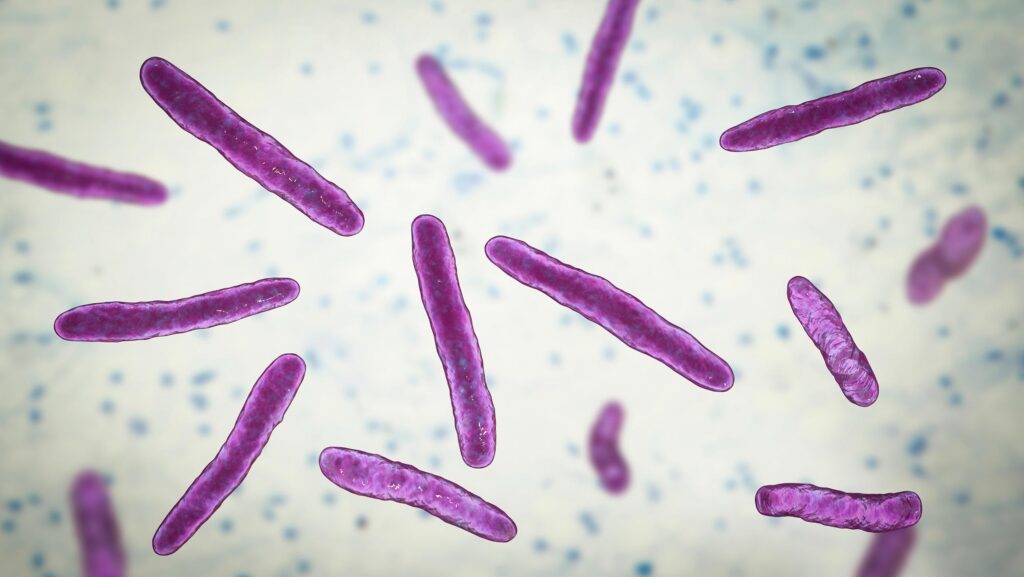 Bovine TB bacteria © Adobe Stock
 Whole-genome sequencing is allowing scientists to gain a clearer picture of the interplay between cattle and wildlife when it comes to spreading bovine TB.
Addressing at the AberTB conference in Aberystwyth on 16 September, Prof James Wood from Cambridge University said that, by analysing the genetic code of the bacterium M. bovis, it was possible to identify related strains and trace infection patterns between herds, areas and species.
See also: Scientists seek proof badger vaccine cuts cattle TB
“What’s very clear from this is that an average figure of around 15 times more cows get infected by other cows than get infected by wildlife,” he said.
Prof Wood said this strengthened the case for focusing disease control on cattle-to-cattle transmission, while stressing wildlife remained “a significant and important risk” in some areas.
His comments came as the latest Defra figures showed TB continuing to decline.
In the 12 months to June 2026, herd incidence fell from 7.8 to 6.4 in England and from 7.0 to 5.7 in Wales, with herd prevalence at 3.4% and 4.3%, respectively.
TB-related cattle slaughterings fell 4% to 20,244 in England and 23% to 10,090 in Wales.
Movement risk
Prof Wood said whole genome sequencing was also revealing infection being carried from high-risk into low-risk areas through cattle movements despite pre-movement testing.
“We know from whole genome sequencing that many of these, or probably all of these, infections in the low-risk area [are] carried by cattle,” he said.
He suggested more sensitive pre-movement testing and better information about the TB risk of source herds could help farmers reduce that risk.
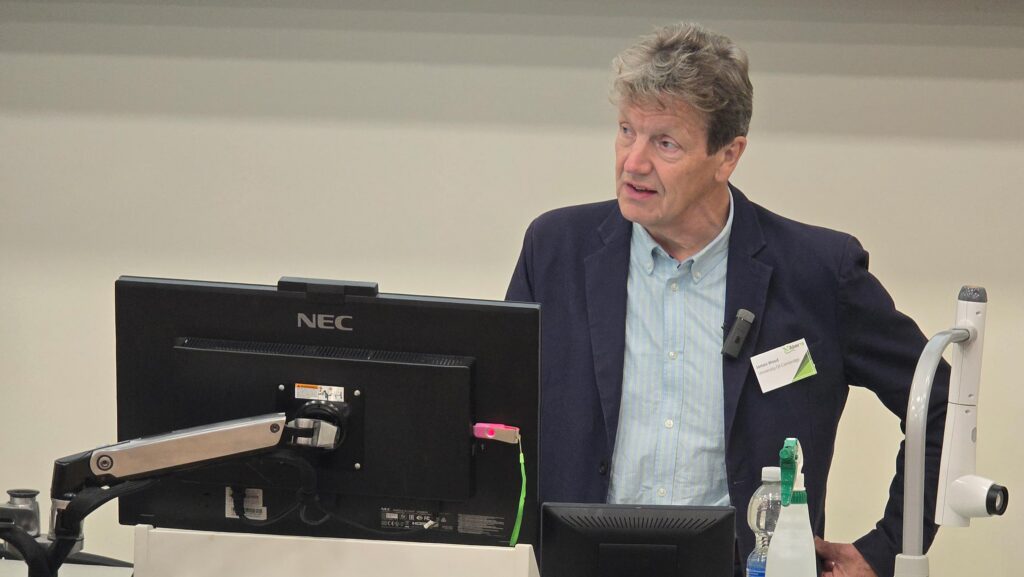
Prof James Wood © MAG/Anne Dunn
His comments coincide with new Aberystwyth University research examining bovine TB genetics across Wales.
Researchers, including Prof Glyn Hewinson, analysed 379 M. bovis isolates collected in 2021, identifying six genetically distinct clusters.
Published in Scientific Reports on 14 September, the study found evidence suggesting cattle movements played an important role in introducing strains into different areas, including separate introductions into Carmarthenshire and Gwent followed by local expansion.
It also highlighted Anglesey and the Llŷn Peninsula, where cattle density is relatively high but TB prevalence remains low, reinforcing the importance of preventing infection entering low-incidence areas.
Badgers remain an important wildlife reservoir for bovine TB, while the study found close genetic links between infection in badgers and cattle living in the same areas.
Although only 10 badger samples were included, TB bacteria recovered from badgers were most closely related to those found in nearby cattle, with no distinct strains associated specifically with either species.
The researchers said further work was needed to understand local transmission between cattle and wildlife.
200-mile spread
Ireland has seen similar evidence of long-distance spread.
Damien Barrett, head of ruminant animal health at Ireland’s Department of Agriculture, told the conference a strain associated with Cork had been detected in a badger about 200 miles away in the north-west.
“There’s no bus for badgers,” he said. “We’re assuming it was carried by cattle.”
Mr Barrett said forthcoming Irish research suggested about 60% of transmission was not local – defined as within 10km – while stressing cattle and wildlife remained part of a “very, very complex web”.