

Defra under pressure over drought grazing rules
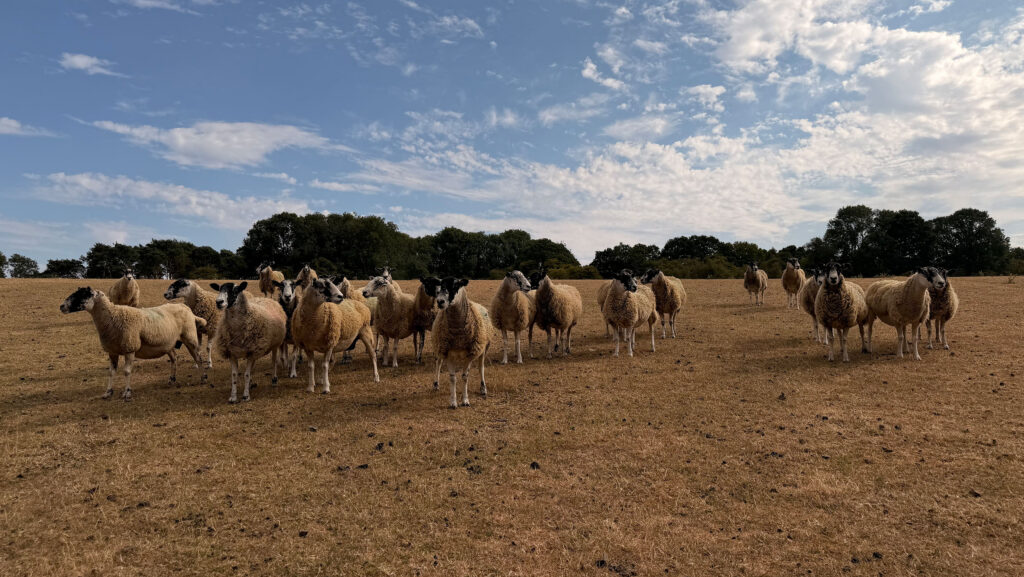 © Louise Penn
 Livestock farmers are urging Defra to introduce temporary drought grazing derogations as forage shortages worsen following one of England’s driest springs in decades.
The Environment Agency said England received just 3% of its long-term average July rainfall, with exceptionally dry conditions severely restricting grass growth.
As a result, many livestock producers have been forced to use winter forage reserves months earlier than planned while agri-environment scheme rules continue to limit grazing on some field margins and herbal leys.
See also: Meat body urges Defra to rethink SFI legume fallow rules
National Beef Association chief executive Neil Shand said the prolonged dry spell was having a serious impact on grazing.
“Grass in some places, it’s not just shrivelled up; it’s completely disappeared. People have been left with the equivalent of the Sahara Desert. It’s just dust.”
Situation becoming critical
Northamptonshire mixed farmer and Ceres Rural agronomist Louise Penn has called on Defra and the Rural Payments Agency (RPA) to urgently review grazing restrictions under Countryside Stewardship and the Sustainable Farming Incentive (SFI) in drought-hit areas.
“The situation on many livestock farms is now becoming critical. Grass growth has effectively ceased on large areas of grazing land.”
She said easing restrictions on selected stewardship and SFI options could help relieve pressure on livestock farmers while maintaining environmental outcomes.
Urgent action needed
Farmers argue there is already a precedent for temporary flexibility.
During the 2022 drought, Defra and the RPA allowed additional grazing and cutting on selected Countryside Stewardship options, including AB8 (flower-rich margins and plots) and AB15 (two-year sown legume fallow), to help address forage shortages.
The RPA also confirmed in 2025 that Stewardship and SFI derogations could be considered where drought affected feed supplies.
Ms Penn said similar measures should now be introduced in the worst-affected areas.
“We are asking RPA and Defra to urgently review whether county-level, regional or national flexibility can be introduced for the most severely affected areas.”
She said allowing controlled grazing or cutting on stewardship and SFI options containing standing forage would help ease feed shortages.
“This is no longer a theoretical concern. It is a practical and immediate animal welfare, farming and food production issue.”
Mr Shand backed the call, saying temporary derogations were needed wherever standing forage could be safely grazed.
“This becomes a welfare challenge, and that’s just common sense,” he said.
“Government keeps telling us they listen to the industry, so they’ve got to show a bit of flexibility and, moreover, some common sense.”
Defra response
A Defra spokesman said the department recognised the impact prolonged dry weather was having on farmers.
“We are also actively engaging with the sector and considering additional ways to support farmers through the current prolonged dry spell.”
Defra advised farmers and land managers concerned about drought impacts to contact the RPA and consult its extreme weather guidance.
Mixed maize season
Maize growers are facing a mixed season.
Jon Myhill of the Maize Growers Association said some drought-hit crops were now “just trying to finish as quick as [they] can”, meaning some growers could face harvesting immature maize as early as the end of August.
Better-established crops, however, should produce good-quality cobs, with the main harvest expected to begin in early September.
Lower maize yields, coupled with poor grass growth, are however likely to leave some livestock farmers short of forage.
“They may have to buy extra feed or limit their ration on maize coming into the clamp,” Mr Myhill warned.
Explore more / Transition
During the series we follow our group of 16 Transition Farmers through the challenges and opportunities as they seek to improve their farm businesses.
Transition is an independent editorial initiative supported by our UK-wide network of partners, who have made it possible to bring you this series.
Visit the Transition content hub to find out more.
