

Drought-related bee decline poses pollination threat
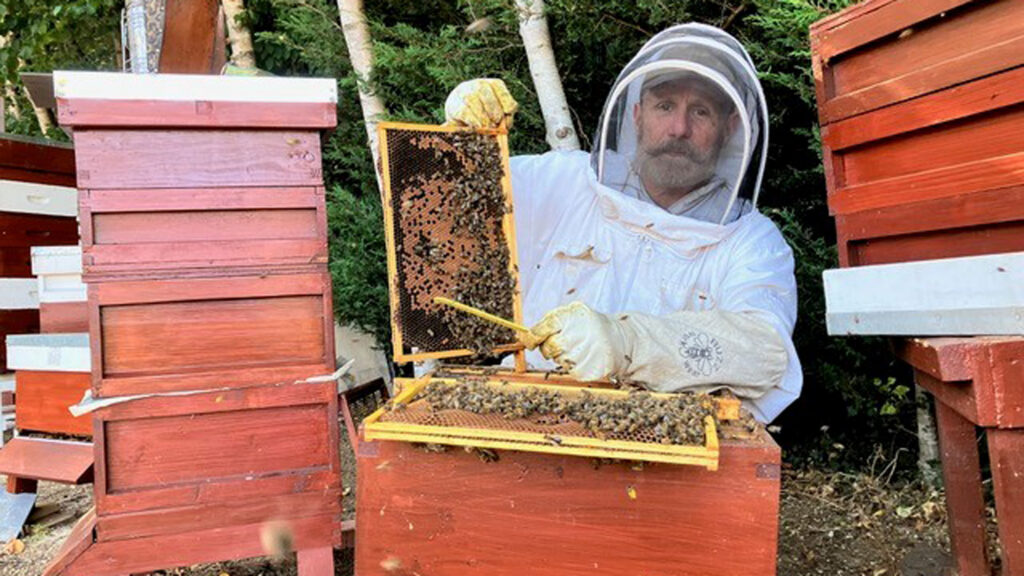 James Hamill © The Hive Honey Company
 The ongoing drought may be taking a toll on arable and livestock farmers across much of the country, but beekeepers are warning of a longer-term impact as their colonies take a drubbing in the heat.
James Hamill is a third-generation beekeeper based in Surrey and founder of The Hive Honey Company.
As well as keeping about 70 hives at his Bee Heaven Farm at Lower Kingswood, he harvests honey from hives within London and at various rural locations, as well as operating a small mobile beehive trailer of his own.
See also: How cluster farmers are delivering for food and nature
“This summer’s drought has put enormous pressure on our bee colonies, which have already been suffering from invasive species and new disease threats,” he says.
“To survive, each hive needs the workers to bring in at least a litre of water a day to keep the queen and larvae hydrated, and as they have to fly further and further to find it, they use more energy and suffer higher mortality.”
Nectar shortage
Mr Hamill explains that heat and ventilation are another challenge, while the drought also means that the flowers the bees do visit contain less pollen and nectar.
“Because of the nectar shortage, we are even seeing bee colonies attacking each other to get hold of the stuff, contributing further to the numbers decline,” he says.
“I normally reckon on their being around 61,000 bees in any one hive, but this has been dropping across all our hives and I’m now seeing populations in the mid-50s.
“They’ve also stopped feeding the queen, which means fewer eggs, fewer larvae and fewer bees. I anticipate we will see more colony collapses over the winter.”
Consequences
The consequence for farmers could be considerable, Mr Hamill predicts.
“Honeybees are the only insects capable of mass pollination in flowering plants in the early spring,” he says.
“Having bees is crucial for crops like oilseed rape, peas and beans, and the whole range of fruit crops. Farmers really do underestimate the importance of beehives and bees to their subsequent harvests.”
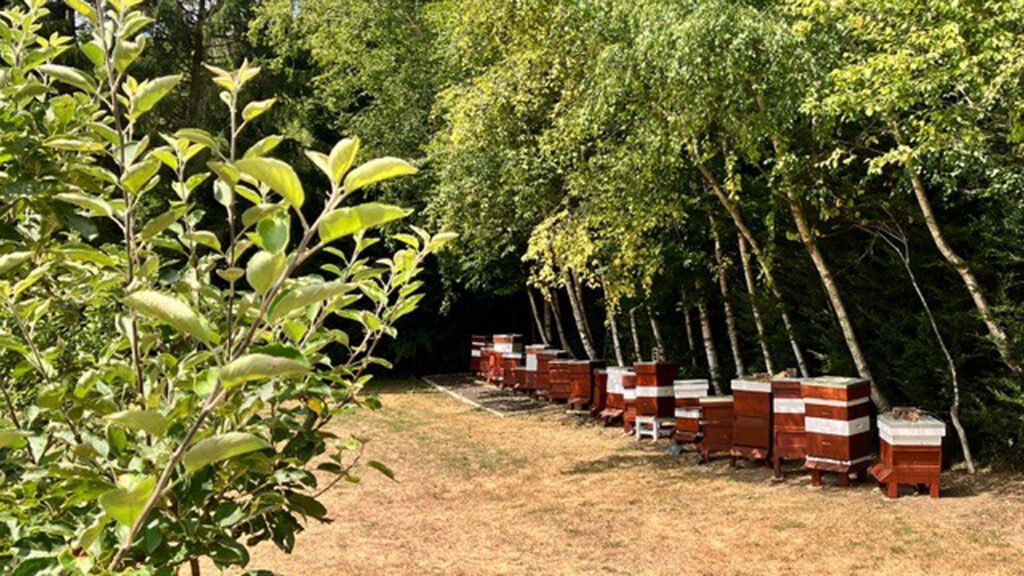
© The Hive Honey Company
To minimise the impact of this year’s drought, Mr Hamill suggests farmers do their bit to ensure water availability for insects generally and bees in particular.
“If you provide a water source, bees will find it. Even an old tyre filled with water can help,” he says.
He also urges farmers not to destroy any wild bee colonies they may come across, but to call in a local beekeeper to see if they can help contain and relocate it.
And come next spring, he suggests more farmers invite beekeepers to place beehives on their farms and in their orchards, to encourage pollination.
“By working together, we can provide a better outcome for both bees and farmers, and help overcome the long-term impact of this summer’s drought,” Mr Hamill suggests.