

Persistent rain threatens crops and farmers’ livelihoods
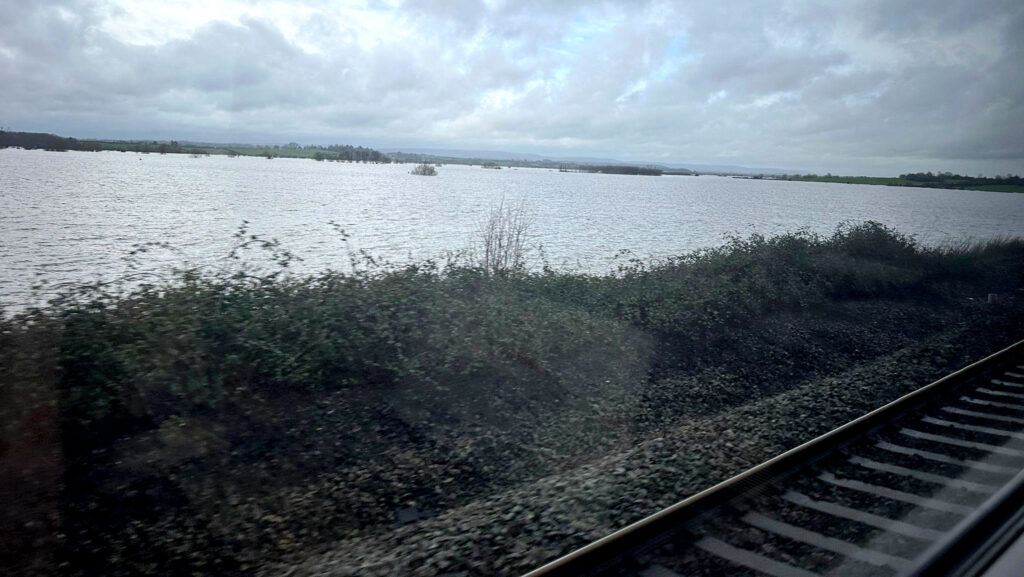 Flooding in Somerset © James Wright
 Farmers are braced for further flooding over the coming days, with no let-up after weeks of heavy rainfall.
Dozens of flood alerts and warnings remain in place in England, according to the Environment Agency.
The Country Land and Business Association (CLA), which represents more than 26,000 farmers and rural businesses, warned of mounting pressures.
See also: UK arable farms lose £828m because of extreme weather
According to Defra-commissioned research, winter floods cost farmers an average of £480/ha, with costs to arable and horticultural businesses two to four times higher.
CLA president Gavin Lane said: “Cereal prices are on the floor and often below the cost of production. Milk prices are no better.
“We face uncertainty about funding for environmental schemes while inheritance tax reforms have forced a collapse in investment.
“After an incredibly dry summer that produced poor yields and no profit, this extended period of heavy rain is the last thing we need.”
Heavy winter rainfall across the UK is causing significant operational challenges and raising concerns about crop yields and land damage.
The Met Office has recorded rain every day so far in 2026 across large parts of the country.
Southern England and Wales have seen up to 50% more rainfall than January averages.
Further north, parts of Aberdeenshire have endured a record-breaking 18-day streak of no sunshine (since 21 January), with prolonged cloud cover compounding the effects of saturated ground and delayed field work on farms.
In the latest Environment Agency update, 114 flood alerts are in place in England.
The Scottish Environment Protection Agency has four flood warnings and two alerts, and Natural Resources Wales has issued seven alerts.
James Wright, a beef and sheep farmer on Exmoor, said: “We have had rainfall every day this month following on from a very wet January.
“It’s sodden and flooding is really impacting parts of Devon and Somerset.
“We have had to buy in another load of straw and slurry pits are topping over the edge.
“But it’s the cereal farmers who are most affected.
“Fields are under water and the roots of crops will be rotten.
“They will only know the extent of the damage once the water recedes,” he added.
Crop diseases
Hamish Evans, head grower at Middle Ground Growers in Bath, Somerset, said vegetable growers were struggling.
“We had 40% more rainfall than on average in January and it’s still raining every day.
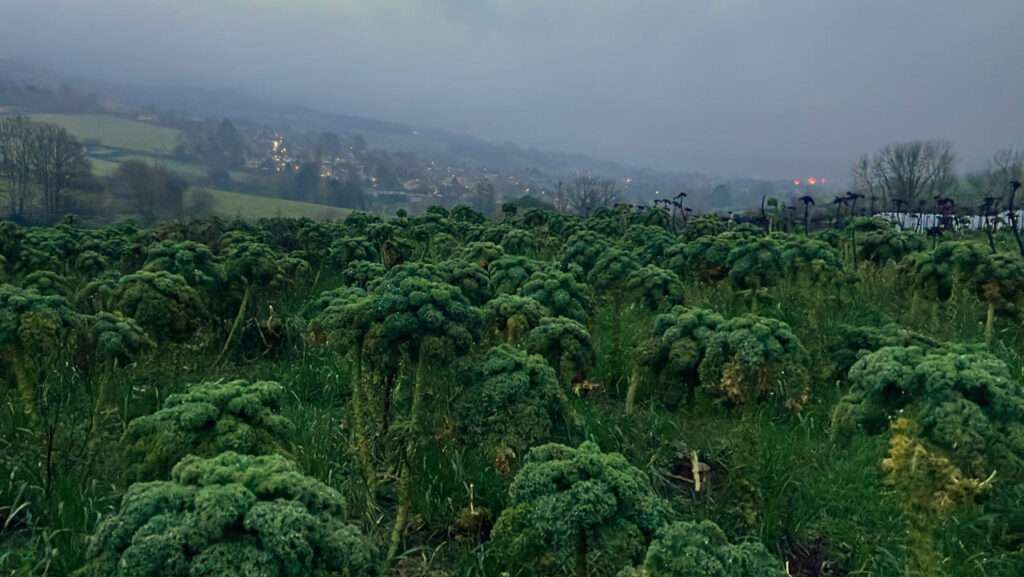
Green curly kale plants suffering from disease © Hamish Evans
“This makes quite a big difference to day-to-day harvesting and picking.
“Also, because we have not had much cold weather, we are getting a lot of disease problems, especially with brassicas.
“Things like clubroot with cauliflowers and viral and fungal diseases with kale.
“A lot of farmers’ fields are totally under water, and neighbouring farms have had to move sheep to the higher fields.”
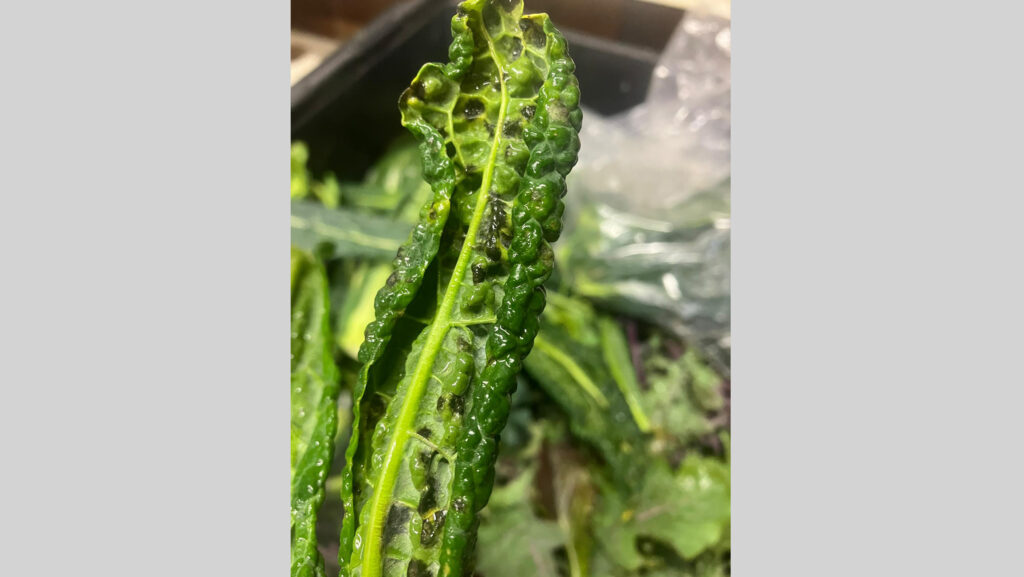
Diseased kale crops © Hamish Evans
Hedgecutting off limits
In Northamptonshire, hedgecutting contractor Bob Rutt described conditions as “horrendous”.
“The Welland Valley just looks like an estuary.
“The closed season for hedgecutting starts at the end of this month, but nothing is being cut because the ground is too wet.
“Many contractors are packing up because there is no future in it,” he said.
The Met Office has forecast an unsettled, cloudly start to the week with heavy rain and strong winds in places, gradually turning colder with brighter, with showery conditions developing towards the end of the week.