

Yara opens lower-carbon fertiliser route to UK
 © Yara International
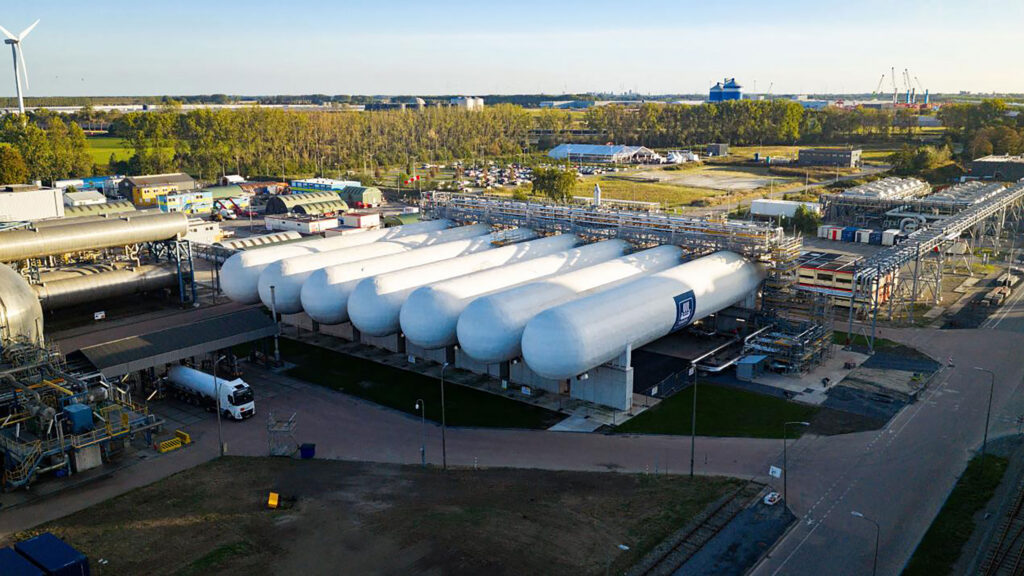
 UK farmers will have access to lower-carbon versions of familiar nitrogen fertilisers following the opening of Europe’s largest carbon capture facility at Yara’s Sluiskil plant in the Netherlands.
The facility can capture and liquefy up to 800,000 tonnes of CO2 a year from ammonia production, with the gas transported to Norway for permanent storage beneath the North Sea.
Mark Tucker, Yara Europe’s senior manager of value chain partnerships, said the project had particular significance for the UK because Sluiskil is a major supplier of fertiliser to British farmers.
See also: Get ahead with fertiliser orders, advise traders
“A whole amount of ammonium nitrate with and without sulphur products, urea as well, are all made at that Sluiskil facility,” he said.
“This effectively means that there’s going to be easy accessibility to these lower-carbon fertilisers coming into the markets and the UK will be one of those destinations.”
The CCS fertilisers have a carbon footprint around 40% lower than Yara’s conventional products, while remaining chemically identical, Mr Tucker explained.
“For a tried-and-tested farmer, they don’t need to worry – do they still spread? Am I going to get the same response? UK farmers can lock into these products knowing that they’re still going to perform as they always have done.”
Products including Yara’s YaraBela nitrogen-sulphur fertiliser and Amidas urea-based fertiliser will be available through existing distribution networks, with NPK products also offered.
Farmers will be required to pay a premium. But Mr Tucker said the additional cost had become “much more affordable” than two or three years ago, with a milling wheat grower needing roughly £4/t of additional crop premium to recover the extra fertiliser cost.
He urged farmers to look beyond the farmgate for ways to recoup that premium through supply-chain sustainability schemes.
‘Recapture value’
“It’s not going to be something where you buy 100% of this low-carbon [fertiliser] because you want to, because it comes at a premium,” he said. “Farmers need to look into and think about where they can recapture some of this value within my supply chain.”
Mr Tucker also warned that the decline of UK ammonia production had increased the country’s reliance on imported ammonia and finished fertiliser, creating “vulnerability” in domestic supply.
He said the longer-term opportunity was for the UK to incentivise green hydrogen production, which could be used to manufacture green ammonia and ultimately fertiliser.
Explore more / Transition
During the series we follow our group of 16 Transition Farmers through the challenges and opportunities as they seek to improve their farm businesses.
Transition is an independent editorial initiative supported by our UK-wide network of partners, who have made it possible to bring you this series.
Visit the Transition content hub to find out more.
