Arable farm management software: The options and prices
 © Adobe Stock
 For years, farm management software has been limited mostly to three options, with Gatekeeper and Greenlight Grower Management (GLGM) – also known colloquially as Muddy Boots – by far the most popular.
Both are now owned by Telus and still available, although GLGM is now known as Telus Farm Management.
Landmark System’s Geofolia has been an established competitor for some time, but other options are emerging – Hutchinsons with its Omnia digital platform; Syngenta’s CropWise Operations; Italian firm xFarm, the choice of Dyson Farming; and Soil Benchmark, which is the latest entrant building on its successful farm management planning software.
Telus, meanwhile, is primarily putting its development focus into a new product Telus Crop Management.
See also: How a data-led approach can manage sub-field costs
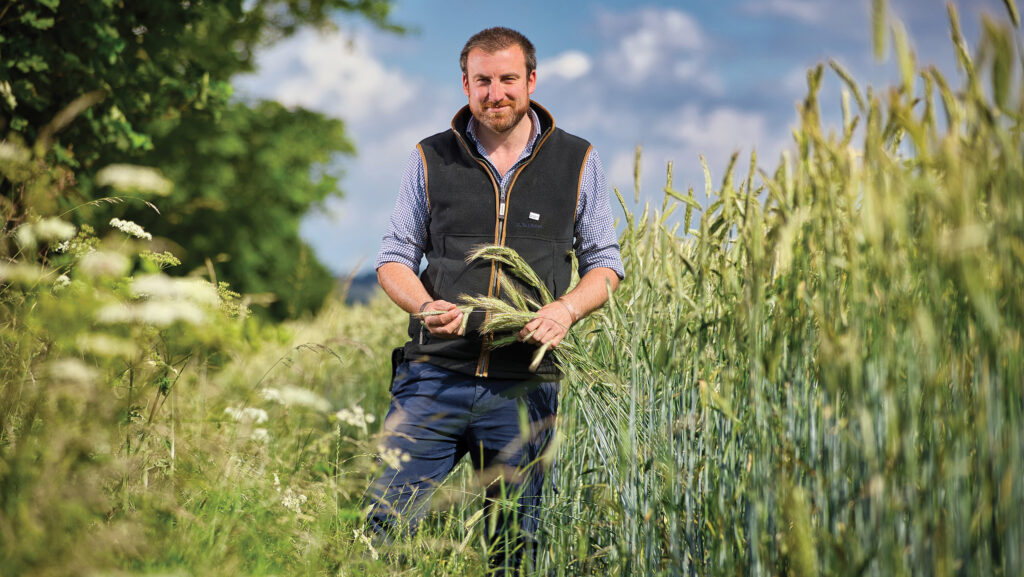
Independent agronomist Kieran Walsh © Richard Stanton
With the help of independent agronomist Kieran Walsh, who has spent a lot of time evaluating farm management software for clients in recent seasons, here’s the Farmers Weekly guide to how these eight options fit the various features required by arable farmers.
While interpreting this information, we have found some of the feature labels are necessarily ambiguous and software providers have approached them in different ways.
This brings nuanced differences to what functionality each system will bring, which is impossible to reflect simply in a comparison table. An example is compliance monitoring.
Virtually all the programs offer a degree of checking whether a pesticide recommendation is legal, for example, and many – although not all – use the same underlying information from Fera’s Liaison database.
However, software providers are increasingly developing the compliance checking modules further to deal with complex situations, including different legal use in Northern Ireland compared with Great Britain, and product specific requirements, such as rolling three-year averages of an active ingredient, explains Telus senior product manager Andrew Wolff.
“The Fera data is not sufficient, so we’re having to do extra indexing to provide greater verifications,” he says.
NVZ compliance
© GNP
Compliance with nitrate vulnerable zone (NVZ) legislation is just as complicated. Grassland in particular is problematic, and some systems are not fully compliant.
Some desired functionality is difficult to achieve in practice, according to Andrew. For example, true integration with accounts packages is challenging, not least because one is set up to deal with financial information first and foremost, while the other is not.
Even removing double entry of invoices, which sounds simple in practice, is not that easy to achieve, not least if an invoice is not sufficiently detailed enough.
For an accounts package, knowing the total spent on herbicides is enough, but for traceability tracked by farm management software you need to know every product in a chemical store, Andrew points out. “Those two worlds don’t always work well together.”
Hutchinsons’ Omnia is one system that claims to have found a way to make it work.
Its soon-to-be-released connection to Xero, with orders for seed, fertilisers or sprays created in Omnia, along with optional references, such as order number or purchase order, supplier and price, explains Omnia services manager Nick Strelczuk.
“This syncs over to Xero as a ‘bill’ to save double-entering data.
“The invoice typically goes into Xero directly and fills in extra info such as invoice number and price, before syncing back with Omnia with the actual price feeding into records of product use,” he says.
“The main point is to cut down on admin and make transactions traceable between the two. Suppliers and products are also matched between systems to ensure accurate info exists in both.”
The old-stagers |
||||
|
Feature/function |
(Telus) Gatekeeper |
Telus Farm Management |
Telus Crop Management |
Geofolia (Landmark) |
|
Cloud/desktop |
Desktop (cloud back-up) |
✅ Cloud |
✅ Cloud |
Hosted |
|
Xero integration |
❌ |
❌ |
❌ (csv export) |
❌ (links to KeyPrime) |
|
Field mapping and boundaries |
✅ |
✅ |
✅ |
✅ |
|
Crop planning and rotations |
✅ |
✅ |
✅ |
✅ |
|
Job/task planning and field records |
✅ |
✅ |
✅ |
✅ |
|
Compliance (sprays) |
✅ (Sentinel) |
✅(ProCheck) |
✅ (CDMS) |
✅ (Agribase) |
|
Compliance – nitrate vulnerable zone (NVZ) rules |
◐ Grassland only up to RB209 v8 |
◐ (No grassland) |
✅ (Scotland regs Q3 2026) |
✅ |
|
Input and stock management |
✅ (Integrate with trading and jobs) |
✅ (Basic and manual) |
✅ (Integrate with trading and jobs except v1*) |
✅ (Direct link to KeyPrime accounts) |
|
Profitability/margins |
✅ |
✅ |
✅ (Best in desktop version) |
✅ |
|
Mobile and offline use |
◐ (Mobile web app rather than cloud syncing) |
✅ |
✅ |
✅ |
|
Team sharing/agronomist link |
◐ (Info viewing differences) |
✅ |
✅ |
✅ |
|
Two-way machinery integration |
◐ (Very slow) |
❌ |
❌ ** (2026) |
❌ |
|
Telematics |
❌ |
❌ |
❌ |
❌ |
|
Precision ag (imagery, VRA, yield) |
◐ (VRA and Yield only; imagery only via import) |
❌ |
❌ |
❌ (Satellite imagery available but precision ag not core strength) |
|
End-to-end traceability and audits |
✅ |
◐ (Lacks some agronomist tools) |
◐ (Not completely end to end) |
✅ |
|
Labour/contractor management |
◐ (Manual) |
✅ |
✅ |
✅ |
|
Carbon/environmental tools |
❌ (But can import data from Cool Farm Toolkit) |
❌ (But can import data from Cool Farm Toolkit) |
❌ (But can import data from Cool Farm Toolkit) |
❌ |
|
Soil/nutrient risk mapping |
✅ |
❌ |
❌ |
❌ |
|
Automatic enviro layers and smart proposals |
❌ |
❌ |
❌ |
❌ |
|
Dedicated soil Sustainable Farming Incentive (SFI) /NVZ/Red Tractor compliance |
◐ (NVZ) |
◐ (NVZ) |
◐ (NVZ and SFI codes) |
◐ (NVZ and Red Tractor) |
| *v1 – there are currently three versions of Telus Crop Management. V1 does not have any stock management, while v2 and v3 are much more akin to the Gatekeeper stock management | ||||
|
Key: ✅ = Included/native ◐ = Partial ❌ = Not available ** = Planned developments |
||||
The newcomers |
||||
|
Feature/function |
Cropwise Operations (Syngenta) |
Hutchinsons’ Omnia |
xFarm |
Soil Benchmark** |
|
Cloud/desktop |
✅ Cloud (web/app) |
✅ Cloud (web/app) |
✅ Cloud (web/app) |
✅ Cloud (web) |
|
Xero integration |
◐ |
✅ (API)** |
◐ (CSV export)** |
◐ (CSV export)** |
|
Field mapping and boundaries |
✅ |
✅ |
✅ |
✅ |
|
Crop planning and rotations |
✅ |
✅ |
✅ (Advanced) |
✅ ** |
|
Job/task planning and field records |
✅ |
✅ |
✅ |
✅ ** |
|
Compliance (sprays) |
✅ (Homologa) |
✅ (Halo) |
✅ (Homologa) |
✅ ** |
|
Compliance (NVZ audit) |
❌ |
✅ |
✅ (From January) |
✅ |
|
Input and stock management |
◐ (input use recording only) |
✅ |
✅ (Advanced) |
◐** |
|
Profitability/margins |
◐ (input efficiency metrics) |
✅ |
✅ |
◐ ** |
|
Mobile and offline use |
✅ |
✅ |
✅ (No offline until 2026) |
❌ ** |
|
Team sharing/agronomist link |
✅ |
✅ |
✅ |
✅ ** |
|
Two-way machinery integration |
✅ |
✅ |
✅ |
❌ ** |
|
Telematics |
✅ |
✅ |
✅ |
❌ |
|
Precision ag (imagery, VRA, yield) |
✅ (Advanced imagery) |
✅ |
✅ |
◐ ** |
|
End-to-end traceability and audits |
**(2026) |
✅ |
✅ |
✅ |
|
Labour/contractor management |
◐ (Sets contractor tasks) |
✅ |
✅ |
◐ (Through user sharing) |
|
Carbon/environmental tools |
**(2026) |
✅ |
✅ |
❌ (Export to carbon calculators) |
|
Soil/nutrient risk mapping |
◐ (Some soil mapping, but not nutrition) |
✅ |
❌ |
✅ |
|
Automatic enviro layers and smart proposals |
◐ |
❌ |
❌ |
✅ |
|
Dedicated soil/SFI/NVZ/Red Tractor compliance |
❌ |
✅ |
◐ (NVZ) |
✅ |
|
Key: ✅ = Included/native ◐ = Partial ❌ = Not available ** = Planned developments |
||||
Latest updates
The Telus offers
All three Telus offers remain available, although only Telus Crop Management is actively being developed.
Gatekeeper, built on 20-year-old architecture, is feature-rich but is clunky to use. The two newer options are built on better infrastructure, but lack some feature capability.
Ultimately, the company aims to have virtually the same feature parity between the new and older versions, with plans to migrate existing users of Gatekeeper and Telus Farm Management – along with up to 10 years’ data – to its new offer once achieved.
That’s already started with the simplest farm businesses in 2025 – with those, for example, needing equivalent pesticide compliance checks to Gatekeeper migrating from early 2026, and the most complex businesses migrating by mid-2026.
The Telus offers are designed to optimise and manage workflow and traceability – connecting what is planned, to what was actually done – in contrast to some other options that focus more on spatial optimisation and use a map-centric approach.
A key focus is on building enhanced verifications for pesticide and fertiliser use, conduct a major overhaul of its stock management functions, and create connections that will allow farmers to push data to others in the agricultural supply chain, if so desired.
Recognising that spatial functionality needs to be improved, Telus is also planning to leverage the functionality within other suitable global assets, such as Telus Agronomy, for use in Telus Crop Management.
Landmark Geofolia
An established option, Landmark System’s Geofolia is map-based rather than one built on a database system such as Gatekeeper. That makes it visually more appealing and easier to use, according to the firm.
It’s able to produce accurate gross margins for costs of production, giving users the ability to preview costs to help with decision-making. Its stock management system runs on a first-in, first-out system.
Landmark System’s parent company French firm Isagri acquired Sencrop, best known for its weather stations, in early 2025.
This is providing an opportunity to link Geofolia with that technology. Landmark has also just released Pear Farmer, which will help farmers carry out their own agronomy to the same level as the existing agronomy package.
Most data entry can be made through a mobile app. Support is provided by a dedicated team based in the UK.
Hutchinsons’ Omnia
Hutchinsons upgraded its digital farming offer, Omnia, to become a fully featured farm management system in 2024.
Again, it is map-based, but there’s little doubt that it is a slick piece of software offering most functionality that any farm business would be looking for in a farm management system.
That includes a bespoke pesticide audit approach, where data from Fera’s Liaison is updated daily rather than weekly and then enhanced to make automated auditing much easier.
There’s neat functionality that helps improve the connection between field and office for when jobs are created and completed.
The stock management module helps growers manage stock from delivery through to application, with automation particularly strong when buying from Hutchinsons.
Omnia has a mobile app that can be used offline, aiming at completing tasks and logging records in the field. Support is provided by local digital specialists and a central UK support team.
But all that comes at a cost that pushes it towards the top of the list. Prices start at £6/ha for a subscription to all features, reducing on a sliding scale past 300ha. The lower tier Field Manager level starts at £3.15/ha.
Users will have to consider their attitude to using a platform from an input supplier, even if Hutchinsons stress farmers control what data others can access, and have signed up to the industry’s Farm Data Principles that govern data use, safety, sharing and security.
Cropwise Operations
Originally developed for use on large-scale farms in Ukraine and Russia, Syngenta’s Cropwise Operations is used on more than 50m hectares globally.
It offers a suite of crop production workflow tools, such as agronomic predictive models, precision ag functionality including excellent satellite imagery, and artificial intelligence (AI) driven planning optimisation.
These features help growers analyse and compare end-to-end crop growing by tracking agronomic indicators, such as crop growth, soil, weather and productivity, and some economic factors such as fuel use and labour requirements.
But there are some uncertainties. First, a partnership with integrated software solution firm FMEC to sell the platform in the UK ended in December 2025.
Syngenta says a new offer with increased support for growers and agronomists will be advertised soon.
Like some of the other providers, users have to decide on their willingness to share anonymised data with a multinational organisation.
Syngenta stresses the data is explicitly owned by the grower and a strict data confidentiality policy follows General Data Protection Regulation laws.
However, the firm says it will use anonymised, aggregated data to help develop and improve farm management system models and algorithms that benefit users, such as better AI machine planning.
As a global software, there are also some potential weaknesses in UK compliance to check.
It uses a global database, Homologa, which is updated monthly to provide warnings when rates or applications are exceeded, but does not include nutrient compliance.
xFarm
A partnership to digitalise Dyson Farming’s operation marked Swiss firm xFarm Technologies first foray into the UK farm management system market in late 2024.
The firm is hoping to expand its xFarm app’s use to 700,000ha over the next three years.
As with other newcomers, the platform is continuing to develop with major UK-specific functionality improvements due to be launched in time for use in autumn 2026.
These include NVZ compliance, soil mapping for variable rate applications, tools to help manage (non-)spraying of buffer zones, and being able to build crop plans with crop estimates to optimise budgets.
A core strength, albeit at extra cost, is its fleet management capabilities with the ability to connect with more than 50 machinery brands to help keep records organised centrally, and track maintenance operations.
The app also allows users to easily exchange maps and tasks through direct connections with in-cab monitors.
Like a couple of other options, the downside is that some of this functionality is not available immediately, and while the app looks promising and the company has grown rapidly in other countries, its product is yet to be fully tested in the UK.
Soil Benchmark
The newest of newcomers, Soil Benchmark started by building a platform to support soil management on farms.
This quickly expanded into offering manure and nutrient management plans that cover both arable and grassland requirements. The tool is now used across 1.2m hectares, according to its makers.
Next on its list of developments was its crop recommendation product, which went live at the end of 2025 – with a list of features to be added or improved over this year.
These include an offline companion app for viewing plans and recording applications in the field, improved reporting and analysis, and allowing users to work with more complex cropping, such as companion and cover crops.
Enhanced precision ag capabilities to allow growers to automate variable rate applications using normalized difference vegetation index (NDVI) or yield maps, and allow users to use more detailed sub-zones, is a target for early 2026.
While the product does not have the full range of features as its competitors, its track record so far suggests it is responsive to requests, able to deliver, and builds extremely usable products.
Its aim is to have a robust solution for agronomists to generate plans for autumn 2026.
A more comprehensive grower version will likely take more longer, so it is likely to be 2027 before the product is a true competitor for some of the more established options.
Kieran Walsh’s one-line summary and value for money ratings
Gatekeeper
- Benefits: Sentinel compliance and detailed
- Drawbacks: Outdated, not cloud based & time-consuming
- Value for money rating: ★★★
Telus Farm Management
- Benefits: Quick and simple to use
- Drawbacks: Lacks some detail, especially mapping
- Value for money rating: ★★★★★
Telus Crop Management
- Benefits: Future offering looks exciting
- Drawbacks: Too basic to be Gatekeeper replacement?
- Value for money rating: ★ (on current; future iteration to come)
Geofolia
- Benefits: Does exactly what you would expect
- Drawbacks: In danger of being overtaken by others
- Value for money rating: ★★★★
Omnia
- Benefits: Very slick cloud-based tool. Good on compliance, NVZs etc.
- Drawbacks: Stock management best if a Hutchinsons customer. Expensive
- Value for money rating: ★★
xFarm
- Benefits: Cloud-based, end-to-end with lots of modern functionality
- Drawbacks: Early stage, needs further UK testing and RB209 alignment. Looks promising
- Value for money rating: ★★★★
Cropwise
- Benefits: Cloud-based, transparent crop recording and scouting. Excellent precision variable rate planning
- Drawbacks: Focused on global ag, not UK specific
- Value for money rating: ★★★★
Soil Benchmark
- Benefits: Independent UK run system. Usability so far is top notch
- Drawbacks: Still being developed so unproven, but company has demonstrated success. One to keep an eye on
- Value for money rating: ★★★★ (when developed)
Pricing structure |
||||
|
System |
Pricing structure |
Cost for 100ha |
Cost for 400ha |
Cost for 1,000ha |
|
Gatekeeper |
One-off purchase price starting at £1700 + annual support model (£305/year) |
£1,700 one-off cost + £305/year support |
Approx £3,000 one-off cost for version with precision farming and mapping + £1,000/year support |
Approx £3,000 one-off cost + £1,000/year support |
|
Telus Farm Management |
Four levels: Standard, Professional, Enterprise, Premium – covering different functionality with area banding, plus costs for additional users and contractors |
£465/year for Professional |
£465/year for Professional |
£465/year for Professional with 1,000ha as area limit (£635/year for Enterprise) |
|
Telus Crop Management |
Complicated. Four levels: Standard, Advanced, and eventually Premium and Enterprise covering different functionality. Also area banding of up to 250ha, 500ha, 1,000ha, 2,500ha and over, plus costs for additional users |
£550/year for Advanced (includes stock management) |
£620/year for Advanced |
£1,050/year for Advanced |
|
Landmark Geofolia |
Single upfront cost based on area banding. Additional annual charges for support based on requirements |
£795 one-off cost (includes two mobile app users) + (£) annual support |
£1,375 one-off cost (includes two mobile app users) + (£) annual support |
£1,985 one-off cost (includes two mobile app users) + (£) annual support |
|
Omnia |
Starts at £6/ha a year (full system); £3.15/ha for Field Manager, with area banding for farms over 300ha |
£600/year (£315/year for Field Manager) |
£2,325/year (£1,210/year for Field Manager) |
£4,875/year (£2,510/year for Field Manager) |
|
xFarm |
Flat fee of £950 up to 300ha Additional hectares charged at: £3/ha (0-500ha) £2.50ha (500-1,500ha) £2/ha (1,500ha+) |
£950/year* |
£1,250/year* |
£2,700/year* |
|
Soil Benchmark |
Flat fee: £500/user, includes basic nutrient management. £200/farm additional charge for detailed NVZ reports including spreading maps, and SFI soil management plans |
£500-£900/year** |
£500-£900/year** |
£500-£900/year** |
|
Landmark Geofolia |
Single upfront cost based on area banding. Additional annual charges for support |
n/a |
n/a |
n/a |
|
Cropwise |
Pricing structure under review. Prices shown are on a full system per ha basis |
£425/year (£4.25/ha) |
£1,700/year (£4.25/ha) |
£3,750/year (£3.75/ha) |
|
Notes: * = Machinery connections: additional charges of £100 for one machine, £400 for five to 10 connections, £1,000 for unlimited connections. ** = Cost for Crop Recommendations module is per user. Soil and NVZ plans are per farm |
||||