

Advertiser content
Black-grass: striking the balance between risk and reward
Decision-making on farm is often about balancing cost, risk and reward. With black-grass, however, the medium- and long-term costs can be hard to see. Seed return gets buried and yield loss can be difficult to pinpoint.
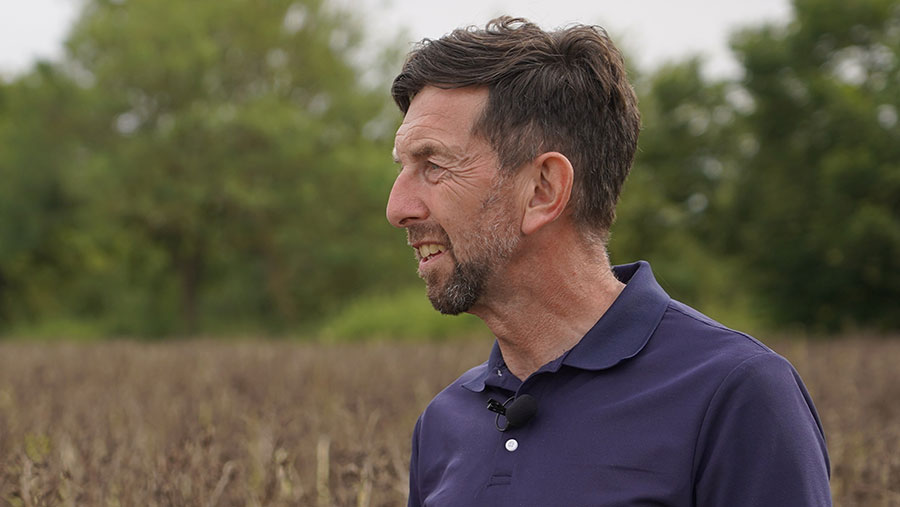
Pat Thornton © BASF
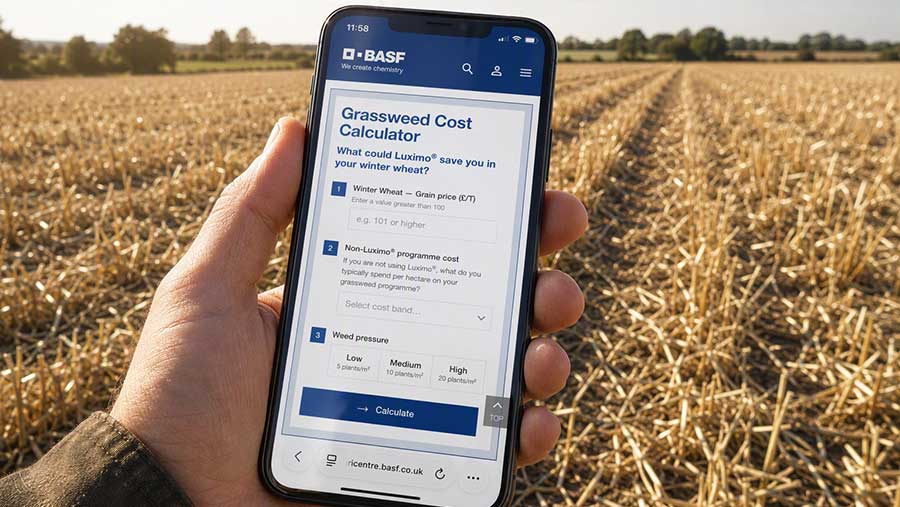
To help bring these less visible costs to light, BASF has launched a free tool – the Grassweed Cost Calculator.
Based on a model using data from its own and independent trials, it shows how herbicide spend influences black-grass control, the cost implications from yield loss and the potential seed return.
Here, BASF’s Business Development Manager, Stuart Kevis, uses the underlying model to show how one grower’s decisions are affecting his bottom line.
“When it comes to grassweeds, even doing nothing will cost money. Black-grass and ryegrass both have huge potential to rob yield,” says Stuart. Just 5 black-grass plants per m2 can reduce your yield by 5%.
The question, he says, is when you’re deciding your herbicide programme, are you taking into consideration lost yield and seed return, or is the decision made on the cost of herbicide alone?
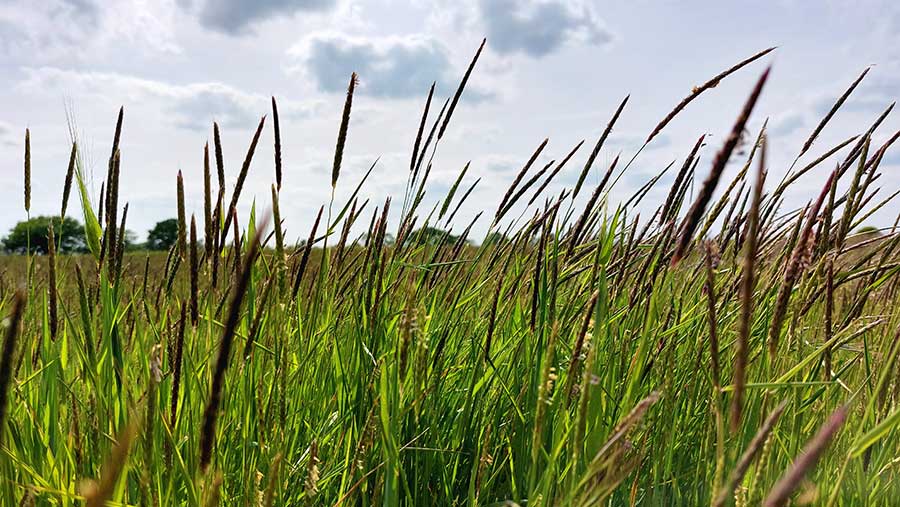
© BASF
Maintaining the pressure pre-emergence on black-grass
Pat Thornton farms 140ha in the Trent valley in North Lincolnshire.
“Historically, black-grass pressure on this farm was really high,” he says. “Like everyone else we have had to change the rotation, implement cultural controls and invest in chemistry.”
Being on heavier land, Pat finds it hard to resist the opportunity to drill wheat crops when the opportunity presents itself.
“Early harvest in 2025 put temptation in the way and we started sowing wheat on 1st October – ten days earlier than usual. September drilling used to be usual here and I hate missing the chance of dry weather to get crops established, but in the back of my mind I know I can’t risk going that early.”
Last year didn’t quite go to plan for Pat. Having drilled all his winter crops and got his pre-emergence herbicides applied, he had an accident which put him out of action for weeks.
“Given the weather and the fact that we didn’t get the peri/post emergence on, it was a good test for our pre-emergence application of Luximo + Stomp Aqua and I’ve no complaints,” he says.
Looking ahead, Pat describes Luximo® as the mainstay of programmes.
“It’s become the backbone, like flufenacet used to be,” he says.
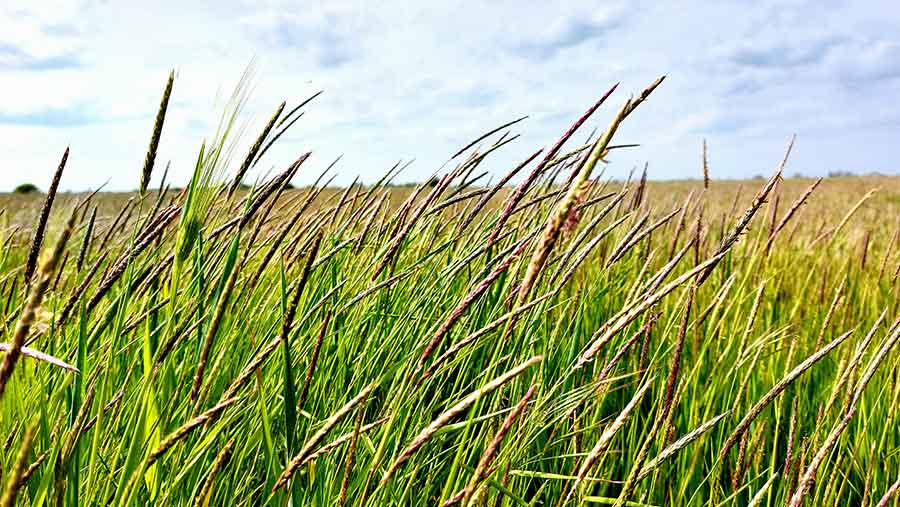
© BASF
Although the black-grass pressure Pat faces is ‘more manageable’, he defends his choice to maintain a strategy designed to tackle the high pressure he had in the past.
“I wouldn’t fall back to a ‘moderate’ or ‘low’ pressure approach to black-grass control because I see a return on investment on what I’m doing. I wouldn’t fool myself into thinking that the problem has gone away, it wouldn’t take long for populations to bounce back,” he says.
Assessing the true cost of black-grass
Using the model that underpins the Grassweed Cost Calculator, Stuart assesses the true value of Pat’s herbicide choices.
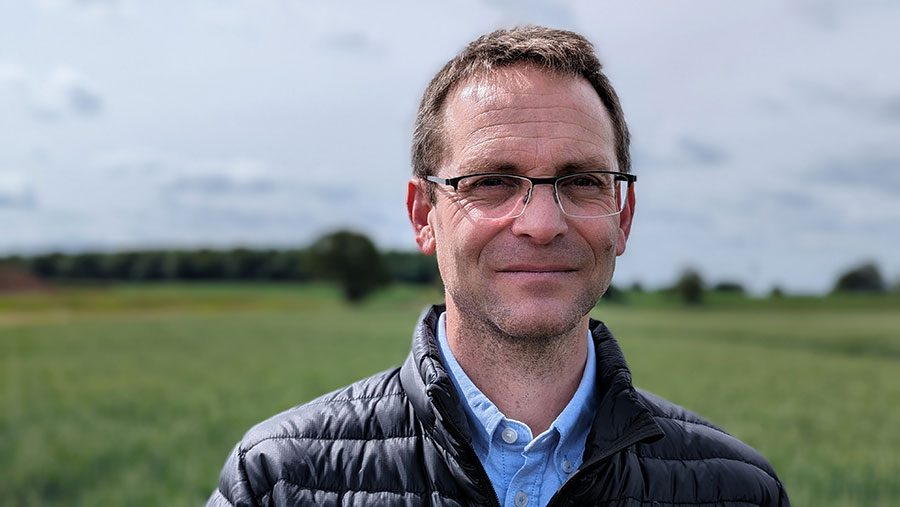
BASF’s Business Development Manager, Stuart Kevis © BASF
“Assuming Pat continues with first and second wheats and there are 5 black-grass plants/m2, an alternative programme such as flufenacet + diflufenican + aclonifen, is likely to offer 73% control. That means 27% of the black-grass is not controlled.
“If the crop is expected to yield 9t/ha, at £170/t that will cost, in total, £284.30t/ha. 73% of that is through lost yield. There’s also the high seed return to consider. 7,371 seeds will be added to the seed bank,” he explains.
“Luxinum® Plus + Stomp® Aqua + diflufenican, on the other hand, offers around 86% control and will cost £205.06/ha in loss yield and herbicide spend. That’s a saving of nearly £80/ha versus the comparison programme above, and is achieved largely through the preservation of yield.”
“He’ll also have far fewer black-grass seedlings to deal with in future years, as the seed return is also lower at 2,184 seeds/m2,” explains Stuart.
“It’s about knowing the true value of our actions,” reflects Pat.
Fundamentals of weed control matter
“I’m looking for that one percent gain in everything that I’m doing, whether it is trying to reduce fuel consumption or optimise my herbicide programme. It is important to keep asking ‘why?’ and understand the fundamentals,” says Pat.
It is a point that ADAS’ weed expert, John Cussans, has stressed for many years.

John Cussans © BASF
“Despite the challenging reality of farming today – the financial pressure, the extreme weather, the geopolitical landscape – the fundamentals of weed management haven’t changed,” he says.
John is currently reminding growers of the advantages of delayed drilling – a 66% reduction in seedlings for every month sowing is delayed – and is advising those with dry conditions to refrain from cultivating dry land post-harvest.
“Black-grass is not adapted for these hot and dry conditions. Left on the soil surface, seed will naturally die off or be predated on,” he says.
“It is important to give it time,” agrees Pat, who is waiting to see whether rain will come and allow him to re-introduce oilseed rape into his rotation.
“SFI options are on the table too, but I worry about their impacts on black-grass control, particularly the burden they leave behind. It comes back to that assessment of the ‘true cost’ of our decisions,” he says.
Assess the true cost of black-grass on your farm
BASF’s Grassweed Cost Calculator is a free and easy tool to use.
© BASF
Just enter your anticipated grain price, herbicide programme spend and black-grass pressure, and the calculator will reveal the impact of your grassweeds – combining lost yield, crop protection cost and future seed return – so your decisions are driven by data.
Assess the true cost of your black-grass.
Provided by
BASF offers renowned and innovative fungicides, herbicides, insecticides and growth regulators for agriculture. Our products and services help farmers increase their yields and optimize the quality of their products.