

Advertiser content
Clean stems key to unlocking oilseed rape yield
Harvest 2025 delivered on average 3.76t/ha – nearly one tonne more than the previous year.
Combined with favourable summer prices and oil bonuses, oilseed rape became one of the most profitable break crops of 2025.
This renewed profitability has driven an increase in planted area for harvest 2026, as farmers recognise both the financial returns and rotational benefits oilseed rape can deliver.
Confidence continues to build, with crops showing strong potential, prices currently above last summer levels (excluding oil bonuses), and average yield potential around 4t/ha.
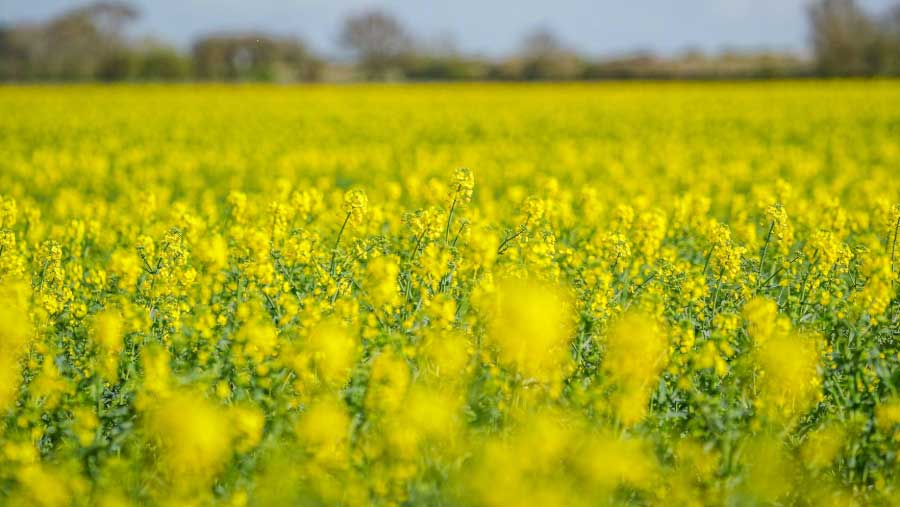
Field of Oilseed Rape © Limagrain UK Ltd
As a result, oilseed rape is once again positioned as a leading break crop, and potentially the most profitable crop in the rotation for 2026.
But how can farmers ensure the potential of the crops already in the ground is fully realised?
Keeping the crop well fed and, crucially, clean from disease is essential to converting that potential into harvestable yield. Management of the oilseed rape crop should not be overlooked.
Across all major diseases, one principle stands out: clean leaves and clean stems underpin yield, oil content and harvest resilience.
A crop with cleaner stems free from stem-based diseases is key.
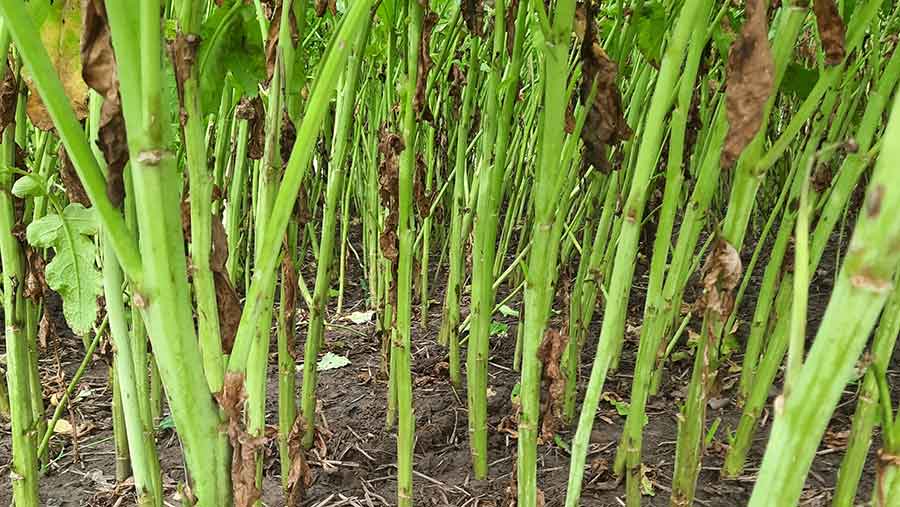
Clean Oilseed Rape Stems © Limagrain UK Ltd
Managing stem and leaf diseases to protect yield
Phoma stem canker is a damaging oilseed rape disease, which normally starts after a wet autumn.
Initial symptoms include lesions on the leaves and, if left untreated, can spread to the stems, causing cankers, which can then lead to premature lodging and ripening.
Left unchecked, this disease can quietly strip yield potential.
The disease can be kept in check with fungicide applications, but also by choosing varieties with good resistance to phoma stem canker, and strong autumn biomass to build a resilient canopy.
Light leaf spot (LLS) is one of the most damaging diseases for an oilseed rape crop. It is a polycyclic disease, which means reinfection can occur multiple times during the season if conditions are favourable.
Initial symptoms appear on the leaves; however, it is stem and pod infection that poses the greatest risk to yield and oil content.
This disease can be managed through cultural control methods such as cultivation of oilseed rape stubbles, later drilling, and maintaining sufficient breaks between brassica crops, as well as through fungicide use.
However, some LLS strains are now showing reduced sensitivity to certain fungicides, increasing the importance of varietal resistance when building a disease management strategy.
Verticillium stem stripe is a disease that is becoming more common, especially in the East.
Spores can survive on plant debris in the soil for prolonged periods, meaning infection can occur early through the roots at the seedling stage.
It is often difficult to spot, particularly where other stem-based diseases are present.
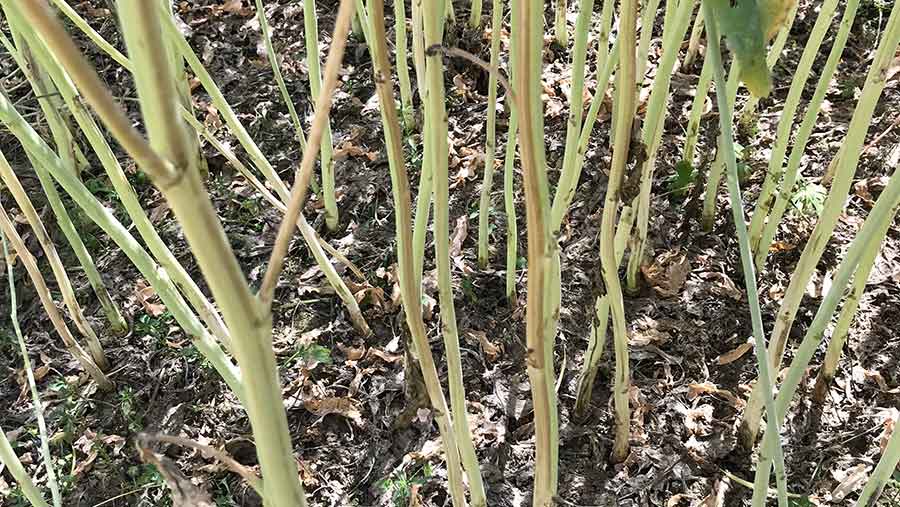
Verticillium Stem Disease © Limagrain UK Ltd
Symptoms generally appear as the crop is ripening, with the most recognisable sign being grey discoloration in stripes along the stem. This can lead to lodging, poorer pod fill and, ultimately, yield loss.
With no chemical control available, infected plant debris can also contribute to longer-term soil infection. Varieties with tolerance are therefore the best option where verticillium is a known risk.
Protecting crops at flowering
The current situation across the country is that oilseed rape crops have established well and are now at mid-flowering.
Most growers have already applied fungicides and fertiliser and are preparing to apply sclerotinia sprays.
Sclerotinia stem rot is the main disease threat at flowering, particularly in warm, humid conditions.
It is a soil-borne disease that can affect the whole plant, starting with leaf lesions before moving into the stem, where lesions increase in size, weakening stems and leading to premature ripening.
At flowering, the crop is at peak risk of Sclerotinia infection if conditions are favourable.
Fungicide timing is critical, with application recommended at growth stage 65, when 50% of flowers are open and older petals begin to fall.
Even in the absence of visible disease, a well-timed flowering spray can help prolong canopy greening and protect yield, making it a key input at this stage.
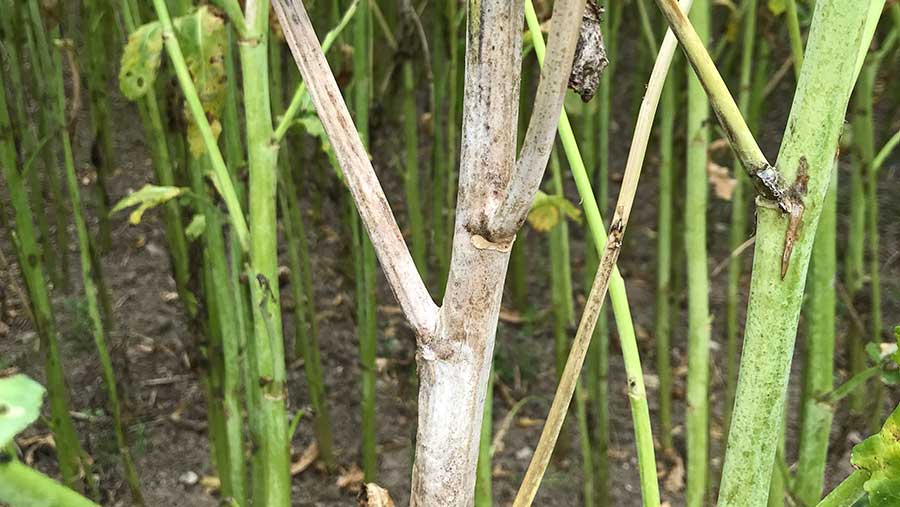
Sclerotinia Infection @ Limagrain UK Ltd
Building stem health through varietal choice
Choosing varieties with strong resistance to Phoma stem canker, good LLS resistance and tolerance to verticillium is key to protecting yield potential.
LG varieties carrying the LG ‘Stem Health’ trait offer growers added reassurance when it comes to managing these complex stem-based diseases.
The ‘Stem Health’ badge is awarded to LG varieties following multi-year assessment across Limagrain’s extensive oilseed rape development trial network in the UK and Europe.
The badge is reserved for varieties that demonstrate resistance or tolerance to all three major stem-based oilseed rape diseases: phoma stem canker, LLS and verticillium.
Testing includes both new material and commercially available varieties, particularly in high-risk areas.
In the UK, LLS resistance is assessed in Scottish trials where infection pressure is consistently high, while verticillium tolerance is tested in Suffolk.
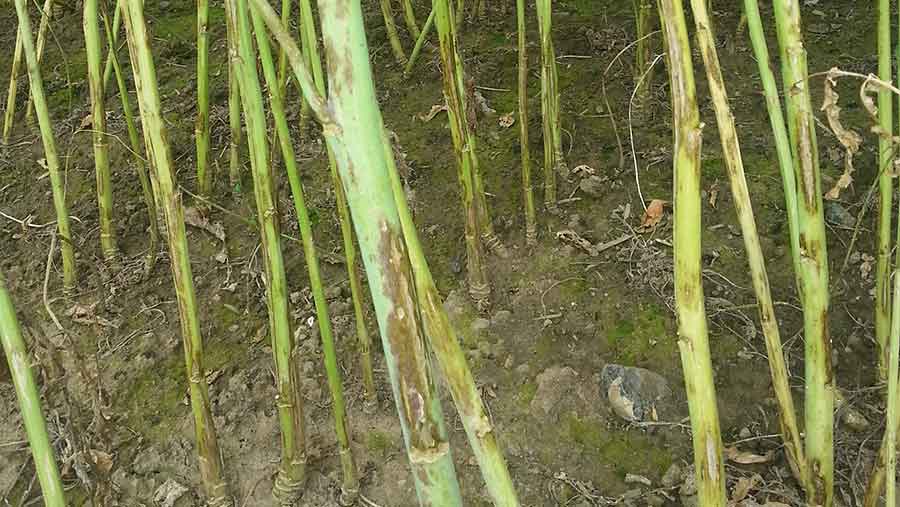
Light Leaf Spot @ Limagrain UK Ltd
In addition, Limagrain’s oilseed rape portfolio offers growers the option to select varieties with sclerotinia tolerance. This is measured through multi-year assessments looking at both disease incidence and severity.
Varieties that combine low levels of infection with milder symptom expression demonstrate a stronger overall tolerance to the disease.
Clean crops convert potential into profit
Combining strong disease-resistant genetics with a robust fungicide programme helps deliver cleaner crops.
Clean leaves and stems support more effective photosynthesis, improving pod set and pod fill, increasing oil content and ultimately driving higher yields.
By keeping oilseed rape crops clean and well fed throughout the season, particularly during flowering and pod fill, growers can turn a high-potential crop into a profitable harvest.
Provided by
Farmer‑owned global seed specialist delivering high‑performing, reliable crop varieties and expert support, combining UK breeding excellence with worldwide research to help farmers grow profitably and sustainably.