What farmers can do to minimise rising alternaria threat in potato crops
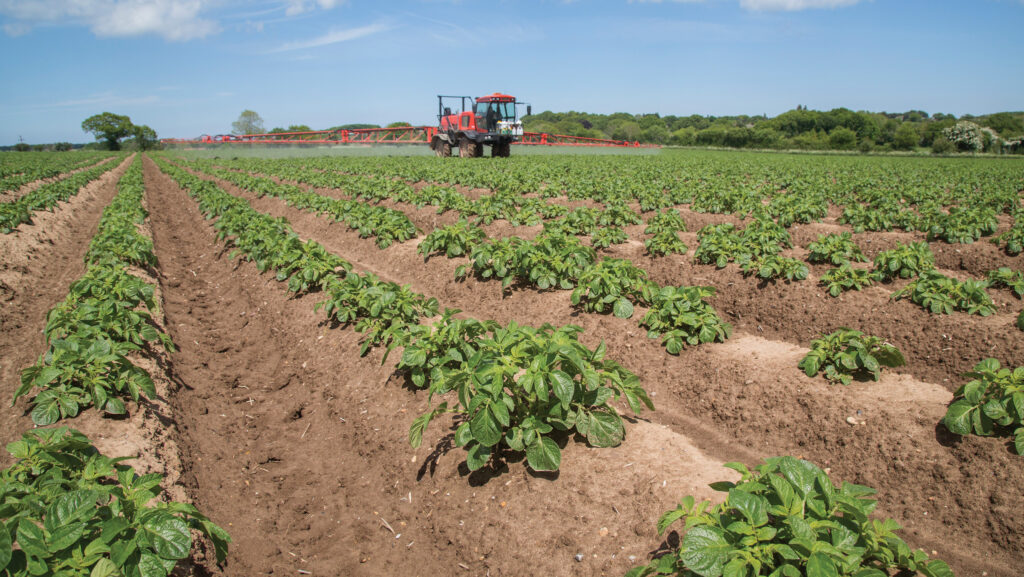 © GNP
© GNP A combination of factors is thought to be behind the rise in alternaria in the key potato-growing region, covering Shropshire, Cheshire and into Lancashire, over the past three to four seasons.
However, there are a number measures growers can take to minimise the risk of the disease, which if left unchecked can result in yield losses of up to 20-50%.
Cheshire-based Procam potato agronomist Philip Garton-Pope believes that mancozeb use in late blight programmes was camouflaging suboptimal crop nutrition, due to being a source of manganese and zinc.
See also: Advice on effective late blight control in potatoes
“In trials you could always pick out plots treated with the fungicide. It had a greening effect, especially earlier in the season,” he says.
Reasons for increase
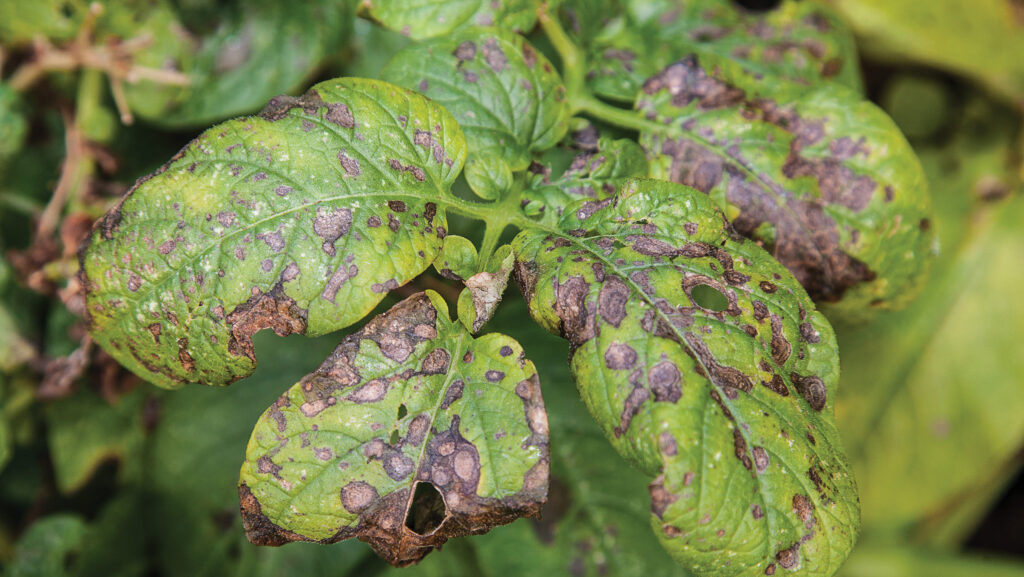
Alternaria on potato leaves © Blackthorn Arable
Alternaria – also known as early blight – is a stress-related disease. In some cases, mancozeb was providing micronutrients to crops and reducing stress, explains Philip. It had a combined effect, so not just a fungicide.
A potato crop reaches peak nitrogen requirements 45-50 days after emergence, so you want crops to be flying at this early stage. “You don’t want any nutrient shortages in this period.”
While alternaria has always been an issue in processing varieties, such as Markies, which are widely grown in the North West, it hasn’t really been a problem.
But in the past three to four years it has increased, which he believes is due to the greater extremes in weather-stressing plants.
Recent seasons have seen more stress events such as drought and periods of hot weather. Poor weather has also forced farmers to plant in more difficult conditions, putting plants under more stress.
“The safety net of macozeb has been removed, resulting in more alternaria creeping into these crops.”
He also believes rotations are a factor with the increase in maize growing. Nightshade is a weed that can be found in local maize crops, which is a host for the disease.
Maize is often grown within two to three years of potatoes in the rotation.
Risk management
So how do growers manage the alternaria risk in the absence of mancozeb?
Philip believes the focus is on early nutrition, and he adds foliar manganese and zinc in early blight sprays to minimise stress – especially if there are weather events forecast that will lead to stressed crops.
For example, if the forecast shows two weeks of hot weather, he will also apply a biostimulant alongside, and even a bit of nitrogen to keep plants as stress-free as possible.
In terms of biostimulants, Philip has seen good success with zinc/nitrogen complex products. Pidolic acid can also be useful, being anti-stress, plus an auxin promoter such as Talisman, which also contains foliar nutrients.
Sporadic irrigation
Another risk factor to take into account is the sporadic irrigation in the North West.
It is a precious resource, with only about 20% of crops receiving some form of irrigation, often on a ad hoc basis. Crops can end up getting a slug of water and this can cause stress.
“That’s why you can see the disease after irrigation. So you have to plan irrigation, nutrition and fungicide sprays all at the same time.”
Fungicides
Over the past few years, farmers have increasingly introduced alternaria sprays into their blight programmes, especially where irrigated.
As it’s not the big risk as seen in other areas of the UK, and with less focus on skin quality being destined for processing, he says difenoconazole will suffice.
This is combined with the second and fourth blight sprays, and he then assesses if any further treatments are needed.
Reasons for increased alternaria
- Weather – seeing more stress from drought/heat/difficult planting conditions
- Loss of mancozeb – this season is the first without mancozeb, with sales ceasing at the end November 2024 with a 12-month use up period
- Varieties – some newer ones are more susceptible
- More maize (nightshade weeds in the crop are host) in rotations