Drought conditions drive farming change in central Europe
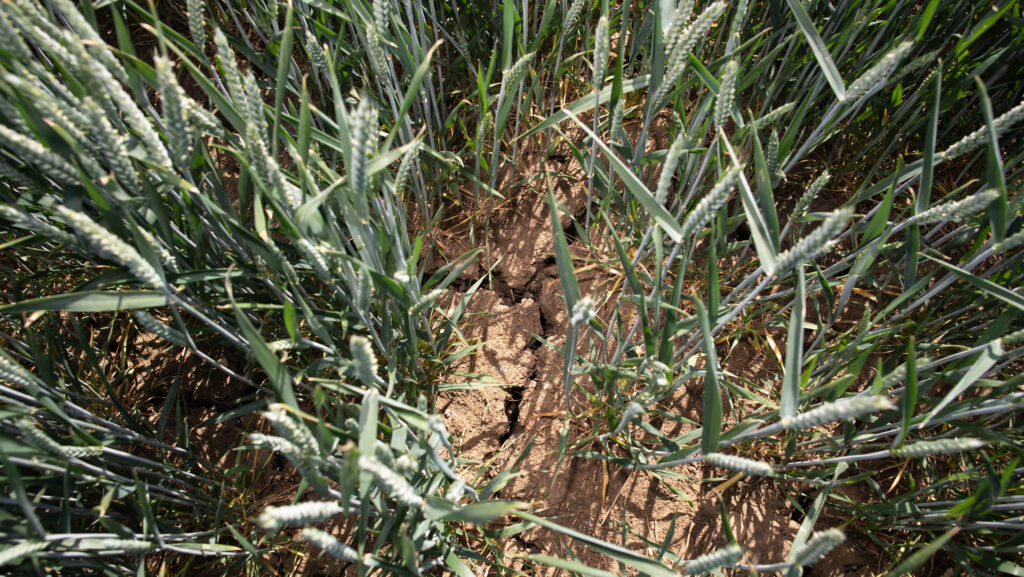 © Tim Scrivener
 Growing crops in drought conditions in central Europe is increasingly relying on techniques that preserve soil moisture and improve soil organic matter levels, according to experience from Hungary and Poland.
Shorter growing seasons, greater weather extremes and some of the lowest water availability in Europe are all challenges faced by farmers and agronomists in the region, where the adoption of regenerative agriculture is in its infancy, visitors to Groundswell were told.
See also: How project is helping French growers adapt to climate change
Practices such as reduced tillage to keep soil moisture where it’s needed and the integration of cover crops are working well, along with a greater rotational emphasis on winter crops with stronger rooting systems that can withstand spring droughts.
For Attila Kokeny, farm adviser in Hungary who works with LENs (Landscape Enterprise Networks), a focus on keeping the soil surface protected for as much of the year as possible and feeding soil biology, through the adoption of regenerative farming principles, is starting to pay off.
“Even when summer temperatures are in excess of 40C for days in a row and there’s been a total rainfall of 200mm, we can still get yields of 10-11t/ha,” he reported.
Crop residue
Keeping crop residues on the soil surface and having living roots year-round are key, he said.
“Long periods without rain, followed by intense rainfall, cause soil loss and erosion if these aren’t in place.
“The residues help to reduce soil moisture loss through evaporation, so the aim is to keep them there for as long as possible.”
He also advises his farmer clients to grow as much cover crop biomass as possible.
“Not only do they help to protect the soil and improve soil function, they also act as a dew trap.
“By collecting dew on the leaf surface, we benefit from an additional 90-100mm of water throughout the year.”
Hungarian grower Tamas Szabo started to change the way he farms a few years ago, driven by the need to increase profits on his 1,000ha mixed farm.
His light, stony soils improved enough for him to start using no-till last year, with no yield penalty recorded and better moisture retention.
“It’s been a positive experience so I will be increasing the no-till area this year,” he said.
He has also incorporated cover crops into the system and plans to integrate his existing livestock enterprise with his arable operations, so that the covers can be grazed.
“We see that as a big challenge,” he admitted. “We have very cold winters and shorter growing seasons, as well as hotter, drier summers, so the timings will be critical. We anticipate that our spring operations will start two to three weeks later than we’re used to.”
Poland situation
In Poland, LENs adviser Hubert Filipak says that the increasing risk of desertification as the climate changes is driving the search for new solutions.
“We’ve had much less rainfall for the last two years and we have some of the lowest water resources/head in Europe,” he reported.
In terms of farming practices, Poland is not ready for no-till yet, added Hubert.
“Soils are too low in organic matter. However, we have persuaded some growers to reduce cultivation depth to 15cm and the benefits are visible already.”
There is also a greater proportion of small farms in Poland, so driving change and changing mindsets depends on education.
“We’re starting with soil testing and analysis so that we can work with them to help build soil organic matter. That way, soils will be able to hold more water and there will be some resilience in the farming system.”
LENs brings organisations together to co-fund regenerative agriculture and nature-based solutions to drive landscape resilience across ten regions in the UK, Italy, Hungary and Poland.