FW Awards: Meet the 2026 Arable Farmer of the Year finalists
 James Chapman, Colin Chappell and Robert Drysdale © Jason Bye/Tim Scrivener/Angus Findlay
 All three finalists have changed their arable businesses to cope with the increasingly extreme weather seen in recent seasons.
The finalists
- James Chapman, Hill farm, Norfolk
- Colin Chappell, Gander Farm, Brigg, Lincolnshire
- Robert Drysdale, Delab farm, Aberdeenshire
The judges
- Richard Anthony – Richard farms 1,370ha of arable cropping near Bridgend, South Wales. Crops include winter wheat, oilseed rape, maize and Westerwold ryegrass
- Jonathan James – An AICC agronomist at CCC Agronomy, based in Chichester, Jonathan advises farmers within West and East Sussex
- Richard Allison – Farmers Weekly’s arable editor Richard is from a farming background, and has been with Farmers Weekly since 2001
James Chapman, Hill Farm, Rollesby, Great Yarmouth, Norfolk
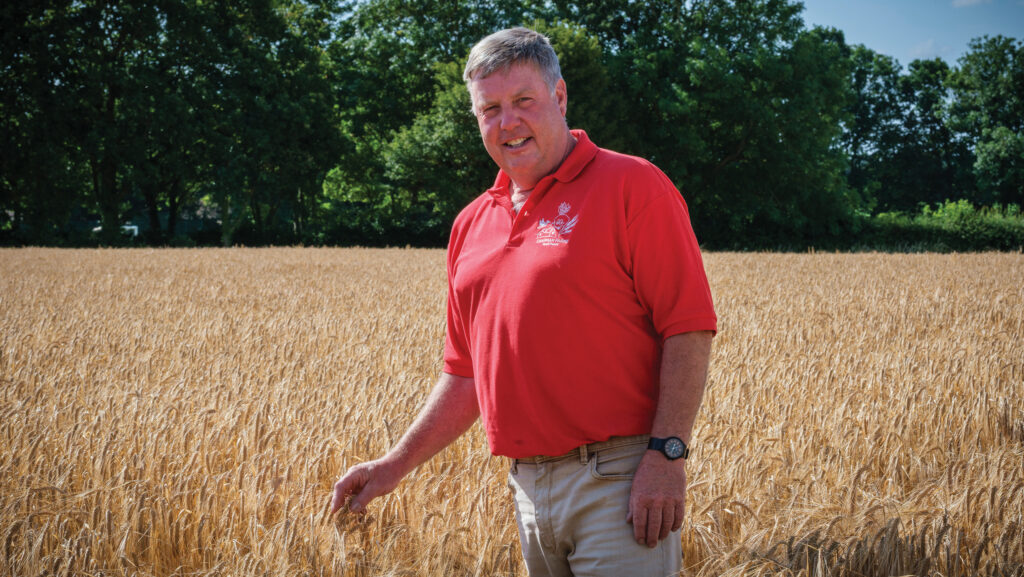
James Chapman © Jason Bye
Not only has James Chapman successfully doubled the arable cropping area over the past 12 years, he has also seen wheat yields rise by 12-15% over the same period.
He is achieving high yields in other crops too with triple digit sugar beet yields and double-digit vining peas.
But what makes him stand out is that he has maintained this high output during the recent challenging years.
Challenges
James is a fourth generation of the family farm, cropping sandy loam soils near the broads and up to the Norfolk coast.
High yields are key to profitability, but like all UK farmers, this is becoming more challenging with greater weather extremes.
At the same time, James is looking to reduce chemical inputs and soil health is a key priority, especially with potatoes, sugar beet and salad vegetables in the cropping mix.
Water quality is also important, as the land is surrounded by the Broads, which is a site of special scientific interest and a major source of drinking water.
And finally, the farming operation had outgrown the original site within the village, with limited crop storage and outdated facilities.
The system
James has made major changes to the business over the years.
He says one key change was going over to liquid nitrogen, which offers greater accuracy and raised yields. He has adopted variable rate P&K too.
There is a focus on soil health with straw chopped and greater use of manures.
Cover crops are grown before potatoes, and dual wheels are used to minimise soil compaction.
James has also reduced cultivations where possible, for example min-tilling, after peas and potatoes.
He is working with his agronomist to cut crop inputs. The rates of chemical inputs are being reduced by optimising spray timings and the use of harvested rainwater.
However, the key change in the last three years has been the new farmyard with 3,600t of grain storage, complementing 1,600t at another site.
This was done with a strong environmental focus with solar energy, rainwater harvesting and top-notch sprayer filling area.
Achievements
While many farms have seen wheat yields plateau, James has increased his over the last 10 years and the home farm averages 11t/ha and another farm is over 12t/ha.
He puts these improvements down to having a dedicated team and his attention to detail.
Sugar beet yields are also impressively high with one farm into triple figures and an overall average of 97t/ha.
Then just a few months later, the same fields are delivering spring malting barley crops that are approaching 9t/ha.
These increases in yield are being achieved at the same time as he is reducing inputs.
For example, James has cut herbicide use in sugar beet by £90/ha with mechanical weeding.
Another example of his attention to detail is the new grain store, where loader operators are never looking into the sun when loading grain lorries.
James is especially proud of his focus on the environment, a Leaf member and also managing land in a range of environmental schemes, including sensitive areas next to two Broads.
Voluntary grass margins double up as riding routes for the locals.
Finally, not only has the new farmyard streamlined operations, it’s also benefiting the wider community and hosting visits.
In conclusion, raising yields and trimming inputs has increased margins.
This, along with the investment in the new farmyard, has secured the farm’s long-term future.
The numbers
- 10.4 – Average wheat yield (t/ha) over the past 12 years
- 97 – Average sugar beet (t/ha) over the last three years
- 85-90 – Saving in beet herbicide costs (£/ha) with camera-guided hoe
- 10-12 – Increase (%) in spring malting barley yields after late lifted beet
- 3,600 – Storage capacity (t) at the new farmyard
- 1,500 – New hedging (m) planted in 2025
Farm facts
- Area: 845ha of arable cropping
- Cropping: Winter feed wheat, winter and spring malting barley, sugar beet, vining peas, fodder beet and lucerne. Potatoes and salad crops grown by third parties
- Establishment: Plough and a 4m Pottinger combi drill (power harrow replaced with cultivator). Min-till after peas and potatoes
- Soils: Sandy loam and marsh with clay outcrops
- Staff: James plus three full-time staff
What the judges liked
- Crops looked good in a low rainfall year
- Working with local farmers and businesses
- Consistently high crop yields
- Strong environmental focus
- Surrounded by a strong, dedicated team
What the judges say
“James’ attention to detail has produced crops that have impressive yield potential in a lower rainfall area. He has created a sustainable arable business and has successfully exploited local opportunities.”
Colin Chappell, Gander Farm, Brigg, Lincolnshire
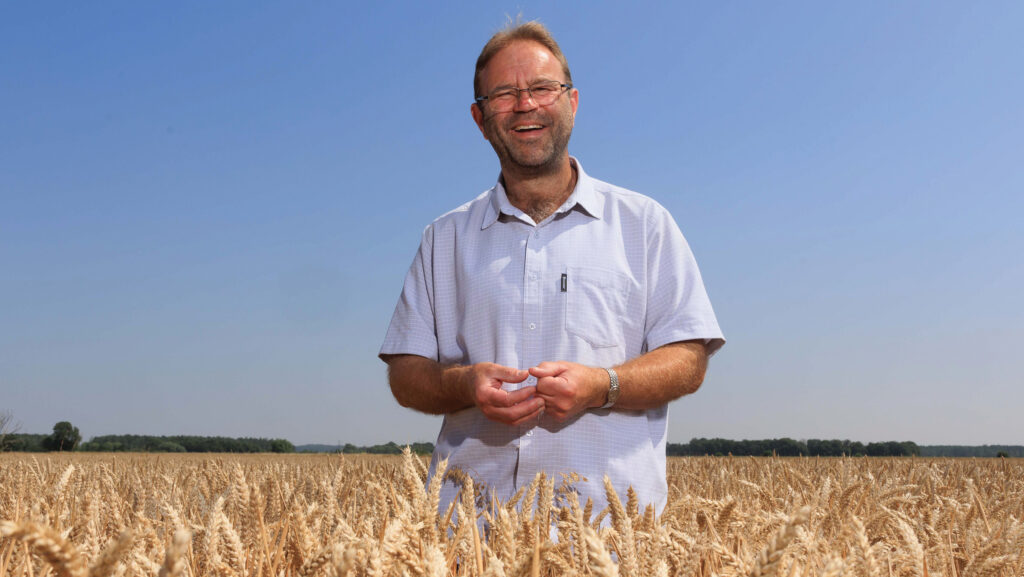
Colin Chappell © Tim Scrivener
Growing crops on high magnesium, heavy clay soils at sea level is not a recipe for an easy farming life for Colin Chappell.
Added to this a blackgrass threat, the loss of BPS income and the growing impact of climate change.
However, Colin has embraced these challenges in north Lincolnshire and transformed the family business – resulting in a carbon neutral arable farm that is producing mainly human quality crops.
Challenges
Colin is the fourth generation at Gander Farm and farming up to the River Ancholme brings its challenges.
It’s not just the threat of crops being flooded, protecting water quality is also key being close to an Anglian Water abstraction point.
Blackgrass was challenging to manage as high organic soils limited the efficacy of residual herbicides. But ultimately, the loss of BPS as a safety net meant he had to derisk.
Therefore, he set out to develop a more resilient business and above all, leave the land in better shape for the next generation.
Changes
The journey started in 2017, when Colin became the Brigg AHDB Monitor Farm.
He was challenged with direct drilling and went cold turkey with the worst field.
Yields halved, but they recovered within four years and the lessons learned from regenerating those degraded soils helped him improve his land as well as take on other degraded land.
Any soil movement is accompanied by applications of fish hydroslate, potassium humate and nurture carbon to minimise the impact on help microbes.
He sees it as an investment on his heavy clay soils. Cover and companion cropping was also introduced.
The rotation was extended making the most of local markets and adding value where possible.
One example is growing two consecutive forage barley crops for a local AD plant which is helping manage grassweeds.
Over 25% of the farm, the more challenging areas to crop, is in environmental measures and margins have a role in helping protect water quality.
He also stopped using metaldehye well before the ban and does not use any insecticides.
On the cost side, he runs a streamlined machinery fleet with just three tractors and he no longer owns a combine, instead hiring one in. Staff numbers were also reduced.
Achievements
He says his biggest achievement over the last five years is the big reduction in his carbon footprint, going from 200t/ha emissions to sequestering 100t/ha.
This is partly down to an improved nitrogen use efficiency (increased to 73%) by applying urea with carbon.
This has enabled Colin to trim nitrogen rates, for example he averages 10.54t/ha with Crusoe milling wheat with just 218kg/ha of nitrogen.
He has improved margins, helped by the premiums from growing human-quality crops.
These include milling wheats for Warburtons, biscuit wheats, marrowfats to make mushy peas in chip shops, seed crops for a local merchant and low input milling oats.
Energy crops also have a role with miscanthus on the poorest areas, forage barley and maize for a nearby AD plant.
His detailed knowledge of costs means he is maximising margins and his business is much leaner.
Biodiversity has returned and he is seeing fish back in the ditches and bird numbers increase.
In conclusion, Colin has a more resilient and adaptable business – being better placed to survive in challenging years.
In numbers
- 10.4 – Average wheat yield (t/ha) over the past 13 years
- 9-12 – Soil organic matter content (%) for the Carr soils
- 100 – Amount of carbon (t/ha carbon dioxide equivalents) sequestered a year
- 679 – Cost to grow maize for AD (£/ha)
- 73 – Nitrogen use efficiency (%) when applying nitrogen with carbon to Crusoe wheat
Farm facts
- Area: 555ha of arable cropping
- Cropping: Includes winter wheat, forage winter barley, marrowfat peas, spring malting barley, winter beans, maize, milling oats and miscanthus.
- Establishment: Owns a 4m Vaderstad Rapid and 4m Triton side press. Has access to a 6m Weaving Sabre Tine Drill and a 6m Horizon DSX
- Soils: Heavy clay, home farm at sea level
- Staff: Colin plus two full-time staff
What the judges liked
- Knows his costs of production for each crop
- Diverse rotation and derisked the system
- Maximising local markets and adding value
- Working to leave land in better shape for next generation
- Strong focus on the environment
What the judges say
“Colin is passionate about regen farming and the changes he has made will leave a lasting legacy for the next generation. He has successfully streamlined and derisked his operation, creating a much more resilient business.”
Robert Drysdale, Delab farm, Monymusk, Inverurie, Aberdeenshire
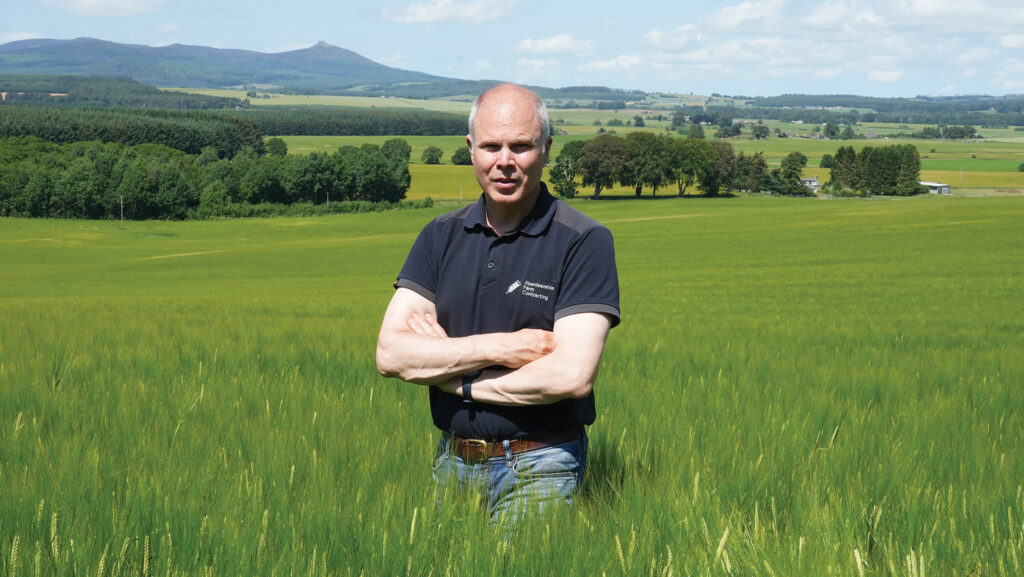
Robert Drysdale © Angus Findlay
A single combine cutting nearly 1,600ha of crops a season makes it probably one of the hardest working machines in this corner of Aberdeenshire.
This is one example of Robert Drysdale’s streamlined machinery fleet.
However, what makes this remarkable is that his streamlining of machinery and labour has been achieved at the same time as expanding the cropping area and raising crop yields.
Challenges
Robert manages three estates with one contract farming operation. Originally, this was part of the Co-op Farms, which Robert managed.
When they withdrew from farming, Monymusk Estate purchased the business and asked Robert to run it. Since then, he has transformed the business.
The key challenge in Aberdeenshire is moisture, which is a key driver of crop success.
His heavier soils can take a long time to dry out in spring and the lighter land is prone to burning off in a dry summer like 2026.
Therefore, there was a need to drive up yields and make the business leaner, and more resilient to the greater extremes in weather.
Changes
Robert is an active member of local AHDB and SRUC benchmarking groups and has gained a good knowledge of his costs.
This helps him with decision making when selling grain forward, thereby maximising returns.
Benchmarking also identified high machinery and staff costs, having inherited two each of combines, drills and fertiliser spreaders.
He has reduced to one of everything, bar the sprayers which went from one to two to help improve spray timeliness, as the prevailing winds mean there is often only one spray day a week. He also moved from 24m to 30m tramlines.
Robert is a keen adopter of technology such as N sensors, variable rate P&K and more recently, variable seeding.
Robert adopted autosteer and sectional control, which reduced field areas by 3% by eliminating overlaps.
Risk management is a key part of farming in the far north. He opts for resistant varieties and takes a robust approach with fungicide choice and rates.
Achievements
Yields have risen considerably since 2000, winter cereals by about 20% and spring malting barley by an impressive 30%.
He puts this down to a combination of factors that have evened up crops.
Robert says variable-rate lime is a game-changer and another factor is P&K applied with the drill and the N sensor has brought benefits in oilseed rape.
His detailed knowledge of costs helps when selling grain and in the benchmarking group he is consistently in the top third for prices.
An example is winter barley at harvest 2026 which he sold for an average £190/t.
He is earning a minimum 30% premium over standard malting barley for his Golden Promise and grows about 10% of the national crop.
With the exception of last year, 98% of his barley hits malting specs.
Robert cut costs through a more efficient use of machinery and labour.
For example, a single Claas Lexion 8700 with 40ft Convioflex header is cutting 1,600ha and with 13 staff. Back in 2000, it took two combines and 13 staff to cut half the area.
Consequently, his lower machinery and labour costs combined with higher yields resulted in a total cost of production for wheat of just £117.98/t in 2024-25 (excluding rent and finance).
In conclusion, Robert shows it is possible to take on more land, improve crop yields and cut staff and machinery – all at the same time.
In numbers
- 10.2 – Average wheat yield (t/ha) in 2025
- 98 – Cost of production (£/t) for wheat in 2024/25 (excluding rent and finance)
- 117 – Cost of production (£/t) (excluding rent and finance) for wheat
- 30 – Minimum premium (%) above standard malting barley for Golden Promise
- 30 – Increase (%) in spring barley yields since 2000
- 1,800 – Amount (m) of new hedging planted
Farm facts
- Area: 1,567ha of combinable cropping
- Cropping: Includes winter feed wheat, winter barley, spring barley and oilseed rape
- Establishment: Plough, press and 6m Horsch Pronto drill. A 3m Heva l Evolution OSR drill
- Soils: Very variable – Good, free-draining silts near river, some heavier areas and some stoney land
- Staff: Robert plus four full-time staff, one also looks after cattle
What the judges liked
- In-depth agronomy knowledge
- Good detailed knowledge of costs
- Farming significant acreage with lean machinery fleet
- Adding value to spring malting barley
- Increased crop yields as area expanded
What the judges say
“Robert has an excellent technical knowledge of crop agronomy as well as a detailed understanding of his costs. He has transformed the business and is successfully farming a big acreage with a lean machinery fleet.”
A word from our sponsor

Nitrasol salutes the Arable Farmer of the Year finalists – true professionals that share our passion for innovation, professionalism and teamwork driving exceptional performance and success.
Lord Fuller, chairman, Nitrasol