

How foliar N pioneers are cutting inputs without yield loss
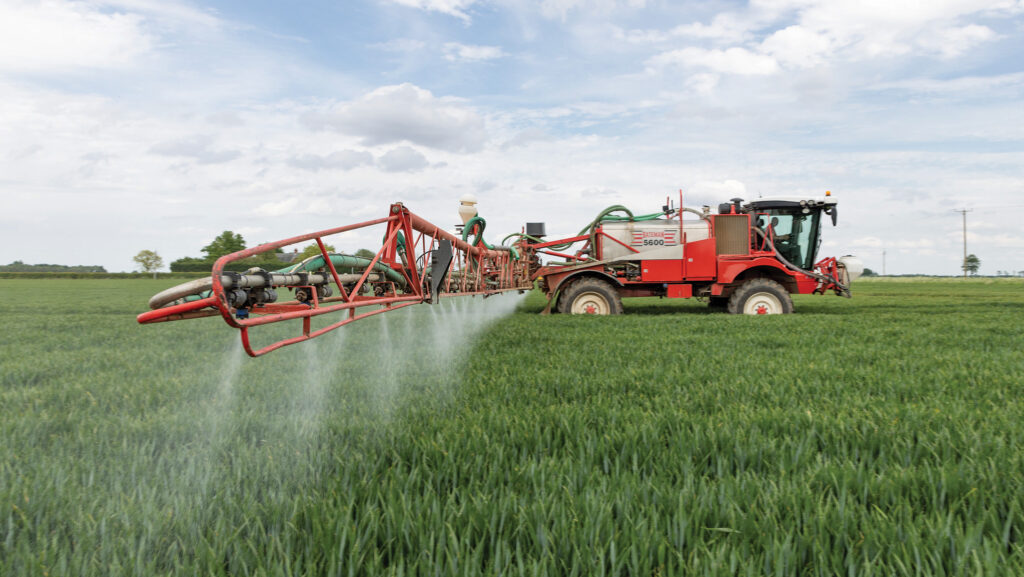 © GNP
Using foliar nitrogen rather than granular or liquid soil-applied nitrogen fertiliser for later-season applications is becoming more popular on some farms, thanks to a combination of aiming to improve nitrogen use efficiency and reduce overall nitrogen inputs, as well as environmental considerations.
In many cases, growers’ knowledge about how to make effective foliar applications has come from learning the core principles outlined in detail during Joel Williams of Integrated Soils’ online foliar nitrogen masterclass, which launched in 2023.
See also: 4 new nitrogen management technologies and how they work
But four growing seasons on from that lecture series, which is still available to purchase, how are farmers integrating the practice into their farms?

Rhys Jones © Louise Impey
Rhys Jones, Pearson Gape Farming Partnership, Cambridgeshire
Pearson Gape Farming Partnership farm manager Rhys Jones began using foliar nitrogen as a result of growing wheat for Wildfarmed, which at the time capped total nitrogen applications to 80kg/ha.
“I felt the best way to use this limited N was to apply some foliar nitrogen to gain the quoted improvements in efficiency,” he says.
With yields reaching 6t/ha at 13% grain protein, the success prompted him to investigate further, with Joel’s online course a key learning point.
“I also did the maths on the products we had bought in, and realised that while effective, it was expensive,” Rhys says.
That is when he started exploring making his own on farm by melting urea. “I’m now obsessed with it,” he says.
Using a 2,000-litre cone-shaped tank half-filled with pre-heated rainwater, he adds 800kg of urea, tops up the water and then agitates using a compressor pointed at the tip of the tank.
“The reaction causes the liquid to go very cold, so you don’t want a tank with any corners,” he says. “If the water is preheated to 30C, it takes about four hours.”
Melting can be done in advance and stored in IBCs, or on the day of application, he says.
For application, he dilutes the mix by 50% to apply about 10kg/ha of N, with about 90% of the N from melted urea and the other 10% as ammonium sulphate to add sulphur and a different source of nitrogen.
“As I pull that into the sprayer, I add fulvic acid, seaweed, amino acids and fermented molasses.”
Foliar applications in wheat typically start around the flag leaf, or as soon as the weather becomes too dry for soil-applied nitrogen to be effective. “Normally, it is about 140kg/ha of soil-applied N before we start with foliars,” he says.
That’s about a 20% reduction in N, without any effect on yield or quality.
Applications are made at night. He uses the Delta T graph that relates air temperature and relative humidity to indicate evaporation rates and droplet survival to know when to spray. “I’m looking for the droplets to sit on the leaf for at least a couple of hours [to maximise uptake].”
The farm is now leading an ADOPT project aiming to generate hard data validating the use of foliar nitrogen applications.
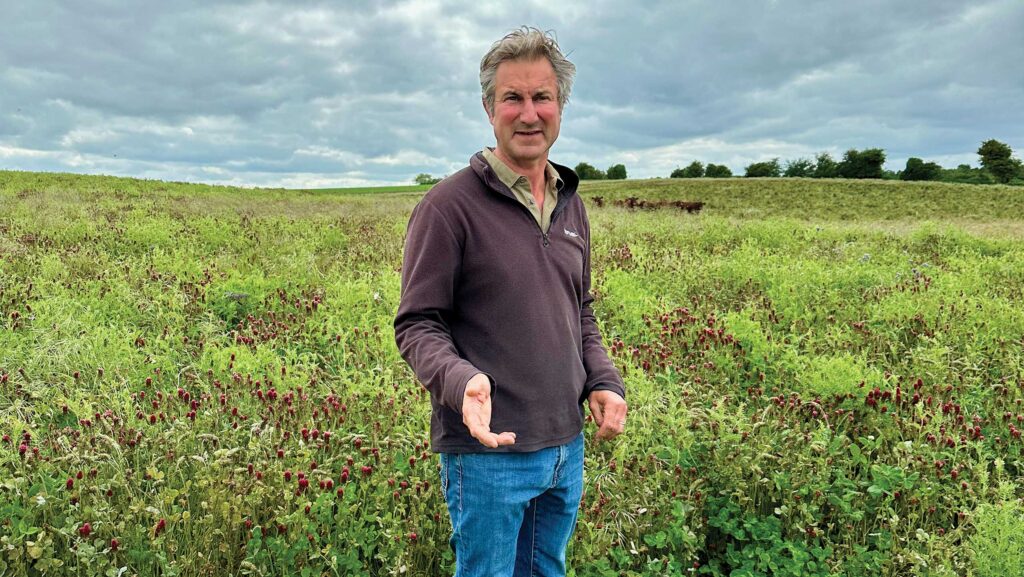
James Bucher © Mike Abram
James Bucher, Hall Farm, Knettishall, Suffolk
Suffolk farmer James Bucher tried making his own foliar urea on farm, but found that it took too long. “For the past couple of years, we’ve been using a product called Protein Plus (plus S). It’s not silly expensive and gets pumped into IBCs on the farm.”
Base foliar applications typically amount to about 10kg/ha of N, plus fish hydrolysate, seaweed, humic acid, a carbon product and a biostimulant, he says. “To that we add, based on sap analyses, one or two trace elements, usually magnesium, but this year boron and molybdenum.”
To minimise the risk of scorch, he avoids spraying in the heat of the day, with applications usually made earlier in the morning.
This season, he has applied foliar nitrogen twice, at flag leaf and end of flowering, but he is considering using three splits following 40kg/ha of soil-applied granular nitrogen applied in mid-March. “We also have a local digestate plant close by, which was a similar price to granular urea and contained a lovely mix of trace elements, so we’ve used that this year.”
The combined approach has led to a reduction in nitrogen from 200-220kg/ha of N to about 120kg/ha, he says.
With a budgeting exercise showing fixed and variable costs creeping up to about £900/ha over the past three years, he is now experimenting with making his own protein hydrolysate from beans grown on the farm.
“I don’t know whether it will work, but the plan is to spray hydrolysate every fortnight from late March to the middle of June rather than use fertiliser,” he says.

Andrew Rees © David Jones
Andrew Rees, Moor Farm, Haverfordwest, Pembrokeshire
A three-year European Innovation Partnership-funded project investigating foliar feeding on grassland, not far from dairy farmer Andrew Rees, was the starting point for his switch to foliar nitrogen.
He was drawn in by the study’s findings that farmers could grow the same amount of grass using up to 50% less nitrogen, and the resulting financial savings.
Over a three-year period from 2019, when he was using his previous farm-standard approach of 220kg/ha of N, through to 2021 when he had cut back to 83kg/ha, with the middle year a halfway house of about 150kg/ha, he found a flat line in the amount of dry matter used across the seasons.
Applications are made using a Tow and Fert applicator, which mixes urea directly in the tank using patented agitation technology, and sprays to a width of 20m with just two nozzles.
“I cut a urea bag the same way as you would over a fertiliser spinner, and it is dissolved in five minutes. A typical mix to do 16ha would be 600kg of urea and 120kg of ammonium sulphate to give a 10:1 N:S ratio, plus a carbon source like humic acid and trace elements.”
Cutting nitrogen had a big effect on animal health, as well as a financial saving, with the percentage of cows failing to get back in calf halving and a similar drop in mastitis rates, he reports.
“We have healthier animals, which means our med spend is also less,” he says.
Since 2021, he has continued to cut nitrogen rates, with virtually no synthetic nitrogen applied to grazing ground. A contractor separates slurry in the winter, with solids applied to off-lying ground, saving on transport, while a slurry pump applies 25-30cu m/ha of water slurry after every other round of grazing, he explains.
“We’re recycling nutrients in that way,” he concludes.

Dan Moore © Cranborne Farms
Dan Moore, Cranborne Farms, Dorset
Finding Joel’s online course in 2023 was a turning point in Dan Moore’s attempts to build a resilient soil for his wheat, malting barley, pea and herbal ley rotation.
“We’re farming quite high-pH soils over chalk downland and we were struggling to increase fungal dominance,” he says.
Since undertaking the foliar nitrogen masterclass, he has reduced artificial fertiliser by about 40% in three years, with up to three-quarters of the reduction as a result of switching to foliar rather than soil-applied nitrogen fertilisers. A foliar amide nitrogen fertiliser bought from Aiva Fertiliser is applied at flag leaf and ear emergence in wheat.
Spraying is usually at night, as he has found that helps with uptake, with nutrition requirements guided by a sap analysis, taken every 10 days.
That has helped him to also cut fungicide use dramatically – no fungicides were used in 2025, and they were only used for yellow rust this season.
“We’re a lean team, so buying in products works better for us. Using things like amino acids, especially in springs like this year, helps to manage stress in crops. We have largely maintained yields at our five-year average,” he says.
Alongside his agronomist, he has also trialled using a Senseen nutriscope leaf scanner as an alternative to sap testing. The device provides real-time crop nutrient and trace element readings, eliminating the need to send a sample to the lab.
“It’s early days. I think it is reliable against itself, but we haven’t tested against lab-based sap testing, which is probably the next step,” he notes.
Content for this article was gathered at Groundswell 2026.

Staying sharp shouldn't be a chore
Explore more / Transition
Follow the experiences of our 16 Transition Farmers and access in-depth supplements, expert webinars, live events and practical content covering the challenges and opportunities facing farm businesses.
Transition is an independent editorial initiative supported by our UK-wide network of partners.
Explore the Transition hub for the latest insights, resources and events.
