Coragen emergency authorisation offers beet moth relief
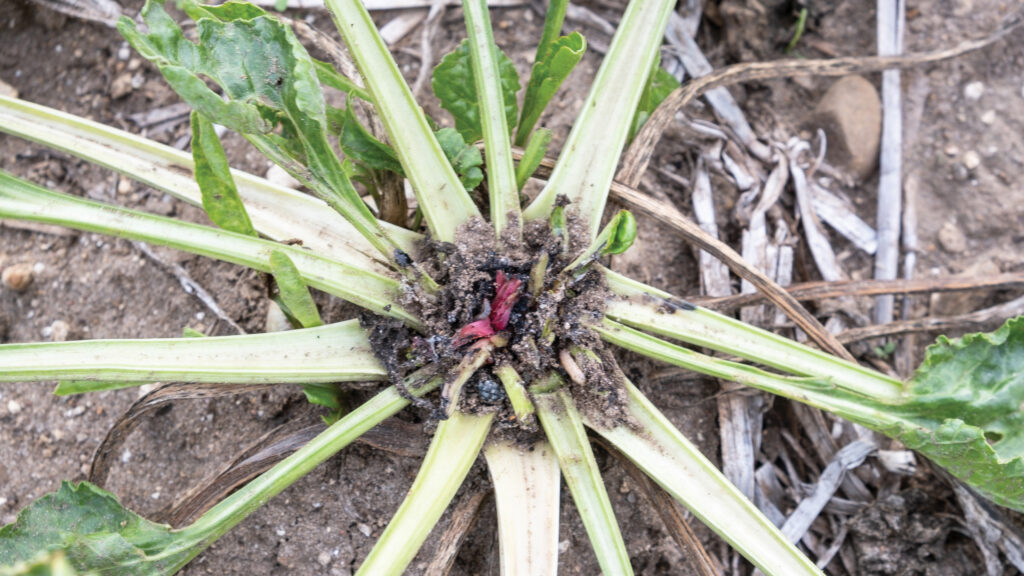 © Blackthorn Arable
 Sugar beet growers have secured access to an important pest control tool after emergency authorisation was granted for Coragen (chlorantraniliprole) to tackle rising beet moth pressure across the UK crop.
The authorisation (opens in PDF), granted by the Health and Safety Executive (HSE) following an application from NFU Sugar, British Sugar and the British Beet Research Organisation (BBRO), permits a single application of Coragen between 3 June and 30 September 2026.
Growers must keep detailed records of treated areas, infestation levels and the fate of beet tops, which cannot be grazed or fed to livestock.
See also: Sugar beet growers offered sustainability payments
Speaking at the NFU’s quarterly council meeting in Stoneleigh, Warwickshire, on 23 June, NFU Sugar Board chairman Kit Papworth said beet moth damage had become far more widespread this season.
“We’ve seen more crops with beet moth damage across the wider area than ever before,” he said. “Last year, we saw it in the Newark corridor. This is now right up the A1 corridor, as far as York.”
Mr Papworth said the emergency authorisation had been granted the previous week, giving growers access to a much-needed control option.
“Once again, we applied for an emergency authorisation of Coragen, and this was granted last week. It’s extremely expensive, but growers do at least have the option now,” he said.
The BBRO has warned that hotter, drier conditions are helping beet moth populations establish in the UK, with some growers reporting six-figure losses from infestations during 2025.
Beet area down
The derogation comes amid a challenging season for the sugar beet sector. According to Mr Papworth, about 82,000ha of sugar beet were drilled this year, significantly down on the 95,000ha grown in 2025 and the lowest area since contract holidays in 2016.
“This is 25% down on the area high since I first joined the board in 2019,” he told council members.
Crop establishment has been highly variable following a hot, dry spring and earlier wet weather, creating what Mr Papworth described as “a really brilliant story of the haves and the have-nots”.
While recent rain has improved some crops, others remain gappy and stressed, limiting yield potential, he said.
Aphid pressure
Alongside beet moth, beet growers have also faced what Mr Papworth described as the highest aphid pressure since 2020 without neonicotinoid seed treatments.
However, emergency approval for a second application of Insyst SG to combat peach potato aphids – the primary vector for virus yellows – has enabled growers to spray crops up to four times where thresholds were met.