Growers advised to hold off stale seed-beds in dry fields
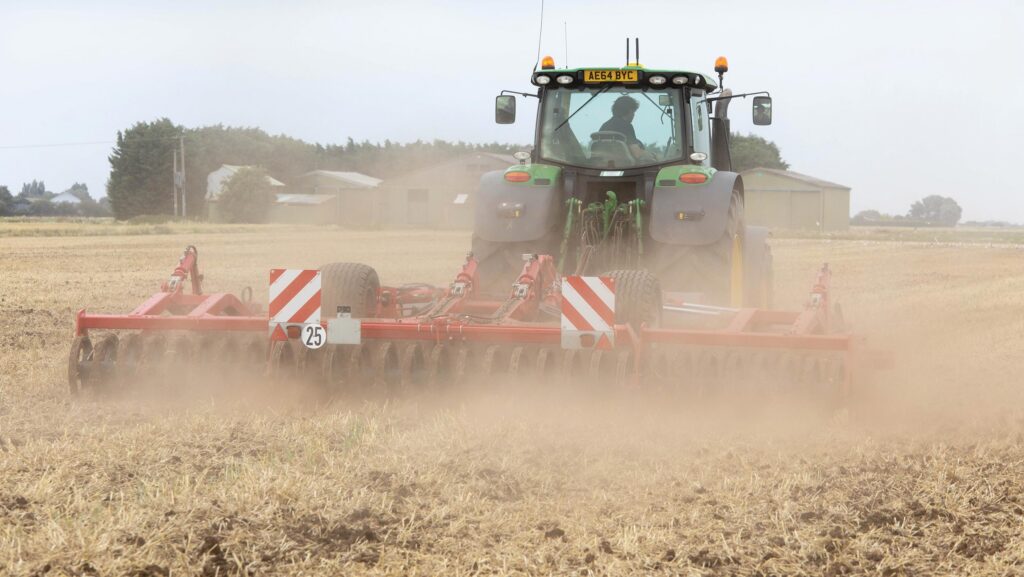 Cultivating barley stubble in dry conditions © Tim Scrivener
 Cereal growers are being advised to hold off post-harvest cultivations in droughted fields, to maximise predation and degradation of blackgrass seed.
Each summer, farmers look to spray off germinated blackgrass in stale seed-beds in a bid to reduce the number of blackgrass plants that subsequently emerge in the drilled crop.
See also: Why grassweed control is vital in oilseed rape crops
Dry conditions
However, Adas weed specialist John Cussans points out that there are two key approaches – based on the amount of moisture in soils.
For dry conditions, as currently seen in the South, cultivations are counterproductive.
The seed simply won’t chit, regardless of dormancy or cultivation strategy, he says.
“Therefore, in drier conditions, the potential to lose blackgrass seeds from the soil surface through predation and natural losses far outweighs the value of cultivation to promote germination.”
John explains that blackgrass seed is not adapted for these conditions when left on the soil surface.
“There is a massive amount of predation of seed by small mammals and carabid beetles.”
He points to newly published work carried out by Adas that showed predation rates up in the 90s (%) for some of the uncultivated treatments.
Overall, predation was consistently greater in no-till systems, with weekly removals averaging 76-79% compared with 46-52% in conventional tillage, although it varied year to year.
When rain arrives
In fields where there is moisture or when the moisture does arrive, cultivation strategies to encourage germination may then be effective, he says.
This is especially the case as the low dormancy means seed is ready to germinate as soon as conditions become favourable.
“In hot and dry conditions, blackgrass seed tends to develop with lower dormancy,” says John.
“That means once moisture arrives after seed shed, we would expect a greater proportion of seed to germinate relatively quickly, which growers can then combat ahead of autumn drilling.”
Plenty of time
One positive with the early harvest is that many growers will have several weeks, and in some cases a couple of months, before drilling begins, says Mat Hutchings, senior commercial technical manager for the East Midlands and Ireland at FMC.
“That gives much more opportunity to create one, two or even three stale seed-beds before autumn drilling, depending upon available moisture, helping to reduce blackgrass populations before the crop is established.”
Lighter cultivations in a low dormancy year
When moisture does arrive, farmers are advised that lighter cultivations generally work best in a low dormancy year because they keep blackgrass seed close to the soil surface, where it’s more likely to germinate.
FMC’s Mat Hutchings explains that in higher dormancy years, ploughing can sometimes help by burying seed that would otherwise emerge over an extended period.
“This year, from a blackgrass perspective, it’s generally a season to avoid ploughing for blackgrass and instead encourage as much seed as possible to germinate before drilling.”
Although dormancy conditions may be favourable for this year’s weed seed, Mat warns growers not to base their entire strategy on current dormancy levels.
“Low dormancy is all well and good for this year, but fields won’t just contain seed shed this summer.
“They will also hold blackgrass seed from previous seasons, potentially going back three or four years, and that seed may have a wide range of dormancy periods.”