How new herbicide is helping tackle Italian ryegrass
 © GNP
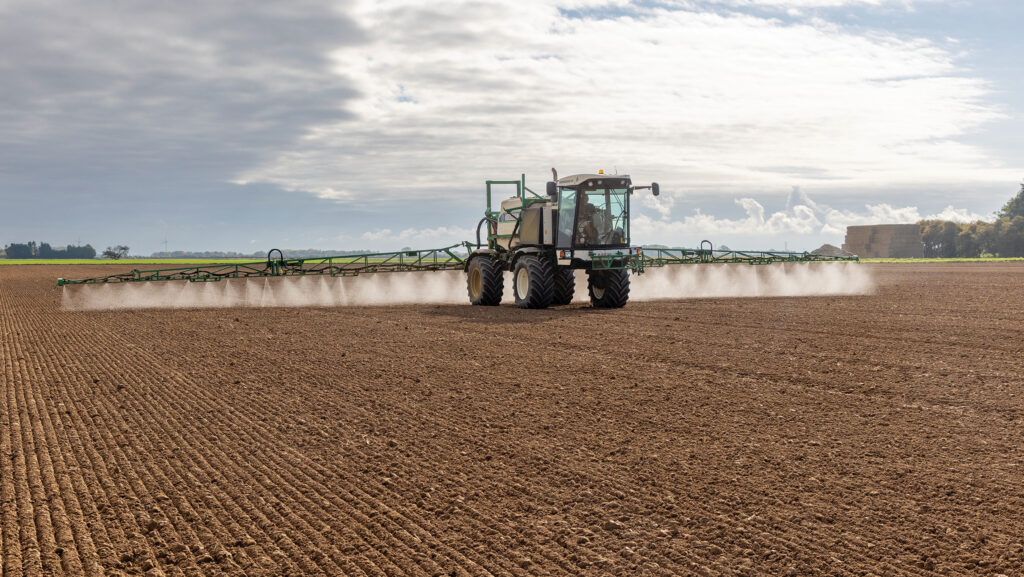
© GNP Italian ryegrass is the key grassweed in parts of Kent and a new herbicide is helping farmers manage high levels and harvest crops which would otherwise be sprayed off.
While blackgrass blights many farms, ryegrass, which has historically been a problem in the country, is seen as a greater threat as it tillers more and has a protracted germination.
Hazel Blanshard, product manager at FMC, highlights that just 8 plants/sq m can lead to 5% yield loss. Higher numbers can see crop write offs and huge seed return.
See also: Why grassweed control is vital in oilseed rape crops
Frontier agronomist Varian Maude explains that the weed had crept into some fields, due to shorter rotations, reduced cultivations and the available chemistry not being as good as that in the past.
Fortunately, farmers now have newer herbicides like cinmethylin that are making a difference when combined with cultural approaches.
He says many farms were almost on top of the weed, but the move to earlier drilling last autumn has let it back in.
After the very wet autumn of 2024, growers opted to drill wheat a little earlier last autumn.
“This turned out to be the right thing to do as plants got rooting down and better withstood the summer drought.”
Fortunately, farmers had a new tool – Fundatis (beflubutamid + bixlozone) – which saw its first full season, bringing one new mode of action and two new active ingredients. And it performed well.
“Growers were pleased and it dealt with very high pressure. It meant they combined a crop rather than spray it off,” says Varian.
He explains that with ryegrass resistance to flufenacet, Luxinum is now the base.
In a typical ryegrass situation, farmers will opt for a stack of Luxinum + diflufenican plus Proclus (aclonifen) and “you can get good control.”
However, ryegrass levels were so high that they had to go with a follow-up of Fundatis early post emergence.
Varian explains that its flexibility on timing means farmers can first see how well the pre-emergence stack has worked and come back if necessary. “Ideally, you would target ryegrass at 1-2 leaves.”
Another benefit is its broad-leaved weed control, like charlock, groundsel cleavers, ivy-leaved-speedwell and cranesbill.
“So farmers have not had to use as much sulfonylurea herbicides in the following spring.”
This autumn
This summer, Varian is concerned at the lack of a flush. “We know seed is there.”
So the concern is that it will be high pressure, especially where farmers opt to drill early again to better cope with any drought next summer.
“But the good news is that farmers do have a follow up option,” he says.
Ryegrass tips
- Good machinery hygiene at harvest is key
- Map field patches
- Adopt a zero tolerance of the weed
- Diversify rotations with more spring cropping
- Go with a robust Luxinum-based stack and follow up with Fundatis where needed
Case study: Pete Old, Cornwall
Pete Old runs a mixed farm near Camborne, Cornwall, comprising arable, 17,000 free-range chickens and environmental stewardship.
He grows lupins, wheat and barley to feed the layers on the farm just 2 miles from the coast.
While there is blackgrass and ryegrass in the area, his key concern is brassica weeds, particularly groundsel.
Pete explains that it is a heavy brassica-growing region, “so there is lots of it around”.
His rotation consists of three cereals – first wheat, second wheat then winter barley – followed by winter cabbage then spring cabbage or spring lupins.
There are also a few wild oats and brome, as well as some more recent issues with corn marigold.
So with a mixed picture in terms of weed burdens, he says it is important to catch the weeds early, mix his chemistry, use multiple treatments where needed, and employ cultural techniques such as rotational ploughing to help control weed growth and prevent resistance.
His standard autumn herbicide programme is based around PicoPro (pendimethalin + picolinafen).
This is followed up in spring with a mixture of Starane (fluroxpyr) and Presite (metsulfuron).
If stubborn weeds persist, he then may use Dingo (clopyralid + florasulam + fluroxypyr).
To help reduce resistance risk in his rotation, Pete trialled using Fundatis instead of PicoPro.
He was impressed by how it managed broad-leaved weeds and it also reduced the need for follow-up sprays the following spring.
This autumn, he is looking to use Fundatis as the main autumn herbicide in his winter cereals.
Ceres Rural advises growers to try alternatives
This coming season is an ideal opportunity to try out alternative herbicides to flufenacet, ahead of EU realignment.
Louise Penn, Northants-based agronomist with Ceres Rural, points out that alignment with EU crop regulations could see the loss of flufenacet, widely used for grassweed control, as well as newer, post-Brexit products such as cinmethylin and pydiflumetofen.
She is telling her clients that growers will still have these options this autumn, but there is some uncertainty for the season after.
Therefore, she is advising growers to look at other options that will be unaffected such as Fundatis and Avadex (tri-allate), especially if they haven’t used it recently.
“Try alternatives this autumn rather than leave it to next year when farmers may have to use them. Even if it’s one field, see how it works and fits in your herbicide programme.”