Tips to improve spring weed control if conditions turn dry
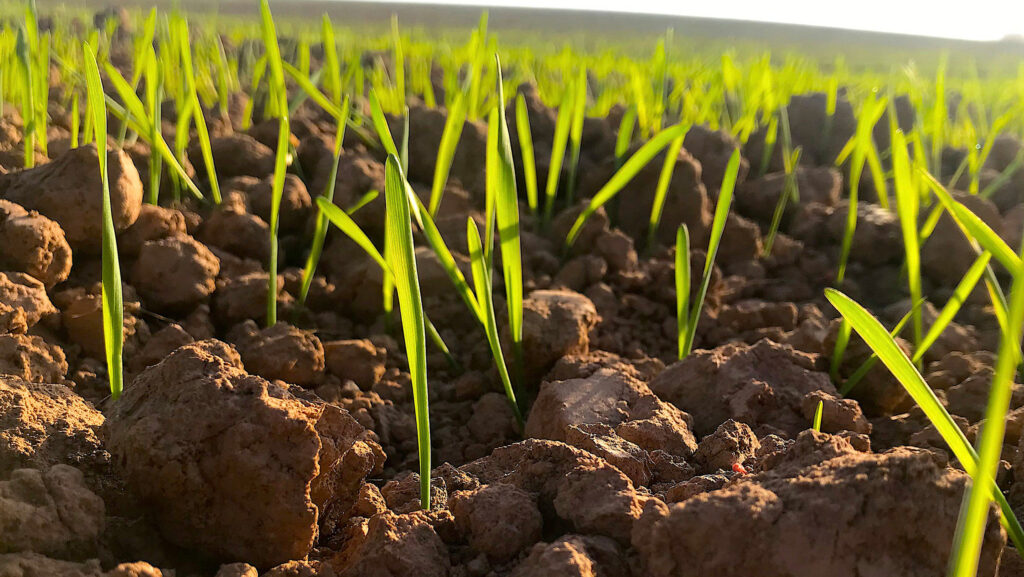 © ProCam
 Early weed control is essential for spring crops, particularly if the season turns out to be a dry one, which has been the case in recent years.
With as little as 110 days between spring barley drilling and harvest, keeping on top of weed control is critical.
ProCam’s head of crop production, Mike Thornton, explains how the weather impacts herbicide efficacy.
See also: 7 tips to make fertiliser go further this spring
Last year’s dry conditions caused weeds to develop a thick waxy layer and kept stomata closed for longer, preventing herbicide uptake.
“The dry conditions also reduced metabolism rates which slowed the translocation of herbicides within weeds. That’s another reason to control weeds while they are small,” says Mike.
When applying a herbicide, applications should be carried out first thing in the morning when stomata are more likely to be open in order to maximise uptake.
“An adjuvant oil can also be used to help the herbicide penetrate target weeds. Don’t be tempted to reduce application rates,” he adds.
Setting up a good seed-bed is the fundamental first step for good crop establishment and weed control.
However, where blackgrass or annual meadow grass are problematic, Mike recommends a pre-emergence application of a multi-active product such as Tower (chlorotoluron, diflufenican and pendimethalin).
“This will be essential as there are limited post-emergence options to control these difficult weeds.”
Post-emergence
For weeds that can be controlled by post-emergence treatments, Mike recommends an application sooner rather than later.
A series of 38 ProCam trials highlighted applications between GS13 (three leaves unfolded on the main shoot) and GS24 (main shoot and three tillers) provided the best level of weed control.
ProCam’s independent trials show treatments made at GS13 deliver an average yield increase of 2% compared to applications which are delayed until GS24 or later.
“It pays to protect crops earlier, but it’s also important to remember different weed species will be more or less competitive depending on growth habit and germination timing,” says Mike.
For example, weeds which grow from depth will be less effectively controlled by residual herbicides, making the need for early post-emergence treatments more important.
“Any weeds which germinate after the crop has gone beyond GS24 will generally be overshadowed and smothered by the developing crop.”
Herbicide recommendations
Mike explains that Quelex is the product of choice in many post-emergence situations “as its twin active ingredients (haluxifen methyl and florasulam) provide strong activity against a wide range of weeds, including some that are resistant to ALS chemistry.
“DP911 SX [metsulfuron-methyl and tribenuron-methyl] broadens the range of weeds and persistency, but growers should be careful when using metsulfuron as its half-life can range from 30-180 days, which could impact a following crop of OSR.”
A third option is Supreme Max (florasulam and tribenuron-methyl), which brings in a different spectrum of weed control including field pansy and speedwell species.
“It also has less of an effect on sensitive following crops such as brassicas and is an extremely flexible tank mix partner,” Mike describes.
For growers anxious to avoid ALS chemistry completely, Mike recommends Pixarro (halauxifen-methyl and fluroxypyr) which can be coupled with a phenoxy hormone containing product to eliminate any following crop issues.
In situations where ryegrass and/or wild oats are to be targeted, he advocates the inclusion of Kanaster (pinoxaden) used at full rate.
This can be applied one week prior to, or three weeks after, a broad-leaved weed treatment.
“The latest timing for Kanaster is GS41,” he explains. “Work plans will need to be managed carefully.
“Alternatively, Foxtrot [fenoxaprop-p-ethyl] can be applied a week either side of a sulfonylurea herbicide, but it has an earlier cut-off of GS31 and must be applied on its own.”