What one system means for everyday farm management at Velcourt
 © MAG/David Jones
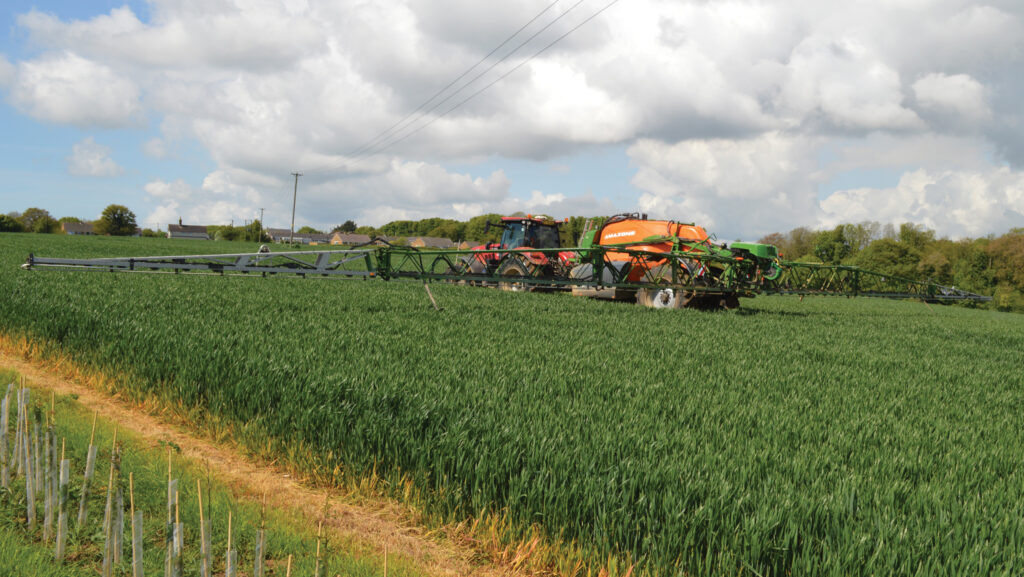
 Farm management company Velcourt has successfully adopted a single digital system for managing field records, financials and precision inputs across 120 client farms and 46 managers.
Since making the move, its farm managers are seeing the advantages of a mapping-based system.
These include using net margin maps to identify underperforming areas of fields, seeing field records and chemical store stocks in real time and a greater ease for adopting technologies like variable rate nitrogen.
See also: Arable farm management software: The options and prices
What prompted the move?
Velcourt was operating a mixture of Gatekeeper for field records, alongside spreadsheets, precision farming tools such as Soyl, and farm accountancy software for the financials, says chief executive Nick Shorter.
“We produce very detailed year end reports, as we account for all the spend with our clients,” he adds.
The company already had the information, but it was held in different places and took time to collate.
Nick says the company recognised the benefits of having everything on one platform in 2023.
There was a shortlist of two front runners – Gatekeeper and Omnia – and they ran them both side by side over a full year to compare.
They eventually settled on Omnia.
“It is now much easier and we can see information like net margins in real time. Knowing what has been spent so far on a crop aids decision-making as the season progresses.”
System requirements
Nick explains he was looking for a single platform across the farms.
It was not just field management – it also had to include precision farming, as well as the financials such as accounts and stock taking.
“We are using other peoples’ money and need to account for every input and cost. Accountancy tools are good for accounts, but they are not good at allocating spend to individual fields.
“Likewise farm management software is not so good at some of the financial tasks,” he says.
It had to be cloud based so that it could update automatically, enabling Velcourt to see each farm’s figures.
“This allows us to compare farms and regions. With the previous approach, we would have to individually export each farm’s information and then compare, which was time consuming.”
In addition, he required automation of processes – from ordering chemicals through to the sale of the crop the chemicals were applied.
“We also wanted it to be mapping based so that soil analysis or stewardship schemes can be recorded spatially in a field.
“Another requirement was for a platform that can grow and not be a barrier to future adoption of tech. We know there is more digital technology coming in the future.”
Finally, Nick wanted UK-focused software, as the UK is very specialised with its own pesticide rules and the nuances of legislation such as nitrate vulnerable zones and N-Max limits.
Implementation
Rowan Duckworth, Omnia’s digital services specialist, started working with Velcourt in summer 2024.
The system was rolled out across all 120 client farms, run by 46 farm managers, in October 2024.
The platform is being used across a very diverse operation, covering roots, livestock and combinable crops. For arable, harvest 2025 was the first cropping season under the system.
User views: How the system is shaping up
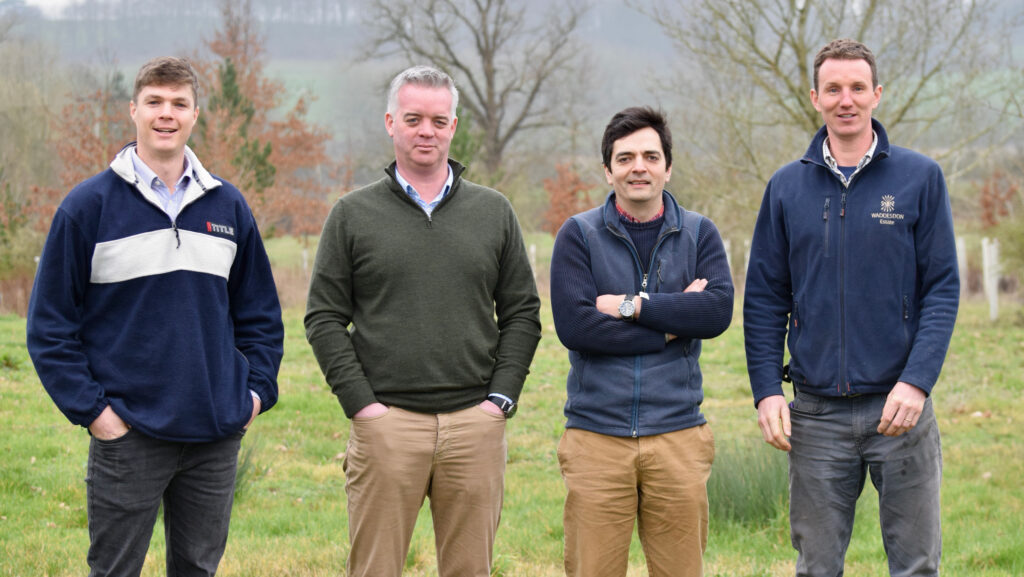
From left: Rowan Duckworth, Nick Shorter, James Griffin and Olly Pemberton © Paul Spackman
- Rowan Duckworth, Omnia digital services specialist
- Nick Shorter, Velcourt chief executive, heads up all operations
- James Griffin, who manages 3,000ha for Fonthill Contracting and 1,250ha for Wilton Estate, covering several farms
- Olly Pemberton, farm manager at Waddesdon Estate managing 1,000ha of cropping
Precision farming and net margin maps
Olly Permberton says it’s much easier to adopt variable rate nutrition at Waddesdon.
“We have done more variable rate work since moving over to the system. Before, it took two to three bits of software to generate the variable rate field plans. Now it’s one.”
They use satellite biomass data to generate variable rate nitrogen plans and he has also trialled some variable seeding.
“It’s mainly to avoid wasting fertiliser on failed crop areas.”
Combining variable inputs with the combine yield maps, Omnia is able to generate net margin maps which aid decision-making in two key ways.
First, you can see how much you have spent so far in different areas.
James Griffin says: “For example, at the T0 timing you can compare to budgets and determine the best use of the remaining spend.”
Second, you can identify underperforming fields, or areas within a field.
Nick Shorter says field-based performance may, for example, show an average of 8t/ha, but it may range from 6-10t/ha.
“While the average may seem reasonable, we could be performing better if we just farm the more productive parts.
“The BPS and Countryside Stewardship payments have in the past masked underperforming areas.
“With a future based on zero subsidy, the productivity of land becomes more important as we no longer have this income to support the losses,” he says.
Velcourt is using the platform to identify underperforming land.
“You need that data before considering what else we can do with that land. Red areas losing money can then be put into an environmental scheme,” says Nick.
Stock management and agronomy
Like most of Velcourt’s farm managers, both Olly and James are Basis qualified and do their own agronomy, so they see the full benefit of the paperless process – from writing the recommendations through to the sprayer operator’s record.
The stock inventory is especially valuable for James, who has seven different chemical stores across Wiltshire.
The admin needed to keep on top of what’s in stock and the spend was considerable.
Rowan Duckworth explains that within seconds of the product being applied to the field, Omnia removes it from the chemical stock, providing a live picture.
All Velcourt staff use the app on their phones, which means they can view the agronomist recommendations, check stock and complete workplans.
Nick recalls the recommendations in spring 2024 – due to the unfavourable conditions, sprayer operators could not go on the fields for up to three weeks, and agronomists could easily see whether product had been applied in the field records.
“If conditions change and there’s a need to bolster the fungicide mix, you can still change the recommendation.
“Even if the ticket has been issued, it can still be amended providing the sprayer operator has not started the tank mixing.”
Being phone based also helps with scouting in the fields.
“If sprayer operators see anything like a patch of blackgrass or a broken gatepost, they can record the location and make a note,” says Nick.
Olly says it has streamlined his farm management. It takes him 10 to 15 minutes to update himself each day rather than the couple of hours in the past.
“Omnia fits around the daily routine when I can spare 10-15 minutes; while with Gatekeeper, you had to book time to physically go through records to update yourself.”
Cultivations and contractors
One feature finding favour with both Olly and James is the ease of recording non-application field passes such as cultivations.
You can map field margins and record passes such as topping strips, says James.
It can also be used to record hedgecutting and those left uncut as part of the cycle, providing a good evidence bank for Stewardship scheme compliance.
James even has sheep grazing as a field option, with its own plan and ticket.
This can be used to plan cover crop grazing and indicate to the shepherd when to move them on.
Another good example is the grey partridge project overseen by James.
Each field has four 6m strips, which in Gatekeeper each one had to have its own field entry (name) which added complexity.
“Sometimes we had to redrill one and it was difficult for the drill operator to know which one. They are now mapped and it’s much easier to manage,” he says.
Contractors, such as those coming in to apply digestate, are also benefiting from the app.
Rowan says farmers can set permissions so they can receive plans and see where to apply it.
Similarly, harvest students can use the app to locate fields, but will not see any financials or other sensitive information.
Another feature being used is a layer containing Health and Safety Executive information, such as the location of electricity poles in a field and footpaths.
This is valuable for contractors and students who are unfamiliar with the fields.
“It’s much easier than having individual PDFs of the fields, which we used to have,” says Nick.
Auditing and compliance
Having a fully digital platform has proved beneficial for farm audits.
James Griffin had a recent Red Tractor assurance inspection and he says providing the information was much easier than in the past.
Nick Shorter has also seen advantages in recording evidence for environmental actions. “It can provide evidence that you have applied less in water protection zones,” he says.