Crop Watch: Beet yields down and leafhoppers in the West
 © GNP
The dry autumn comes to an end with a number of storms. Fortunately, the majority of wheat drilling has been completed although emergence has been very patchy.
This patchy emergence is bringing a number of challenges, such as timing BYDV sprays, as our agronomists explain
See also: Earthquake technology helps farmers map soil compaction
North
Mary Munro, AICC/Munro Agricultural Consultancy
(East Lothian)
The weather has taken a turn and like most of the country we were battered by strong winds and lashing rain over the weekend.
Temperatures are falling, but they are not yet cool enough for ideal propyzamide applications. A cold snap would be very helpful in that respect. The OSR crops are putting on leaves and the best ones have very good ground cover.
The most forward wheats are tillering, but there are still a few fields to sow, if possible, after the last of the potatoes are lifted.
There has been no slug damage to speak of so far, which is very unusual, but after all the recent rain, this may change, and the later-sown crops that have not reached two leaves yet will be monitored carefully and slug pellets applied if necessary.
I apply a higher rate of diflufenican and flufenacet in order to combat the increasing issue of brome in min-till situations.
It is essential to keep ahead of the game with brome and every effort is made to keep it out, or at least confined to the margins. Winter barley has also had its herbicides and is tillering nicely.
Spring cropping
The real dilemma for growers is what to do about spring cropping. Most have drilled as much winter crop as they can, with a view to reducing the area of spring barley.
The malting market is so flat that some are going to aim for bigger yields and the feed market, while others are looking at alternative crops.
The area of spring beans jumped last year and looks set to rise again this coming season, and there is interest in less mainstream options and niche markets.
Others are putting in legume mixes as fallow and giving up on income from some fields for a year or two.
This slightly follows the SFI-type approach seen in the South, but the Scottish environmental scheme requires a more comprehensive plan and has a very different application process.
To be better off without a harvest is not a good situation for our industry and let’s hope things change soon.
South
Neil Harper, Agrii
(Kent)
The welcome arrival of decent rainfall, along with our near-completion of winter cereal drilling, has put us in a strong position, and the mood on the farm is positive.
But we are never satisfied, and we can’t help but feel we still have a big job this autumn to build decent resilience into crops to give them the best chance to face whatever weather spring throws at us.
That means focusing heavily on developing plant root systems through nutrition, on top of the typical jobs this time of year, such as weed control.
Winter wheat drilling is about 90% complete, with only the worst blackgrass fields remaining. A huge amount of crops were drilled in the second week of October when most farmers got going in earnest.
Despite the dry, there was a decent chit of grassweeds in stale seed-beds, with further flushes in fields drilled later in the month; we suspect a bit more is still to come.
Once again, it proves that the first line of defence is always best, with a strong pre-emergence sitting there waiting for the grassweeds.
Even where crops have had a pre-emergence, we will be aiming for a follow-up within two to three weeks of drilling, with timing being crucial.
We are seeing more insect pressure in cereal crops in the autumn. There’s a lot of leafhopper in winter barley at the moment, and with wheat dwarf virus on the rise, that’s a concern.
As is wireworm, where we have had grass leys in the rotation. Fortunately, slugs have been less of a challenge in the dry weather, but they’ll be there waiting for the right conditions.
Aphids are our most threatening pest at the moment. We’re seeing winged aphids and juveniles in crops, and in many cases we are hitting the T-Sum within two weeks of emergence.
Timing is everything for effective insecticide control, but patchy emergence due to dry seed-beds makes it challenging in some fields.
Oilseed rape
We’ve had very few OSR failures, estimating less than 5% crop loss. Most of the earlier drilled crops are at six to eight leaves, and we are deciding on autumn phoma and light leaf spot control.
We will use prothioconazole in most situations, along with metconazole if we need plant growth regulation.
An interesting alternative to autumn fungicides, and something we are looking at more closely, is focusing on plant health through nutrition and peptide biostimulant products like Innocul8.
With generally good disease resistance in most of our varieties, the idea is to build on that and give the plant the best chance to fight off infection through the winter months.
With weeds in OSR, we have reached the usual decision point in the season: apply propyzamide when soil temperatures are warmer than ideal, or wait for the weeds to get bigger than we want.
We have pushed that back as far as possible with other contact graminicides, but we’ll have to get off the fence soon.
West
Will Spurdens, AICC/Ceres Rural
(Shropshire and Cheshire)
© Tim Scrivener
A lot has happened in the past four weeks. The majority of cereals are now drilled and emerged with establishment largely being good apart from certain, heavy areas of fields where the seed had not been able to find any adequate moisture to germinate.
I am hoping now we have had more than 40mm of rain last week that these patches should start to fill out and no seed has suffered from moulding and become unviable.
A large amount of earlier drilled cereals have now received post-emergence herbicide top ups largely based around flufenacet product options, but also cinmethylin where particularly more challenging grassweeds are known to be a problem.
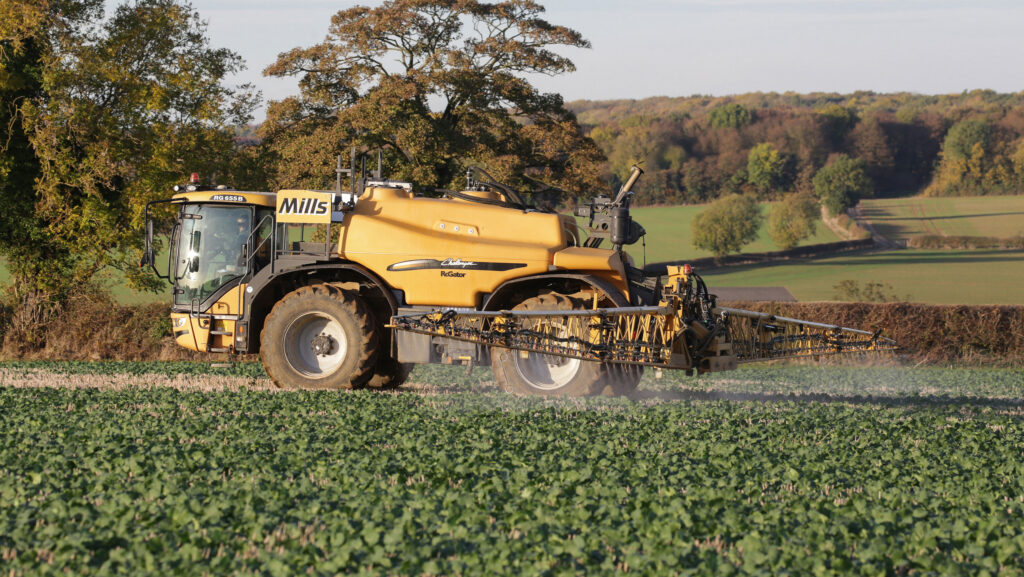
Aphicides are having to be applied as there has been an abundance of aphids and also leafhoppers, which can vector barley yellow dwarf virus by aphids and wheat dwarf virus by the leafhoppers. This has become a big problem in the East.
Soil temperatures
Oilseed rape crops have now got away from the challenge of cabbage stem flea beetle adult damage and are now filling out nicely.
Cereal volunteers and grassweeds have been tidied up with good efficacy so far and broad-leaved weeds are being suppressed where needed before we go in with propyzamide.
I have looked at some soil temperatures on my clients’ farms locally and we are now getting down to 10C and less and thus propyzamide applications can be planned.
It’s now nearly the time of the year where we cannot travel the fields for much longer, but if the weather remains settled there will still be opportunities to travel and keep on top of aphids, potential grassweeds and anything else the season throws at us.
I am now looking at and planning some more slightly unconventional spring crops such as chickpeas and millet on farm that might suit the warmer and drier climate. Could these be a big part of our future rotations?
East
Rory Kissock, Farmacy
(Essex, Herts, Cambs and Suffolk)
Cereal drilling is pretty much put to bed now in the area except for the last few acres following roots. Emergence has been very uneven, mostly relating to soil type and moisture retention.
Early sown crops have taken much longer to emerge due to dry seed-beds. This has made top up residual herbicide treatments and barley yellow dwarf virus timing very difficult.
AHDB data shows that nationally circa 36% of aphids caught in traps have been carrying virus. Last year the average was 34% and between 2020-2024 the average was 22%.
Due to the warm conditions recently the T-Sum 170C has accumulated quite quickly on early sown crops, ongoing monitoring for well timed insecticides is important to reduce the risk.
The slug risk on heavy land cereals following OSR or any large biomass stewardship mixes containing brassicas has significantly increased due to the recent rain.
Fields that are yet to emerge should be monitored for seed hollowing and those just emerging for leaf striping, traps containing layers pellets are a good indication of the field-by-field risk.
Oilseed rape crops have certainly enjoyed the recent rain, applications of biostimulants or nutrition have helped these crops grow away from the pressure from cabbage stem flea beetle at a very crucial time.
Clethodim applied for grassweeds have been successful aided by the warmer weather.
The addition of aminopyralid to Belkar (halauxifen-methyl + picloram) in the form of LaDiva gives us a flexible approach to broad-leaved weed control when the target weeds are smaller getting the best out of the actives applied.
This then allows the application of propyzamide to be far more accurate when soil temperatures and soil moisture are right.
Beet yields
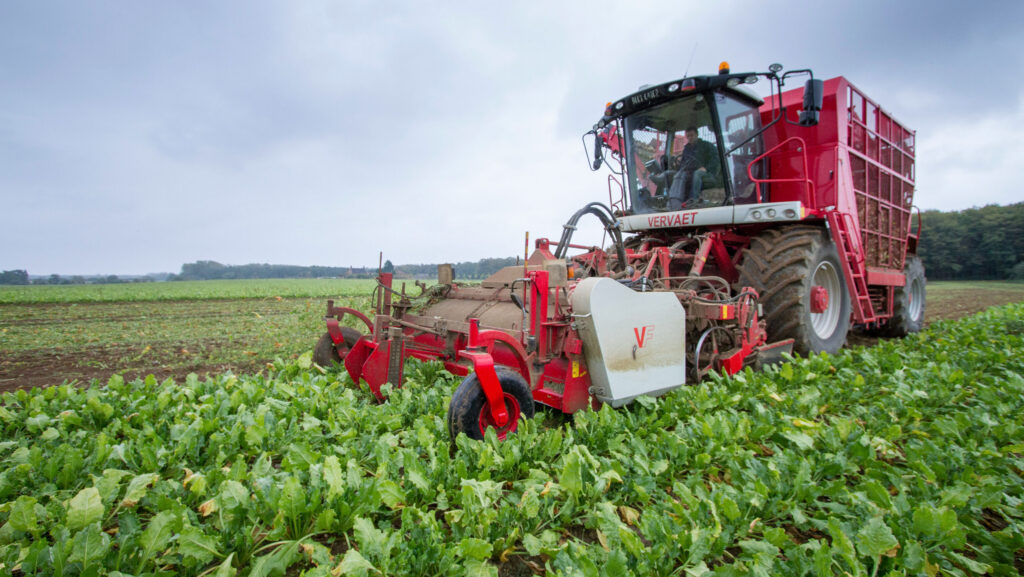
The sugar beet campaign has started, and yields are generally poor as expected.
There has been a huge range of yields, mostly down to soil type, but some growers who have access to irrigation have utilised this and the yield increase is quite significant.
Unirrigated medium soils are producing circa 50-60t/ha adjusted compared with irrigated crops on similar soil producing circa 70-75t/ha.
Waiting to lift beet in the hope of increased yield is probably optimistic, if the following crop is wheat, then it’s worth thinking about the impacts of later drilling and the reduction in yield potential.
Winter bean drilling has been delayed due to the recent rain. Due to the limited post-emergence herbicide options, a well-timed, robust pre-emergence herbicide is very important.
My advice would be if the spray window following drilling for pre-emergence herbicides is catchy then hold off drilling till conditions allow for spraying after.