Crop Watch: Drilling beans deeper and yellow rust in wheat
 © Tim Scrivener
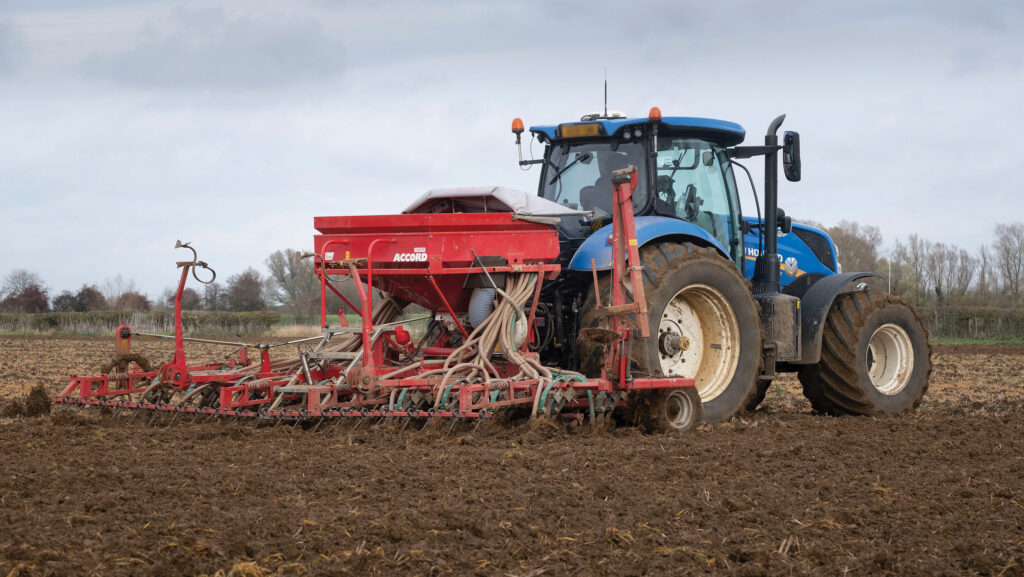
The good autumn conditions mean growers have progressed well with their autumn fieldwork. This week, the topics covered by our agronomists include winter bean drilling and the chocolate spot risk next spring, yellow rust being spotted in early drilled wheat in Scotland and short-term grass crops in the South West.
See also: Rapeseed oil producer reveals how he grows a successful crop
West
Dominic Edmond, Matford Arable (Devon/Cornwall)
At the end of the last Crop Watch report I was hoping for good fortune with the weather forecast, and I’m pleased to say we’ve had a very kind autumn.
Rain didn’t arrive in October until late in the month, which meant most crops were drilled by the time it arrived. Good soil conditions allowed seed-beds to be created easily, so crops went in well.
Parts of Exeter and East Devon are still in a severe drought situation, which resulted in delayed emergence of some crops. With relatively high aphid numbers being recorded this was no bad thing.
The two to three inches of rain towards the end of October accelerated emergence of cereal crops, and good weather conditions has allowed applications of esfenvalerate or lambda-cyhalothrin to be made giving timely protection against BYDV aphids.
The downside of the timing of the rain was some emerging crops revealing transitory herbicide effect, particularly in my experience from picolinifen. New green leaves are reducing the visual impact and in no time crops will recover.
Being in the fortunate position of not having to tackle very much blackgrass, most herbicide programmes were tailored for annual meadowgrass and broad-leaved weeds with an increased use of Alternator Met (metribuzin + flufenacet + diflufenican), which seems to give slightly improved groundsel control.
For other farms that have mixed populations of brome grasses, pre-emergence applications of flufenacet/diflufenican products have been made as a holding job, before making follow up applications later in the season.
Another plus is slug pressure is generally low, with only a small number of crops requiring attention.
Grass crops
The good conditions also allowed plenty of opportunities to plant short-term grass crops, of which some of the earlier drilled crops have allowed a much needed cut this autumn.
Some of the September-drilled grass has been very slow to emerge, but most are now established and recent conditions have allowed some tidying up of weed burdens with seedling docks and chickweed dominating.
Attention has already turned to maize requirements for the coming spring, with early indications determining that seed supply will be tight.
Many conversations have been had, and with forage reserves low, there is plenty of reasons to focus on the spring already. Never a dull moment!
East
Ryan Baker, Frontier (Suffolk/Norfolk)
Despite two named storms and their accompanying wind, the majority have caught up with spraying in the past two weeks.
The wind, however, has allowed land after beet and failed oilseed rape to continue to be drilled in phenomenal conditions and haze quickly. It is likely that more land after beet, that was originally destined for spring barley, will now be drilled with wheat.
Residual herbicides that went on in the dry have now activated with sufficient moisture. Cinmethylin has continued to perform well in the highest-pressure fields.
Top up herbicides continue to be applied based upon either flufenacent or bixlozone. Fields have been categorised based on their inherent grassweed burden, with the most challenging fields receiving bixlozone.
In these scenarios, beflubutamid should aid any challenging spring broad-leaf weed issues.
With warmer temperatures continuing, aphids are still at the forefront of the mind. Many crops that emerged quickly and evenly at the beginning of September, before land dried out again, have already received two aphicides with thoughts already turning to whether there is justification for a third.
Frit fly has also been seen, especially after legume fallows. Bean seed fly has been reported after pulses and sugar beet where bare soil has been visible. The key symptom to look out for is early seedling death.
Winter beans
Winter beans have started to be established in the past week. Soils are still warm, so deeper drilling to delay emergence has been considered.
Many have remembered that the earliest drilled, and thus lushest, bean crops in the spring last year had the greatest early chocolate spot pressure.
In the East, phoma risk is still low. Many have included a preventative fungicide with any broad-leaved weed herbicides. This will allow propyzamide to be applied later where a wet leaf is more likely.
Soil temperatures are still too high for application to oilseed rape yet. Corteva’s app gives a good map based early warning for when appropriate conditions occur.
Consideration must be given to the thicker canopies of early drilled crops and getting the herbicide down to the soil.
Mild weather has continued to aid sugar beet yields. No records are being broken, but there have been some respectable yields considering the dry spring the crops have endured.
Sugars have been average with late rain and regrowth after leaves were lost to drought both diluting sugar content.
South
Oli Pilbeam, CCC and CLM (Kent and Sussex)
Crops went in well into dry but good seed-beds, with most wheat drilled in the first three weeks of October. Emergence has been patchy because it’s been so dry, with some plants at two-leaf stage and some just emerging, but I’m hopeful it will even out.
Some blackgrass and ryegrass is evident, but we’ve applied pre- and post-emergence herbicides. We juggled our plans in response to the weather, using an aclonifen and pendimethalin-based pre-emergence then, two to three weeks later, a post-emergence of cinmethylin and flufenacet.
Putting our best products on later when there was some moisture in the soil was a risky approach had it come wet.
Thankfully, it didn’t, so we benefited from a prolonged effect of the pre-emergence, plus the better chemistry later, resulting in a longer duration of chemical in the soil. The Luximo (cinmethylin) is doing a cracking job on the ryegrass so far.
Aphid numbers are higher this year, so we are having to spray against barley yellow dwarf virus.
There seem to be more aphids every year – a combination of not getting the “proper” harsh winters we used to, and a reluctance to use insecticide these days – partly as a result of the Sustainable Farming Incentive (SFI) action, which pays farmers not to.
Meanwhile, the lack of rain means we haven’t put any slug pellets on the wheat, which represents an easy saving of at least £15-20/ha.
Oilseed rape
Oilseed rape is a really mixed bag. We’ve had to write off some ground because of flea beetle, but elsewhere – even just a few miles away – fields are really strong, corner to corner.
Despite the margins looking strong on paper, this year is a reminder of the awkward beast it can be, with no rhyme or reason why some is better than others.
After two good years, across the South East there has been about 15% more sown this year, but it will be interesting to see how that differs from the harvested area.
Phoma and light leaf spot levels have been very low to date so I’m hopeful we can tie in treatment with the propyzamide application as soil temperatures decrease.
The Rural Payments Agency has quickly turned around the SFI applications I made, which is refreshing to see, although there were some compromises with certain options I couldn’t apply for because of glitches in the system.
Despite the understandably massive frustration and anger surrounding the scheme this year, I suspect SFI27 will be popular when details are released. With cashflows tight, people will go for it, because that consistent income will be important.
North
Greg Dawson, Scottish Agronomy (East Scotland)
© Blackthorn Arable
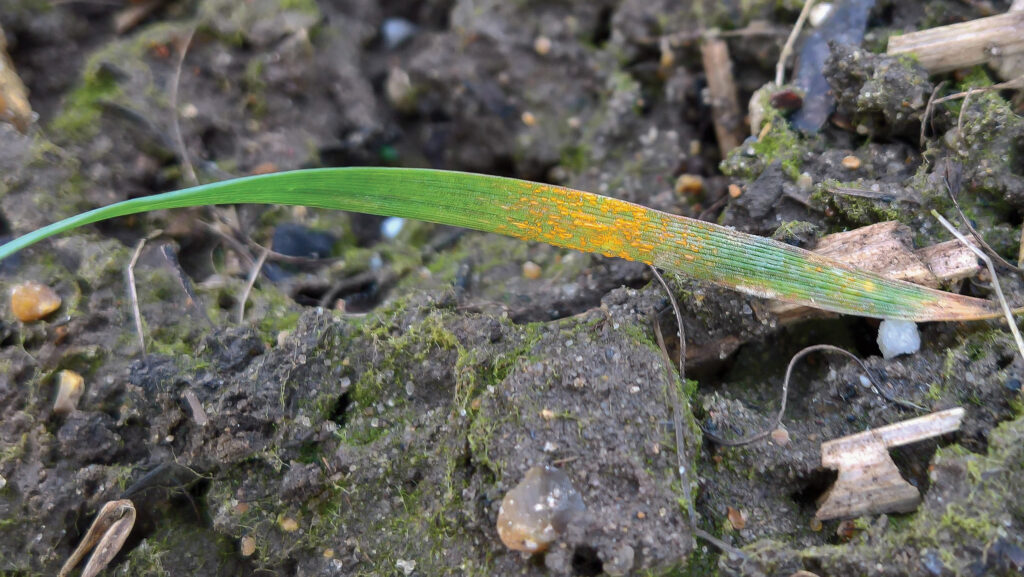
Yellow rust is already showing in some wheat crops drilled in early September in central Scotland. The regional differences in fieldwork progress I highlighted last month are now playing out in autumn crop development and disease progression.
Earlier drilling, as growers respond to volatile weather patterns, favours yellow rust, although it is not the only factor driving the disease.
The trade-off growers face is that delaying drilling increases the risk of wet weather preventing establishment or forcing fieldwork in conditions that damage soil structure, with knock-on effects for crops and the environment.
For now, those wet-weather risks outweigh the extra yellow rust risk associated with earlier drilling, while effective fungicides remain available.
Yellow rust must, however, be considered alongside other crop risks, including septoria. Rainfall over the coming months will determine whether the extra disease risk from early sowing makes protecting green leaf area and yield potential challenging enough to tip the scales.
Pigeon pressure
Winter oilseed rape canopies also vary, but winter weather and pigeon pressure could change the picture considerably before spring.
Warmer air temperatures have put stem canker risk on the radar for agronomists and growers in Scotland.
So far, however, there has been no marked trend towards more autumn phoma symptoms. This is consistent with AHDB forecasting, which still puts Scotland at lower risk than areas further south.
Scottish potato growers were on the more favourable side of the north-south weather divide for harvest 2026, but low growing-season rainfall was still a challenge in several regions. Water availability has strongly influenced both yield and the quality of potatoes now in store.
Sampling shows that in some cases, variation within fields is substantial, reflecting variety traits, soil characteristics and irrigation layout.
With rainfall patterns becoming more variable, all three will feature as planning for the 2027 crop progresses.