Crop Watch: High aphid numbers in peas and wheat
 © GNP
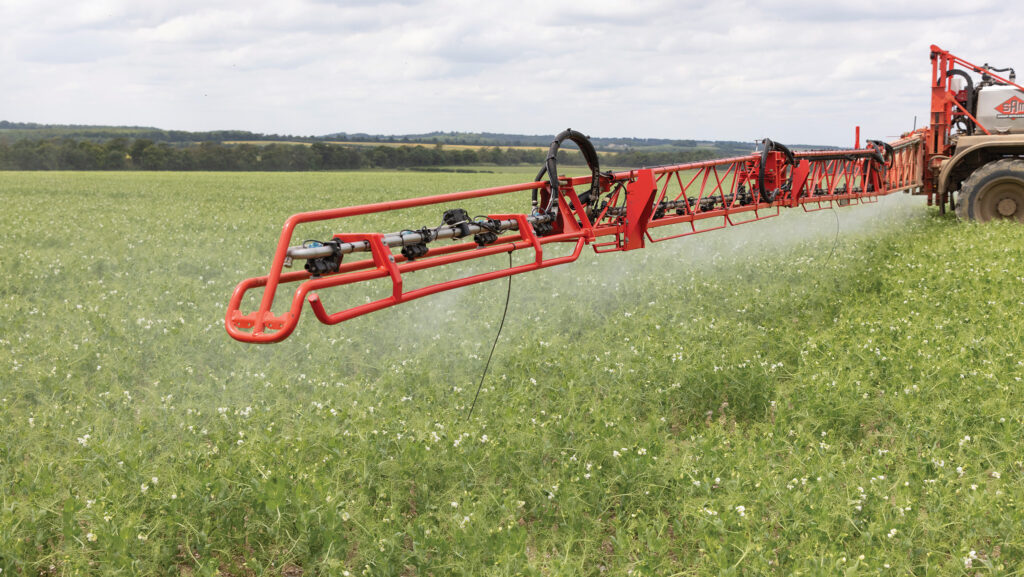
© GNP A change to more unsettled weather has brought an increased disease risk and high numbers of aphids on wheat ears and in pea crops.
See also: Caithness farmer grows over 10t/ha spring oat crop
North
Stephen Bell, Fane Valley (Northern Ireland)
Following a spell of dry, warm and settled weather through the latter half of May, the change to mild, wet conditions has driven spring crop growth, but also lifted disease pressure across the board.
In winter wheat, dry weather between T1 and T2 eased septoria pressure and allowed T2 sprays to be completed in good time.
Yellow rust remains active in susceptible varieties, particularly where early infection got away in crops that missed a T0 due to poor weather.
Yellow rust is relatively easy to control in theory, but spray timings are often dictated by the weather and, if missed, management can quickly become more difficult in practice. Variety choice will therefore be even more important for the autumn season ahead.
As attention turns to T3, fusarium risk is rising in this wet spell, with programmes likely to centre on prothioconazole, tebuconazole and strobilurin mixes where additional yellow rust activity is needed.
Spring crops have got off to a good start and are responding well to the recent rain, but mild conditions are also encouraging weed flushes and increasing disease pressure.
Early plant growth regulator and manganese treatments have worked well, and the focus is now shifting to weed control and disease management at the end of tillering and into early stem extension.
Priorities for maize
In maize, warmer, wetter conditions are supporting rapid early growth. Before crops reach the six- to eight-leaf stage, post-emergence weed control and foliar nutrition remain priorities, with phosphate especially important during early establishment and root development.
Potato crops are at varying stages depending on planting date, with blight control already under way in the earliest.
The damp weather has improved residual herbicide activity in the main crops, but as plants begin to meet along the rows, blight management becomes critical.
Mild nights and recent moisture have raised blight risk, so follow a well-planned programme with alternating modes of action and a mix of actives, matched to crop growth stage.
Waste potato dumps should be covered and volunteers controlled to reduce initial inoculum.
In the absence of mancozeb, additional alternaria control needs to be built into programmes, particularly in susceptible varieties.
Use tissue analysis to plan foliar nutrition, with manganese and magnesium best applied preventatively before symptoms appear.
Recent warm, dry weather has increased aphid numbers across all crops, and the return to damp conditions will encourage slug activity.
Vigilance is needed to prevent damage in vulnerable crops, especially emerging fodder beet and potatoes.
South
Anna Dunford, Hampshire Arable Systems/AICC (Hampshire, Surrey and Isle of Wight)
Wheat is flowering 10-14 days earlier than usual due to the high temperatures, and many had finished by the end of May.
T3 fungicide applications have been bought forward to protect the flowering ear during the wet spell, to prevent fusarium infection.
However, for crops that have finished flowering the T3 is primarily a foliar top up for rust.
Some crops that received a later T2 that hit most of the ear can potentially forgo a T3 application, but will be carefully monitored especially if a rust susceptible variety.
Thoughts are turning to pod sealant applications in oilseed rape, timed two weeks pre-desiccation when all the pods have reached their final size (around mid-June).
Many varieties now have pod-shatter resistance so the decision to apply pod sealant is down to the opinion of the grower.
Going through the crop at the stage where the crop is still green and supple can bring benefits of pushing it down and, therefore, hopefully causing less damage when going through for desiccation – but it is an extra pass.
Maize post-emergence applications have demanded precise timing, while maize has enjoyed the heat and cracked on, weeds are slower. It is a balancing act to catch the main of the weed flush, while staying within growth stage of the maize (by eight leaf).
Pea protection strategies
Peas are in flower; high numbers of aphids have been treated accordingly and continue to be monitored.
It is good to see all stages of ladybird and hoverfly lifecycles in crops after treatment. Pea aphid populations contain varying levels of resistance to both pyrethroids and pirimicarb, so alternate products such as Insyst have been used.
Pea moth traps should be out in fields and being checked, the threshold is 10 or more moths caught on two consecutive days. Visit the PGRO website will provide a precise spray timing. The mid-flowering fungicide is a good opportunity to get some manganese on the crop.
Spring cereals have been most affected by the drought. Crops have a lack of tillers and are racing through their growth stages.
Most spring barley crops have received one prothioconazole-based fungicide at awn emergence/flag leaf and that will be enough.
Farm visits are getting shorter, and conversations around next season are happening.
Trial season is beginning, so it will be interesting to see how new varieties have fared, but perhaps most beneficial will be the conversations between agronomists and growers of their experiences of the year.
West
Ben Allard, Pearce Seeds (Dorset, Wilts and Somerset)
A lot has changed over the past few weeks since my last Crop Watch, with crops flying through their growth stages, more often than not caused by stress rather than steady growth.
Warm and dry, cold and wet, and then extremely hot over the past few weeks, with this weather I’m not surprised the crops have been stressed.
Winter wheat T3s have all but been applied now, which have been made up of tebuconazole and prothioconazole mixtures to help protect the ear, as well as tackle any small amounts of yellow rust present in the crop.
There has been big discussion over the past few weeks about aphid populations, with high numbers of grain aphids being recorded.
This has led to hard conversations about using insecticides at T3, which would be a first for me.
However, thankfully the beneficials have kicked on and done their job, with aphid populations dramatically reducing over the past five days, also helped by the wet and stormy weather, which I expect has washed them off.
Sadly, the spring barley in my area has suffered a lot with the recent weather, to the point that a majority of my barley is half the height it should be, has dropped tillers and is sadly not looking too promising, with awns fully out and the ears emerging shortly.
Anyone expecting a good barley straw yield this year will be heavily disappointed. Sadly, this has been a result of the weather since drilling.
Spring barley has had a T1 application to clear up weeds, and the inclusion of azole and strobilurin-based fungicides to help protect the crop going forward.
Unless conditions change, this is all the barley will be having, as it currently has limited potential.
Key maize weed control and nutrient issues
Maize is all now drilled and above ground, moving along nicely. The hot weather was ideal for maize, followed by the rain over the previous couple of days.
The crop will soon start to fly away, so now is the time to be looking for weeds and getting spray plans lined up.
The typical culprits are present in maize again, however this year I am coming across more black bindweed compared with previous seasons, which will require a different treatment.
This includes the use of Peak (prosulfuron), which tackles broad-leaved weeds in maize, but not grassweeds. Therefore, you need to be sure which weeds are most important to target.
The first six to eight weeks of maize are the most important time to help set the crop up for the rest of the season.
It’s key that weed control and nutrient issues are addressed in order to give it the best chance possible going forward.
Not only is improving weed control and nutrient deficiencies important, but also addressing disease issues in some maize crops is vital.
While a lot of growers often dismiss disease control in maize, it’s worth noting that with more maize being grown, often back-to-back or in a short rotation with winter wheat, we should not be turning our back on disease.
Instead, we should be looking to implementing an array of cultural and chemical controls, to help reduce the impact in the current season and in future years to come.
Overall, maize is looking good, and the weather we have going forward should set the crop up nicely, which is a massive contrast to last year’s drought.
East
Harriet Bateman, Prime Agriculture/AICC (West Norfolk, Cambs, south Lincs)
We are now in June and, finally, the rain has arrived. Certain areas have benefited significantly from the recent welcome rainfall, while others are still hoping for more – but is it too late?
Winter wheat is receiving its final T3 application. Like last season, some wheat crops are carrying higher infestations of aphids in the ear.
The threshold is quite high at two-thirds of tillers infested at the start of flowering.
Crops should continue to be monitored and, in most cases, treatment should be avoided, as there is some pyrethroid resistance within the aphid population and treatment is broad-spectrum, potentially damaging beneficial insects.
Continuing with the aphid theme, they seem to be quite prevalent across all crops recently, with some potato crops reaching threshold levels and treatment required in vining peas.
However, black bean aphids have yet to be seen in beans at threshold levels, where treatment should be considered when 5-10% of plants are affected.
Variable beet
Sugar beet in my area remains very variable. Some crops will certainly reach canopy closure between the rows before the longest day, while a large area has only just chitted and is trying to break through the soil surface.
In these patchy emergence situations, heavier herbicide mixes applied at shorter intervals are required to achieve maximum weed control.
The newly emerged pest, the beet moth, has been observed in quite a few crops across the region.
The British Beet Research Organisation recently announced that emergency authorisation has been approved for the use of Coragen (chlorantraniliprole) for the control of beet moth.
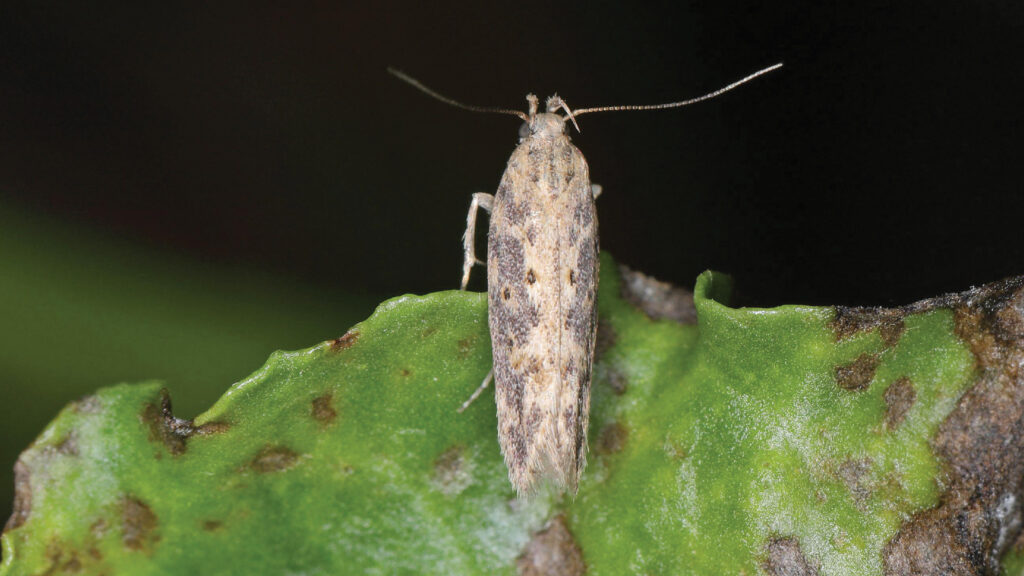
Beet moth © Alamy Stock Photo
We recently experienced a full Hutton period in potatoes and it looks as though we may have several more with the upcoming weather pattern.
As a reminder, Hutton criteria are met when two consecutive days both record a minimum temperature above 10C and at least six hours of relative humidity at or above 90%.
This serves as a general reminder that appropriate product choice, the use of differing modes of action, and maintaining robust spray intervals are all key to reducing the risk of blight.