Crop Watch: Late beet emergence and cereal leaf roller moth
 © GNP
© GNP This week, the key topics include 10-week delayed sugar beet emergence, the first season since the 1960s managing potato disease without mancozeb and wheat fields in the East seeing damage from the cereal leaf roller moth.
See also: Dyson Farming launches UK’s biggest research farm
East
Ryan Baker, Frontier (Suffolk/Norfolk)
In one day at the end of May, we had anything from nearly 70mm on the coast to no rain at all further inland.
However, the rain last week was relatively universal with everyone receiving a useful amount. Combined with warm sun this week, the beet and combinables are almost visibly swelling by the day.
Many T2s were applied to emerging ears, bringing the question of whether to ear wash or not.
There is no doubt that Adepidyn (pydiflumetofen) has a positive impact on the control of ear diseases.
Nonetheless most have still opted for a T3 to both fully protect the ear and to top up rust protection.
© Tomasz Klejdysz/Alamy Stock Photo
Similarly, many spring barley crops have only received one fungicide. They have limited potential, with their ear being set early and tillering minimal.
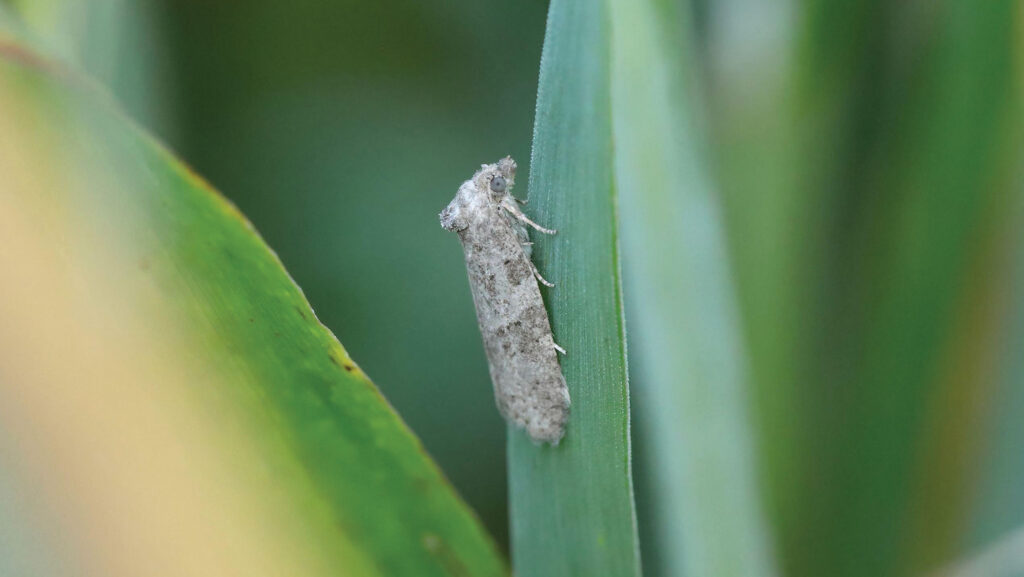
Some fields have shown sporadic wheat ears dying. Further investigation has found the stem has been severed just below the ear.
Discussions with Adas suggest it is a species of tortrix moth, likely to be cereal leaf roller moth.
Vining pea harvest
The first crops of vining peas were harvested last week, with the final crops only drilled the week before.
Those currently at cream bud have received one application of pirimicarb for pea aphids. Recently emerged crops are also showing high numbers of pea aphids.
Treatment is advisable to prevent virus spread; transmission is possible even with low numbers of aphids.
The majority of beet were meeting in the row by the Suffolk Show and will easily be closed in by the Norfolk Show next week.
However, last week there were still fields that were only just emerging. It is impressive that some beet seed has laid dry for 10 weeks before germinating recently.
Potentially, we will still be planning beet herbicides as the first combines roll.
Oilseed rape looks to have great potential, with large pods already swelling well. The ideal timing for pod sealants is once the pods have reached their maximum size but are still green and flexible, usually around eight weeks prior to harvest.
Glyphosate for desiccation can be timed about four weeks later once two-thirds of the seed in pods on the main raceme are starting to change from green/red to brown.
The approach of the end of the season brings around trials days and variety tours.
Make sure to assess how varieties have performed in your local geography before making the decision on seed choice for this autumn.
West
Dominic Edmond, Matford Arable (Devon/Cornwall)
Flaming June has arrived without the flaming part of the equation. The mini heatwave saw maize loving life, jumping out of the ground and changing day-by-day. Winter barley crops turned rapidly. We then found ourselves with rain, northerly winds and weather not dissimilar to February.
As soil temperatures dropped and the wind did its job of making it wonder why it had emerged, maize went from a lovely green colour, to standing still and going yellow and blue in places.
Thankfully, as I write temperatures are on the rise again and the maize should pick up nicely with most crops around the six-leaf stage.
Pre-emergence sprays have done a good job this year, with weed pressure low, but most are getting a tidy up with mesotrione mixes along with either nicosulfuron, prosulfuron or clopyralid for the plentiful ryegrass, mayweed and thistles that are about.
Fodder beet has had a good start this year, not hanging around going through its growth stages quickly, while weed burdens have been manageable and control good.
The assessment of spring barley crops can only be described as variable.
While there are some quite decent crops with potential, there are too many average to below average crops.
Barley yellow dwarf virus (BYDV) is the worst I’ve ever seen in 30 years of doing the job.
Some later-drilled spring barley crops look like they’ve had an application of glyphosate. A mild winter with overwintered aphid numbers with high infection levels this spring must have contributed and would explain the numerous ladybirds spotted in fields this spring.
Spring barley
Most spring barley crops are getting their T2 spay as awns emerge, albeit with a close eye on costs.
The T3 wheat flowering spray coincided with the inclement weather, which was frustrating, but most have been applied or about to be applied.
The recent weather made me glad I kept the T2 applications robust against septoria, but I also found myself chasing pockets of yellow rust at T2, particularly in Champion.
Winter barleys are changing rapidly, a bit too rapidly in what have been the drier parts of Devon and Cornwall. But where there has been sufficient rain, they are looking promising.
As we approach harvest time, one can reflect that yet again the weather has a firm grip on everything we try to do to manage a crop, but despite a record wet winter, a dry and relatively cold spring, harvest overall should be reasonable and, hopefully, coincides with firming prices.
North
Greg Dawson, Scottish Agronomy (East Scotland)
As I write my final Crop Watch article for spring 2026, the final crop protection treatments on winter wheat and spring crops are well under way.
Heavy showers and longer spells of rain have increased the risk of microdochium, fusarium and the mycotoxins resulting from the latter.
It has also made timing protective sprays accurately more challenging. The rain has, however, provided a welcome boost to soil moisture ahead of grain fill.
In May, I commented that yellow rust was apparent in untreated winter wheat trials in eastern Scotland.
The disease has accelerated in the interim and more varieties have succumbed.
Leaf wetness and rising temperatures have given rise to growing septoria pressure.
The double whammy of disease will make it extremely challenging to identify “low risk” varieties for drilling in the north this autumn.
This all serves to confirm the importance of an integrated approach that utilises all available control measures. This includes appropriate fungicide selection.
Potato disease
As the crop protection period for cereals closes, the management of growing potato crops gets under way.
This year marks the first season since the early 1960s without access to the protectant properties of mancozeb.
Growers are acting to plug the holes it leaves in managing late blight, alternaria and reducing the risk of fungicide resistance developing.
Below the soil surface, careful attention is also being paid to managing soil moisture deficits to maintain yield and, crucially, quality for an increasingly discerning market.
Early irrigation has been required in many Scottish ware crops despite the broken, showery weather conditions.
As a sector, we’re not always good at communicating the reasons for plant protection products and our conspicuous utilisation of resources including water.
There needs to be greater public cognisance of their contribution towards sustainable, reliable and safe food production.
This includes recognising the strides that have been made towards sustainable use through regulation and professional stewardship since the green revolution upgraded the quantity and quality possible from the finite area of UK farmland.
South
Oli Pilbeam, CCC and CLM (Kent and Sussex)
As we head towards harvest, I’m expecting oilseed rape to come up trumps again this year.
It’s always difficult to judge oilseed rape yield until you’re actually in the crop, but so far it’s looking good.
The market is strong and, with bonuses, it could well be the best-margin crop on the farm. I hope I’ve not cursed it now – thunderstorms stay away.
Podstick has been applied a few weeks before we go through again with the Roundup (glyphosate), particularly on varieties with poor shatter-resistance characteristics.
Flea beetle is still a potential issue – but the prime infestation window is typically the August bank holiday weekend and we planted it later (second week in September), which seems to have helped combat this.
Overall, it’s set to be a very variable harvest, but it’ll probably be a heavy land year because that ground kept hold of moisture in the spring.
It’ll still be a location- and land-specific picture, though. My land over gravel is certainly a sore sight.
Contrast that with the heavy land on Romney Marsh and the land over chalk on the South Downs where there are some really strong crops which are still growing nicely.
Vibe and Arnie seem to be standout varieties.
T3 sprays
Disease levels have been remarkably low, even with the recent rainfall, and we haven’t seen septoria take hold.
This meant we didn’t need to go in with an expensive T3 spray, keeping it cheap with tebuconazole, plus or minus azoxystrobin, enabling us to keep herbicide spend under £100/ha on many fields, particularly the blended varieties.
Meanwhile, the Cereals event was a fantastic opportunity to hear about harvest prospects in other parts of the country, network, see some interesting kit and keep informed on trials data.
We’re also planning for the opening of the Capital Grants offer in July, plus the two SFI26 application windows.
It’s important to have a plan as regards SFI. The key is not tying yourself up in knots.
I’ve seen situations where people have tried to tick every box and it becomes a mess. Keep it simple and make it work with you.
You may even be doing some of the “actions” anyway – so could be paid without having to change anything you’re doing.
Putting land into SFI might not make the returns of oilseed rape at over £450/t – but it spreads your risk and offers a guaranteed revenue which, in these unpredictable times, there is a lot to be said for.