Crop Watch: Protecting OSR yields and weevil damage in pulses
 © GNP
© GNP This week’s key discussions include protecting yields in flowering OSR crops, fertiliser strategies for milling wheat and the severe pea and bean weevil attacks in the north.
See also: How polycrop is paving way to premium feed market
North
Conor Campbell, Hutchinsons (Northumberland)
We say this every year, but the variation on farm and between farms currently is staggering. The colder nights and damp soils have meant they aren’t much above 10C.
It has taken quite a while for fertiliser to get into the plant, particularly if applications were urea-based. The combination of our early drilling window and some quick developing varieties is also contributing to the extremes.
Timings have been a challenge on the more forward wheat crops due to the wind. T1s are going on, with most crops now at growth stage 32 and the more forward ones showing a bit of leaf 2.
With plenty of septoria in the base and a good number of rainfall events, T1 product choice has been robust.
Yellow rust has started to rear its ugly head again, not in all of the varieties you would expect, but certainly in some, so the product choices have been “well rounded”.
There is plenty of scarring from T0s that have forced what would have been severe infections out of the plant.
This looks ugly, but far less damaging than uncontrolled yellow rust in a susceptible variety.
Barley fungicides
Barleys have been slow to move and I think this has really highlighted compacted areas. They have jumped now and are racing through to GS39-41, so T2 will be this week.
A good fungicide at T1 has meant that these are looking clean, so the question of product choice at T2 is a good discussion.
Do you go for the best option available, knowing it has excellent longevity (harvest is three months away), or do you go for something middle-of-the-road and perhaps come back with a top-up on the ear? Answers on a postcard, please.
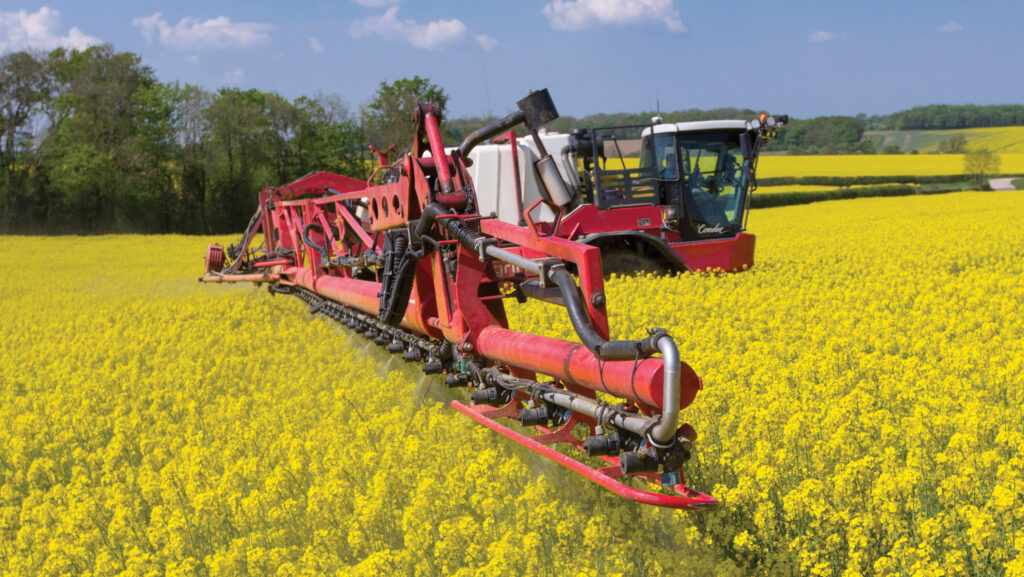
Oilseed rapes are now at mid-flower and look fantastic in the main. Prices also look good so those who have stuck by the crop over the past two or three years will be pleased.
Our first flowering fungicides are going on as we speak.
Don’t forget about light leaf spot, as we often overlook this disease now that the crop is flowering, but you will notice its presence on the pods when walking pre-harvest.
We are always in a protectant situation and some azole with/without a strobilurin doesn’t cost a lot, but can really protect yield.
Pea and bean weevil has been quite severe in both winter and spring beans.
I’ve been through my winter beans with some foliar nutrition and N-fixing bacteria.
I’m just waiting for them to start flowering before committing to my first fungicide.
South
Neil Harper, Agrii (Kent)
It’s that point in the season when we need to start making decisions to maximise yield without overspending, with final nitrogen applications and T1/T2 fungicide decisions most on our minds.
Fortunately, most crops still look extremely promising. Apart from some patchy rain, April has been dry, but this hasn’t held anything back yet.
In fact, a combination of early drilling, mild autumn weather and the recent sunshine means that many crops are 10 days ahead of where we would expect them to be this time of year, which keeps us on our toes as we juggle fungicide timings and herbicide cut-offs.
Nearly all T1s have gone on. There’s still a lot of septoria visible on leaves four and five, and yellow rust is in the usual varieties.
Wheat crops are very erect this spring, and with the localised downpours and frequent heavy dews, we haven’t considered it a low-pressure situation at T1, although we should be in a protective situation.
We grow a lot of milling wheat, so it’s no surprise there has been debate about how to meet protein specifications without overspending.
Where farmers have sold forward on a milling wheat contract for a crop expected to average 9t/ha, there is still a £10-£20/ha premium, taking into account the recent fertiliser price increases.
There are a few options to achieve this. We can cover ourselves with foliar feed by using a Protol-type liquid urea.
Or look at a methylated urea product at T3 timing, although we need to be conscious that they can take longer to become fully available to the plant.
Milling wheat
Milling crops still need to be treated for their intended market.
If we don’t feed them enough, there’s the danger they become a low-yielding feed wheat, and farmers don’t see a return from it.
We have had more conversations about moving 20-30kg N/ha from our planned nitrogen programmes and switching that into a stable amine nitrogen product instead.
These are a cheaper form of nitrogen delivery.
Rapeseed continues to look fantastic, which can sometimes be a worry because it can look too good at this time of year.
However, flowering is progressing well, and the dry weather means sclerotinia pressure is low.
Evidence suggests that retaining green leaf area at this time of year can increase yield, so we have focused on this with flowering fungicides based on strobilurins, with some prothioconazole.
Spring crops have fared well so far. Spring barley is up and away with its nitrogen on. It looks well considering how dry it has been, but it will need some rain before too long.
West
Jamie Armstrong, AICC/Wessex Agronomy (Wilts, Gloucs and Hants)
A settled, drier spell has brought with it some significant diurnal temperature variation, with highs of around 20C in the day dropping to 1-2C overnight, and the odd frost.
Yellow rust, which was easy to find earlier in the spring, seems to have largely cleared up following timely fungicide applications and a shift to drier conditions.
Current wheat crops are looking clean, with good colour and strong forward growth. With the drier weather now set in, it does raise questions on T2 strategy and how much “insurance” is really needed.
Disease pressure, for the time being, feels relatively low, although this can change quickly with a return to unsettled conditions.
In a year when yield will have a big influence on margins, the question is how much risk we are willing to take while reducing fungicide costs.
Oilseed rape is also in good order, although some crops are still showing signs of larvae activity within the stem, causing issues with flower sites.
Most crops have now received their first flowering fungicide.
Where flowering extends beyond six to eight weeks, a second application may need to be considered to maintain protection against sclerotinia, particularly if conditions turn more humid.
Winter barley is now pushing on, with awns emerging across many crops.
Where a final plant growth regulator was required, a T2 fungicide may have been applied alongside, before ears become visible, typically based around an SDHI to protect against ramularia.
Winter beans are just beginning to flower, and many crops are now receiving their first flowering fungicide.
Spring barley
Spring barley ranges from three to four true leaves through to the end of tillering. Some crops are showing signs of frost damage, but overall are moving on well.
Wild oat control is mostly complete, with applications of broad-leaved weed herbicides and a simple fungicide now going on to the more forward crops.
In response to the drier conditions and lower disease pressure, these are mostly based around a straight prothioconazole or prothioconazole + azoxystrobin or pyraclostrobin mix.
Spring beans are sitting around the four to five true leaf stage, and any post-emergence weed control should be wrapped up ahead of the flowering cut-off.
Spring peas are at the four to five leaf and tendril stage. It is important to continue monitoring these crops for thrips (thunderbugs) and pea and bean weevil (notching on leaves), and consider action where thresholds are met.
© GNP
East
Dan Ives, Agrovista (Herts, Beds, Cambs and Essex)
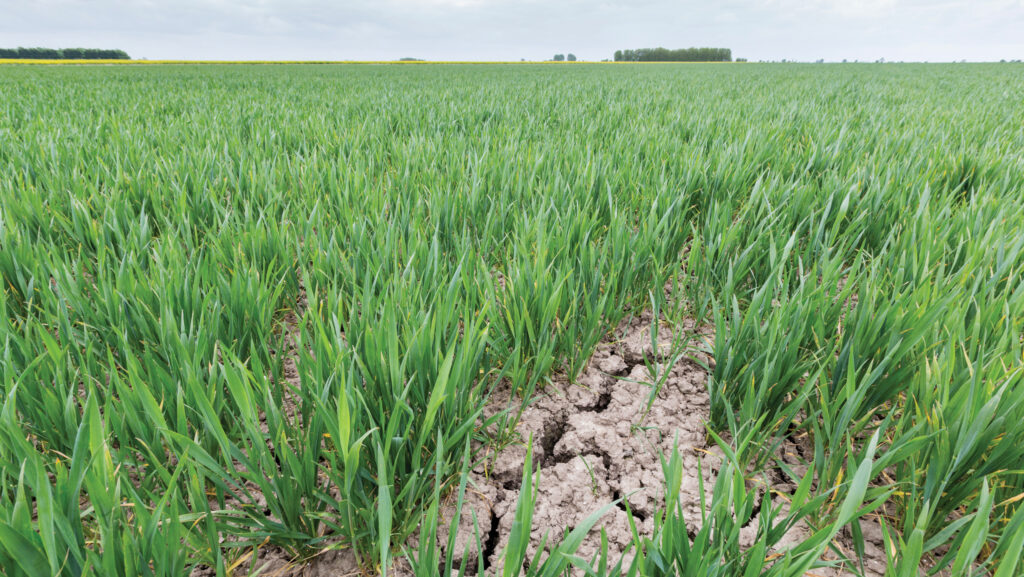
I hoped we would have some rain to celebrate across the region, but sadly not for most.
We’re having to make careful decisions about how to manage wheat crops given the broad range of yield potential.
Overall disease pressure in wheat is easing, but varietal differences are increasingly evident.
Yellow rust is proving more prevalent than expected in some varieties, notably Bamford, reinforcing the need to keep fungicide intervals on track. In contrast, varieties, such as Arnie and Vibe have lower levels of diseases.
Crop structure is playing a key role in disease risk this spring.
Thicker wheat stands were more likely to carry high levels of older septoria in the lower canopy, increasing the importance of a robust T1 fungicide to protect emerging leaf layers.
But depending on soil type and sowing date, several crops are showing signs of moisture stress.
In these situations, we’ve reassessed yield potential, considered the reduced disease progression risk and tailored T1 programmes accordingly, with fungicide spend moderated.
Other wheat crops, at least for now, are not yet in the same danger zone.
These crops will be monitored carefully until flag leaf emergence before any decision is made on further inputs.
Growth regulator rates have been tweaked in the light of the dry weather, or omitted altogether, particularly where lodging risk is minimal.
The priority has been to avoid placing unnecessary stress on crops already constrained by reduced moisture.
The same applies with nitrogen, with rates adjusted in line with the dry conditions and new yield expectations.
Beet establishment
It’s been a good year for sugar beet establishment across the region.
Earlier drilled crops, placed into well-structured seed-beds, were quick to access moisture resulting in uniform emergence and strong, consistent plant populations.