Crop Watch: Romping OSR crops and BYDV warnings
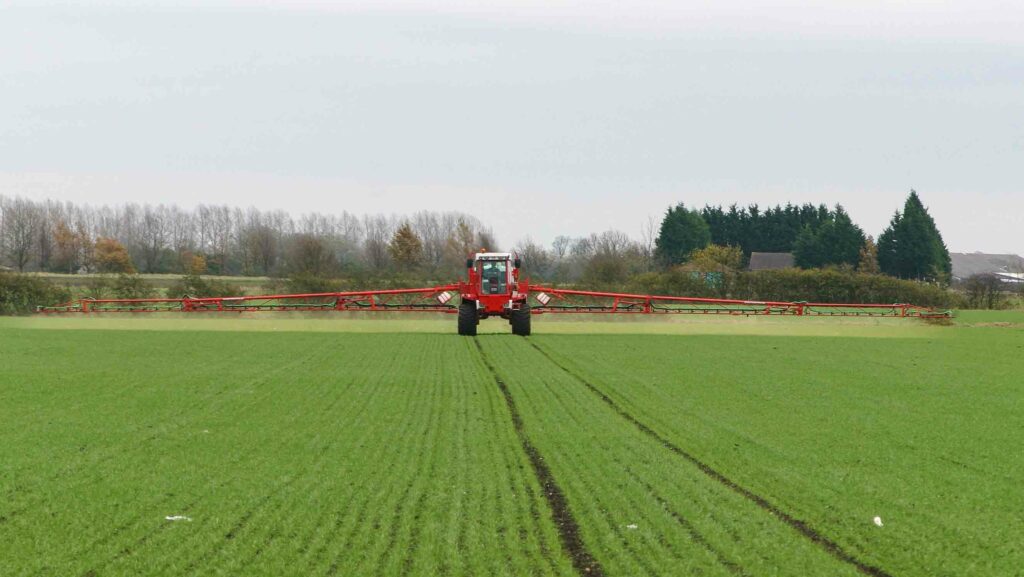 © Blackthorn Arable
Largely fine conditions have seen good progress on winter cereal drilling, with good seed-beds.
However, rapid growth of OSR in October means these forward crops may need careful management next spring.
See also: How one Devon farmer is succeeding with strip-till maize
In the west, growers are being warned about the high incidence of barley yellow dwarf virus, in what could be a high-pressure season.
West: Neil Potts
Matford Arable (Devon)
In the South West, a fortnight of uninterrupted fine weather in the first two weeks of October has allowed the bulk of the maize harvest and winter cereal drillings to go ahead unabated.
This has meant there has been very little damage to the soil structure from forage harvesters and heavy trailers, compared with some years, and that the following cereal crops have in turn been planted into good seed-beds.
The earlier planted cereals are now up and well established, with the most forward now being at growth stage 22/23.
Many of these earlier drilled crops have already received a first application of aphicide for barley yellow dwarf virus control and are due a second one as I write.
With aphids easy to find in crops and the infectivity index being relatively high this year, I would urge all growers to take the application of barley yellow dwarf virus (BYDV) control measures extremely seriously this autumn.
It has been many years since we have had a bad BYDV season, largely due to the extremely effective and targeted control given by Deter (clothianidin) seed treatments.
With these gone and the perfect scenario of early planted crops and high numbers of infective aphids we can expect to see goodly amounts of this yield-robbing virus in untreated crops next spring.
It will be very interesting, also, to see how BYDV-resistant varieties such as Wolverine perform in a high-pressure season.
Fertiliser price
The other big talking point at present is the high price of nitrogen fertilisers. For those who have forward bought the situation is not so bad, but for growers who have yet to order the situation could be quite serious.
I would urge anyone in this situation to talk to their agronomist about this urgently and to start to put a plan into place that will help mitigate the situation.
I don’t think I am being alarmist to say that there will be growers who are going to struggle to get nitrogen this season, even if they are prepared to pay the high price.
In this situation it is crucial that early plans are put in place to get the best from crops that are already planted.
Winter OSR crops, on the whole, have established pretty well, with less flea beetle damage than that seen in the past two seasons. Pre-emergence herbicides, where applied, have worked well.
The potential for next season has been set well, but there are some fairly large problems brewing on the horizon, so as ever it looks like a fairly challenging time ahead.
North: David Martindale
Arable Alliance (Yorkshire)
Good progress has been made with cereal drilling in the past fortnight with any remaining crops of wheat being sown after potatoes or maize as land becomes available.
Seed-beds have been good for the time of year, which makes a hugely refreshing change compared to the difficulties of the past two autumns.
Oilseed rape crops look particularly well whether sown in mid-August or mid-September. The later sown crops have four to six true leaves while the earlier sown crops are above knee height.
The rate of crop growth in oilseed rape during October has been phenomenal. The forward crops will need careful management in the spring regarding timing and quantity of nitrogen fertiliser.
There will certainly be scope to reduce the nitrogen input which will be welcomed by many with the current high fertiliser prices.
So far there has been very little phoma appearing in oilseed rape. Lesions are expected soon though as the heavy rains during late September and early October will have caused some phoma infections.
Any fungicides that are required could well be mixed with propyzamide with or without aminopyralid.
Where broad-leaved weeds such as mayweed, poppy and thistles remain, then the aminopyralid will be required.
September-sown winter wheat crops have established well. Slugs are proving problematic where wheat has been sown after oilseed rape, with timely applications of slug pellets required.
The warm and moist conditions have been ideal for slugs with them having the added bonus of easy movement in many unrolled seed-beds.
Herbicide mixes
Pre-emergence herbicide mixes, primarily for blackgrass control, are back on track for those crops sown in the past two weeks.
September-sown wheat and barley crops have had revised herbicide programmes where the weather prevented pre-ememergence herbicide applications.
Often a weaker peri-emergence herbicide mix has been the Plan B option, while in other situations the pre-emergence herbicide was applied, but the peri-emergence herbicide follow-up was applied two to three weeks too late.
Either way some blackgrass has managed to escape, although numbers so far are not as high as expected.
Contact-acting herbicides are being applied to control dense populations of volunteer beans. However, be patient as most of the limited herbicide options are slow to work.
Winter barley crops are much improved now they have recovered from their pre-emergence herbicide mixes.
Net blotch is already evident and seems to be a disease which is getting more prevalent early in the life of the crop, and could become a problem next spring. A lack of good genetic resistance to net blotch is also a factor.
Winter rye has established well so far. The area of this crop is rapidly expanding and will continue to do so.
Winter beans have been sown into good seed-beds, a fantastic improvement to some which were literally ploughed down and left in furrow over the past two autumns.
There has also been chance to apply the all important pre-emergence herbicide mixes to the beans so they have had the best possible start.
Unsurprisingly there has been lots of talk about high fertiliser prices, especially nitrogen. There will be nitrogen rate adjustments to be made across crops next spring.
However, the level of reductions will vary significantly depending on the nitrogen purchase price and, therefore, the break-even ratio. It will not be a “one cap fits all” with regards to nitrogen fertiliser reductions.
South: Tod Hunnisett
AICC (Sussex)
Another uppy-downy drilling season. People started drilling earlier than the experts would have liked, but I can’t blame them.
Bone dry, rock hard followed by biblical rainfall at times has, astonishingly, resulted in crops being sown in comparatively favourable conditions.
The farmers on the Weald have been looking enviously at those on the chalk who are still able to justify their £150,000-plus drills, whereas elsewhere the ploughs have been dug out of the hedge and the combinations re-greased.
I understand that machinery dealers in East Anglia are now selling more moldboards than ever before. Up yours, Mr Carbon Neutral, people have to eat to survive.
Aphid numbers are creeping up, it’s still very mild, and early drilled crops will need an aphicide.
The excellent Syngenta aphid monitoring service provides a weekly aphid count for given areas, and I get sent free updates from our brilliant local area manager.
The product choice is a bit of a lottery, but fundamentally all we have at the moment is pyrethroids, so usage should be judicious to avoid total resistance.
I imagine the whole world is bored with my soap-box monologue about the total lunacy (and counter productivity) of the ban on neonicotinoid seed treatments.
OSR crops
Oilseed rape crops are romping on quite nicely.
The late-drilling brigade will have some excellent field trials this year; I have farms which didn’t drill until mid-September (against my advice) where the plants did not emerge until mid-October, due to bone dry conditions. The ultimate in late drilling.
Then they got a month’s rain over one weekend. All good fun.
One of the few advantages of having a patch that stretches from near Shaftesbury in the west to Broadstairs in the east, and from the southernmost tip of the Isle of Wight to near Newbury, is that one sees a huge variety of scenarios and strategies. Some of which I get right.
East: Ben Pledger
Farmacy (Bedfordshire/Hertfordshire)
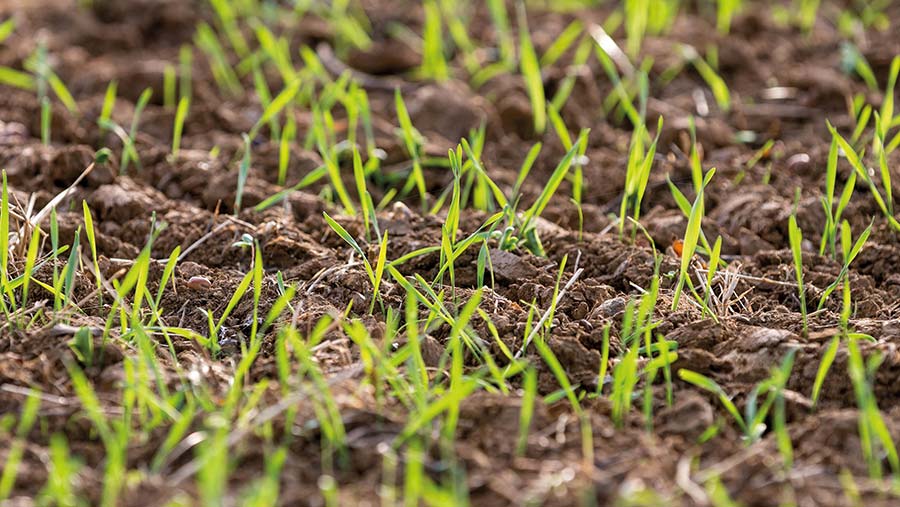
© Tim Scrivener
Autumn cereal drilling is coming to a close in the region, with crops established into relatively good seed-beds.
Thoughts are now starting to turn to management of these crops next spring with regard to higher fertiliser prices.
Some growers have all of their spring nitrogen in store, and others have nothing in store yet.
For those who bought earlier, at a relatively lower price, nutrient management will be less affected, whereas those still facing purchasing their first nitrogen will be looking at reduced rates of application to stay within the nitrogen breakeven ratio.
For all crops, it is important to develop a healthy, strong, and well-structured root system, and even more so where nitrogen will be less available in the soil.
Results from the Yield Enhancement Network also show that crop yield is directly related to crop biomass.
Biostimulants
With rooting and biomass in mind, cereal crops other than the most advanced will receive an autumn biostimulant application, along with phosphite at two true leaves to promote growth both above and below ground before the winter.
In some cases, this will be mixed with an insecticide for BYDV, or a residual herbicide top-up.
Oilseed rape, where drilled before the 14 August, is looking well, and in some areas is starting to show the usual purpling of leaves associated with running out of autumn nitrogen.
This will allow lower, older leaves to die off, taking the odd phoma lesion with them.
This dying off will also give better access to the soil for later autumn soil-acting herbicides, the likes of propyzamide and carbetamide to be applied to control grassweeds and the odd remaining volunteer cereal plant.
This application will also in most cases receive a prothioconazole-based fungicide for light leaf spot and phoma control.

Farm advice and AI survey