Crop Watch: Rusts in cereals and chocolate spot in beans
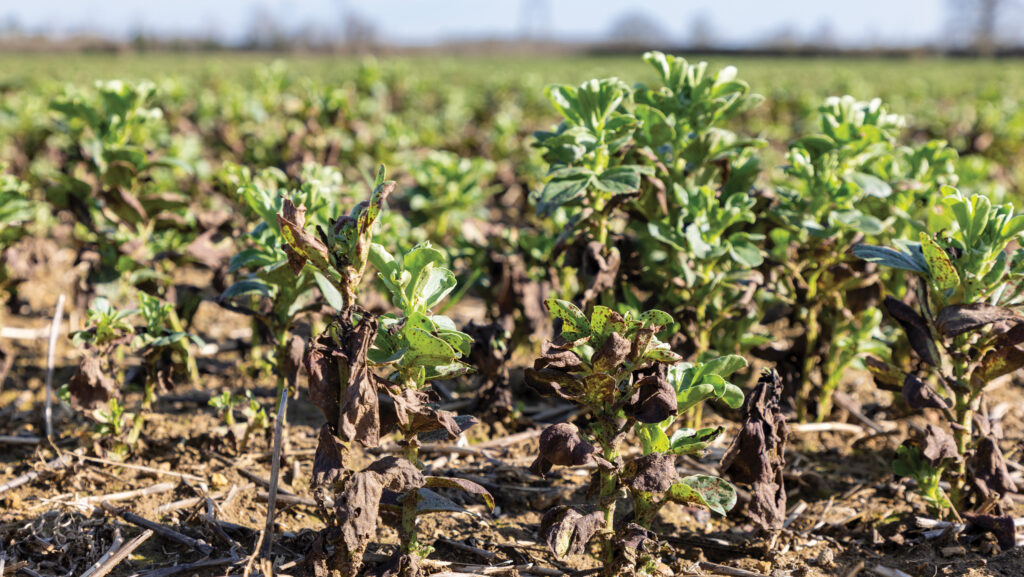 Severe chocolate spot on a crop of winter beans © GNP
 In the first Crop Watch of 2026, there is plenty of disease being found in crops with yellow rust in wheat, brown rust in hybrid barley as well as high levels of chocolate spot in some beans.
Our agronomists consider what farmers need to do in the coming fortnight.
See also: How odour, sound and vibrations can control crop pests
South
Neil Harper, Agrii (Kent)
Just like my first Crop Watch column of the year, spring has arrived all of a sudden.
We were sitting on our hands for so long, with an average of about 11in of rain in the area since the start of the year.
And then, naturally, everyone wanted to get going as soon as the sun appeared last week.
Backwards wheat crops and second wheats, oilseed rape and winter barley have had their first nitrogen applications.
Soil mineral nitrogen levels have been mixed. Some farmers have been surprised that there isn’t as much as they were expecting.
We think this is because a lot was taken up in the autumn with the open weather.
We are expecting sulphur levels to be low after all the rain, so applying some polysulphate has become a priority alongside nitrogen.
Most oilseed rape crops have very good canopies, with a green area index of 2.5-3.
We have been debating whether they can hang on a bit longer for some nitrogen, or if we apply some to stimulate some growth.
Generally, we have opted for 50kg N/ha, and plan to follow up a few weeks later to keep things moving.
If they haven’t already had it, then we will plan to apply a plant growth regulator (PGR) to oilseed rape to help encourage rooting and canopy branching.
The main choice will be Architect (mepiquat + prohexadione + pyraclostrobin) because it gives good growth regulation and contains a fungicide for phoma and light leaf spot control.
Chocolate spot
There is plenty of visible disease on all crops. Winter beans have been particularly badly affected by chocolate spot thanks to the rain, and we have had to apply azoxystrobin in many cases to keep on top of it.
Fortunately, we haven’t seen much yellow rust in our wheat area. But talking to colleagues in Agrii, Hertfordshire and Essex seem to have quite a bit, and there is lots in Scotland.
Crusoe is doing its usual thing and has brown rust visible. Septoria is present everywhere, especially on early-drilled crops.
T0s will mostly be a holding job, and they might be earlier than the usual calendar date because crops are so well forward.
Where we do one, most will contain tebuconazole, which gives a good, quick knockdown on yellow rust, but adding bromuconazole or prothioconazole helps with its longevity.
These will also help with stem-based disease, which is a concern given the prolonged wet soils.
An early PGR will be necessary in most cases. Trinexapac-ethyl will help with rooting, providing the plant with a strong anchor.
Manganese and zinc will be applied with this to help with nutrition where soil levels are low after the rain.
One thing that is less of a worry this spring is weed control in cereals.
Given that many crops were drilled earlier than usual, control from autumn residuals has been excellent.
There will be some top ups going on for brome and wild oats, and some broad-leaved weeds, but not as much as we had feared.
West
Jamie Armstrong, AICC/Wessex Agronomy (Wiltshire, Gloucestershire and Hampshire)
“Well sown, half grown” feels particularly apt this season. After a very wet January and February in the South West, it would have been easy to assume crops would be struggling.
Yet, by and large, they are not. In fact, many fields are carrying more promise than we might have dared hope back in November.
Winter barley has come through the winter in decent order. Most crops are sitting between six and 10 tillers, with biomass generally better than expected given the conditions.
Where drainage is sound and seed-beds have held together, rows are thick and even.
That said, disease has not been slow to take advantage. I have already spotted brown rust in several hybrid barleys and in Caravelle.
It is not widespread yet, but it is there and worth remembering how quickly it can move once temperatures lift.
Mildew, which ticked along earlier in the winter, seems to have eased with the heavier rainfall, but with a drier spell forecast I would not be surprised to see it reappear, particularly in thicker crops and more sheltered situations.
Wheat
Wheat is telling a similar story. Early drilled fields and varieties such as Extase and Arnie are edging closer to growth stage 30, perhaps only two to three weeks away if temperatures behave.
In contrast, some of the Christmas-drilled wheats are only just beginning to tiller. Extase, Palladium and Mayflower are all showing early signs of yellow rust beginning to ignite.
Infection at this stage can build quickly once we get a settled, warmer spell, and timely T0 decisions will be important to keep crops clean as they approach stem extension.
One consistent feature this winter has been the sheer amount of water moving through soils. Even here in the South West, the intensity and persistence have tested drainage systems.
On heavier ground, there are still areas that feel fragile underfoot.
Cabbage stem flea beetle larvae are easy to find in many OSR crops. In some plants, larvae have already hollowed stems just below developing flower buds.
While most crops look capable of growing away as temperatures rise, the true extent of damage will only become clear as we move towards stem extension and flowering.
Thicker, more forward crops appear more resilient, but thinner stands may struggle if larval pressure remains high.
Winter beans drilled slightly earlier (pre-November) to take advantage of the dry and ideal ground conditions have started to suffer with disease earlier than usual.
Chocolate spot and ascochyta seem prevalent and where present, a simple fungicide will be required to get things back on track.
Many on lighter land have begun to prepare seed-beds for spring drilling.
For now, optimism feels justified. Crops are well rooted, disease is present but manageable, and spring is within reach.
East
Dan Ives, Agrovista (Herts, Beds, Cambs and Essex)
I’m starting my new Crop Watch season with a touch of optimism, which hopefully won’t be misplaced.
After the severe wet conditions throughout January and February, coupled with fluctuating temperatures, the outlook for March looks more positive. It feels like spring is on its way.
Over the past two weeks, the return of drier conditions in some areas has enabled field work to resume on lighter soils.
Oilseed rape looks the best I can remember at this time of year, especially in terms of green area index. Nitrogen rates have been tweaked accordingly.
Lack of pigeons has helped, and long may that continue.
Most crops have received a growth regulator, either mepiquat or azole based, to promote branching and canopy structure.
This has been co-applied with trace elements to kickstart the spring nutrition programme.
Cereals have, or are in the process of, receiving their first nitrogen application.
Lush hybrid barley has received trace elements to maintain colour and prevent deficiency, along with 50-75% rate chlormequat on the really forward crops.
Broad-leaved weeds
Broad-leaved weeds seem more evident in some winter barley crops.
We are now planning product choice, sequencing and application dates to remove the risk of residual sulfonylurea herbicide in the soil affecting following oilseed rape crops, which remain a popular option in this area.
Planning for wheat T0 has also started. Some crops will reach GS30 earlier than usual and yellow rust is extremely easy to find in any varieties with a weakness following favourable conditions over the winter and the mild and damp early spring.
Close attention (and protection) should be made to varieties susceptible to the new YR15 race.
Starting the programme with tebuconazole remains our go-to.
However, with more second and continuous wheats in the ground, varieties with weak eyespot ratings will need to be watched, particularly given the trend to earlier sowing last autumn and favourable conditions for disease development over winter.
Be ready to add prothioconazole or prochloraz as required.
We are also tackling grassweeds in cereals with contact herbicides selected on a farm-by-farm basis, depending on species and product success.
Anyone who grows winter beans will be familiar with the advice to treat winter beans with an early fungicide. That is especially pertinent this season given the extremely high levels of chocolate spot we are experiencing.
North
Conor Campbell, Hutchinsons (Northumberland)
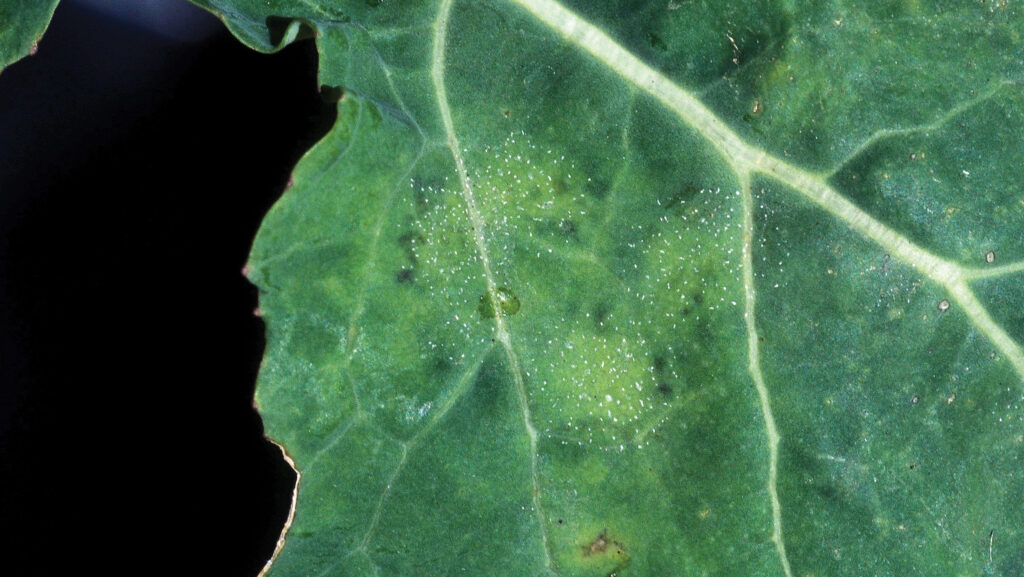
© Blackthorn Arable
March is here and a new spring is upon us. This time it feels oddly familiar with big, well established crops and fields that are drying out quickly.
Those on kind land have started to travel with some urea and spray plans are being put together ready for action.
Despite a wet and dull January, I’m surprised how well fields are walking and beginning to dry up.
Cereals look well, as they did this time last year. They are well rooted, thanks to early drilling and a mild winter. It has been a mixed winter, with a wet November, but very dry December followed by all the rain in January.
The yellow rust pressure doesn’t seem as bad as it did at this time last year, although it doesn’t take a lot of looking to find it on the main wheat varieties in the area.
Given our experience last season, I think we have to assume the affected varieties will offer us no protection against the YR15 strain.
Remember that the level of curative ability and protection from azoles is completely rate dependent. Is it really worth cutting the rate at their current price point.
Winter barley
Barleys will be looking for nitrogen now – their yield is reliant on tillers and ultimately ear number, so maintaining these is crucial.
These big crops are going to need careful PGR applications. Little and often is the key, but the early timings are so important to building root mass and strength in the base of the plant.
Think about building a house – it starts with good foundations.
Oilseed rapes look good, especially when you consider how they started. Pigeons don’t seem to have bothered them this year, so they’ve been able to tick away all winter.
Kerb (propyzamide) has done a good job.
There is a reasonable level of light leaf spot in untreated crops, so a well-timed green bud spray will be critical. Prices look good for harvest, so this might be the crop of the season again.
I appreciate budgets are tight and prices aren’t where we would like them to be. Sadly, we can’t control these but there is a lot we can control.