Farmer Focus: Winter oats are the best-looking crop on the farm
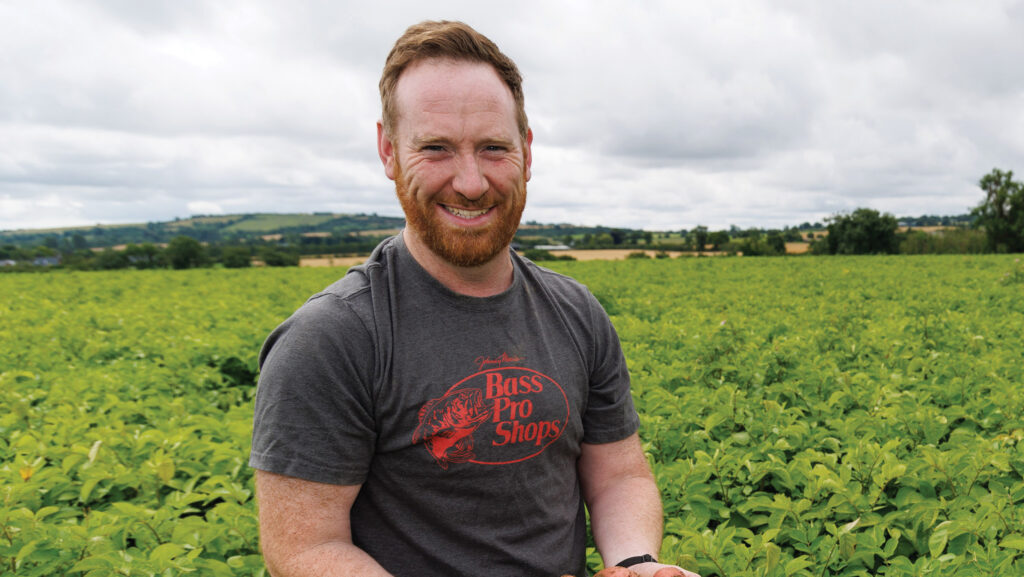 Peadar Whyte © Damien Eagers Photography
 We have finished planting the potatoes, and the main fertiliser applications are now complete.
Our focus shifts to preparing for the harvest season. It is a busy time with spraying, and driving through the crops; I’ve found it difficult to gauge how they will perform.
Like most farmers, I spend a lot of time looking into a crystal ball, trying to predict their potential. But I know it is only speculation, because at any stage the weather can step in and change everything.
See also: Why Devon farmer is growing oilseed rape again
About the author

Winter barley looks slightly thin, and even the best fields show patches where water sat for a couple of months over the winter.
Even though the barley is clean and shows no real signs of stress, it is difficult for me to see us even reaching our average winter barley yields.
Winter oats are probably the best-looking crop on the farm this year. They coped with the rain well and stayed relatively clean.
There are no signs of rust this year, which had become an increasing problem in our Husky oats over the past few seasons.
Two half rates of generic prothioconazole, applied alongside weed sprays, plant growth regulators, and trace elements, have kept mildew at bay.
I find oilseed rape a very difficult crop to judge until the combine goes into it. The crop got off to a good start, and drone passes in the spring showed a higher green area index than most years.
However, the canopy has not developed as expected.
The crop is shorter than usual, though I cannot tell whether that is due to better growth regulation or poorer crop development.
It has been flowering for a long period, so I am hopeful we still have enough pod numbers for a good yield.
Winter wheat is generally looking good, and the recent cool, dry weather has helped slow septoria development.
We had a lot of rust this spring, but I think it is now under control and should not affect yield. Disease pressure is low, but we could really use a flush of growth, as conditions remain too cold and dry.
Spring beans have got up and going quickly despite a late start and mixed planting conditions.
Overall, the crops still have plenty of potential, but after a difficult wet winter and a cold, dry spring, much will depend on the weather over the next few weeks.

Staying sharp shouldn't be a chore