

Advertiser content
Focus is on ‘heading’ stage in Farm Demo Network
As crops across the Limagrain Farm Demo Network move through growth stages, attention has shifted from early establishment to one key question: how much yield potential is still realistically available, and how should inputs respond?
With crops developing under very different moisture conditions, the network’s two contrasting sites, Dennington Hall Farms in Suffolk and Atkin Farm near Uttoxeter in Staffordshire, are offering a timely comparison of how location, rainfall and soil resilience are shaping agronomic decisions this spring.
East versus West: Rainfall tells two stories
At Dennington Hall Farms, a lack of meaningful rainfall through late spring is beginning to influence expectations as wheat reaches GS39 (flag leaf fully emerged).
“Rainfall is the key limiting factor here in the East this season,” says Ryan McCormack, Farm Manager, Dennington Hall Farms.
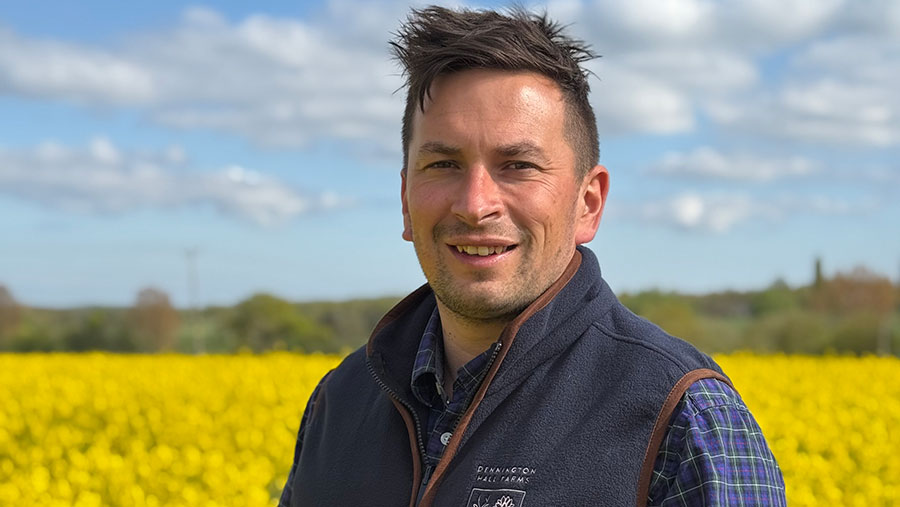
Ryan McCormack, Farm Manager, Dennington Hall Farms © Limagrain Field Seeds UK
“We’ve had a reasonable start, but without follow-up rain, crops are relying heavily on rooting depth and soil structure, to carry them through to harvest.
“Differences in varieties and establishment techniques are becoming evident, LG Beowulf, LG Rebellion and LG Defiance are the current stand out varieties on farm.”
In contrast, the Uttoxeter demo site, with the majority of the wheat sitting around GS35, has experienced significantly higher rainfall, supporting canopy development and biomass, but raising different concerns about nitrogen utilisation, particularly as conditions have turned drier since the beginning of April.
“Moisture is only starting to become an issue now, I have not rushed T1 application, because the varieties we have chosen are clean, and the dry weather seems to be holding back the pressure,” notes Rob Atkin, host farmer at the Uttoxeter site.
“The challenge has been making sure nutrition stays in balance so we’re supporting yield while monitoring disease.”
Flag leaf: A critical decision point
Across both sites, flag leaf is proving to be a crucial checkpoint. Crop potential is now largely being set, but management decisions taken at this stage can still influence final yield and grain quality.
“By GS39, you can clearly see the cumulative impact of earlier decisions, variety choice, drilling date, nitrogen strategy and soil condition,” says Heather Oldfield, Cereals and Pulses Product Manager for Limagrain Field Seeds UK.
“This is where the demo network really comes into its own, because it allows growers to compare how the same genetics respond under very different stress conditions.”
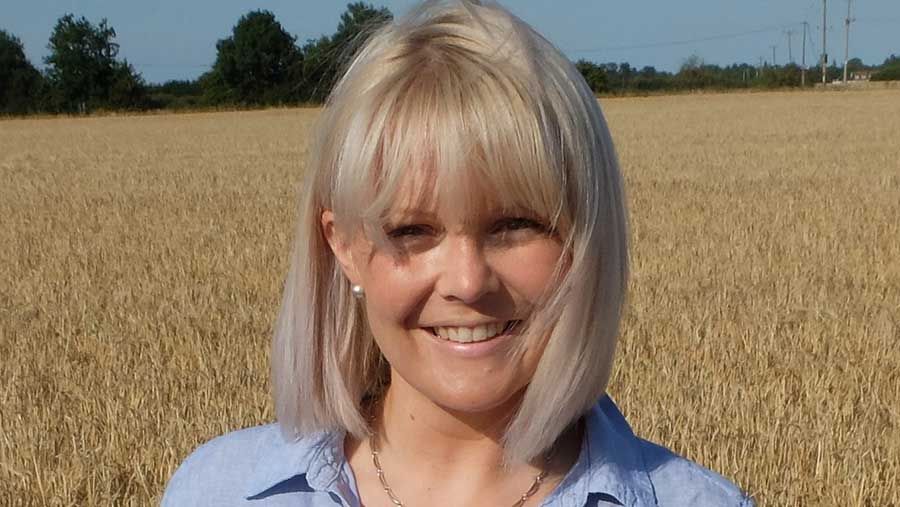
Heather Oldfield, Cereals & Pulses Product Manager, Limagrain © Limagrain Field Seeds UK
At the drier Dennington Hall site, leaves are clean but with visible variation linked to soil type and historic cultivation.
Areas with stronger structure and better organic matter are likely to hold on longer, should the dry spell continue.
“We’re seeing that where moisture is limited, the crop’s ability to access nutrients is just as important as the amount applied,” adds Ryan McCormack.
“It reinforces the need to align nitrogen inputs with realistic yield potential, especially in a dry spring. This year we are seeing the benefits of direct drilling wheat into a summer catch crop.”
Moisture monitoring moves centre stage
With weather patterns becoming increasingly unpredictable, moisture monitoring is taking more of a central focus of the network this season.
“This does put Limagrain in a unique position to assess varietal performance at scale, to enable better variety placement, and ultimately allow for more in-depth information to growers from an earlier pre-commercial stage”, adds Heather Oldfield.
At Dennington Hall Farms, soil moisture probes and regular pit inspections are being used to assess how much plant available water remains in different profiles.
This is helping to inform decisions around late nitrogen applications and expectations for grain fill.
“Fertiliser timings have been adjusted to allow for the potential of a dry spring, with three quarters of the required nitrogen applied before the end of March.
Now we are looking at yield potential and weather to determine how much extra is required to finish the crop” says Ryan McCormack, “part of the long term resilience strategy at Dennington Hall Farms is to lower our exposure to the volatile input markets, both Limagrain and the farm are exploring legume based catch crops and legume bi-cropping to reduce reliance on synthetic fertiliser.”
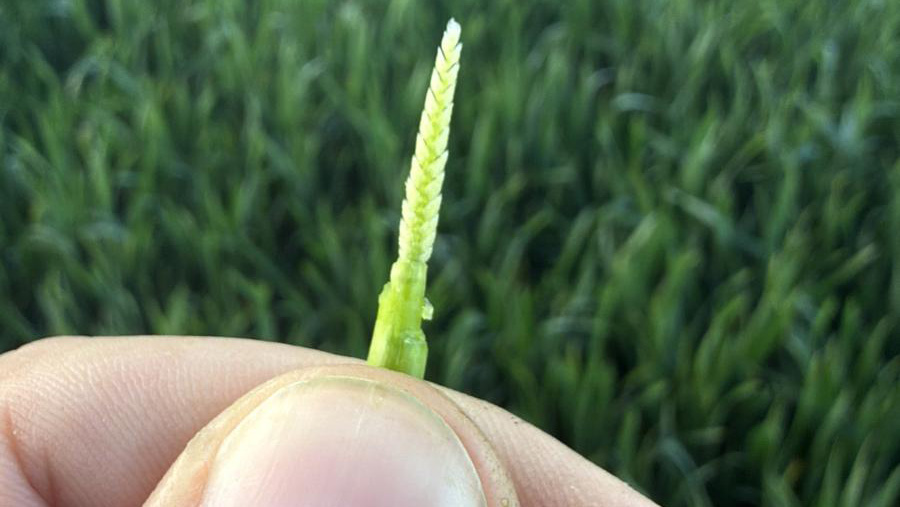
LG Crusoe GS39 © Limagrain Field Seeds UK
“There’s no value in chasing yield with fertiliser if moisture isn’t there to support uptake,” says Heather Oldfield.
“In the East, it’s about being honest with yourself throughout the season and adjusting plans accordingly.”
Meanwhile, at Uttoxeter, higher rainfall kept moisture levels comfortable but has increased the importance of root health and drainage.
Rob Atkin explains that “Conditions in the West mean you want roots working efficiently so you don’t lose nitrogen through leaching or denitrification.
“Once we reach the ear emergence stage we will really see whether our nutrient timing has matched crop demand.”
Fertiliser needs: Tailoring final inputs
Final nitrogen decisions differ sharply between the two sites. At Dennington Hall Farms, strategies focus on maintaining grain protein without overinvesting, as yield may be capped by moisture.
“At this point, the emphasis is on efficiency rather than total input,” says Ryan McCormack. “Varieties that partition nitrogen well into the ear, can really show their value in a dry season.”
At Uttoxeter, the final application has been varied depending on crop potential. A larger dose of N was applied at the second split, with LG Rebellion and LG Defiance being the standout varieties at this point.
“The crops look well, but that comes with responsibility,” says Rob Atkin. “It’s about supporting the ear while keeping the crop in the best harvestable condition.”
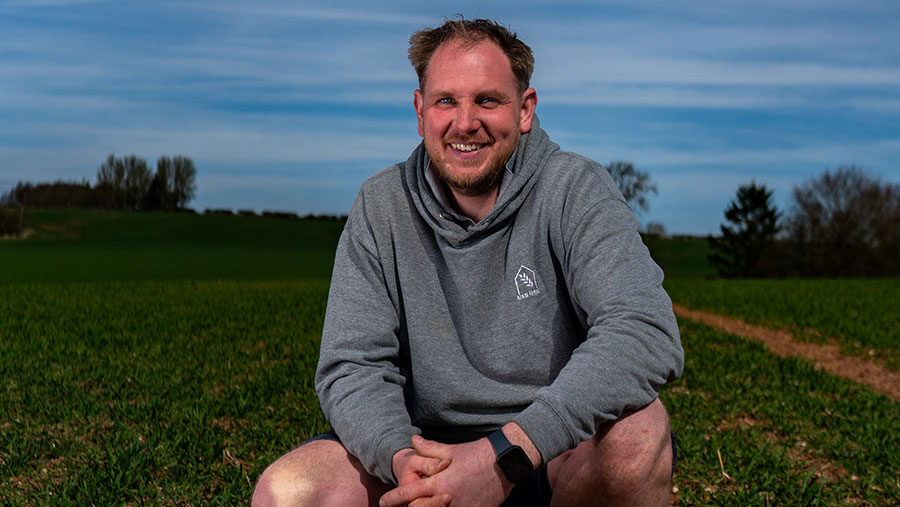
Rob Atkin, Farmer, Atkin Farm © Limagrain Field Seeds UK
Learning beyond the plot
As the season progresses towards grain fill, the demo network continues to reinforce its original aim, taking trial learning out of small plots and into commercial scale decision making.
“What the flag leaf stage shows us, year on year, is that context matters.” concludes Heather Oldfield.
“The same variety, managed well, will respond differently depending on moisture, soil and rainfall. The value is in understanding why and using that insight on farm.”
With weather patterns diverging ever more sharply across regions, the lessons emerging from Dennington Hall Farms and Atkin Farm this season, are likely to resonate widely, as growers fine tune their approach to water, nutrition and crop resilience.
At a glance: what growers are weighing up at flag leaf
- Moisture availability is now the main limiter of yield potential in the East
- Nitrogen efficiency is under scrutiny in both wet and dry conditions
- Soil structure and rooting depth are increasingly visible at GS39
- Late fertiliser decisions are being adjusted to match realistic yield potential
Provided by
Farmer‑owned global seed specialist delivering high‑performing, reliable crop varieties and expert support, combining UK breeding excellence with worldwide research to help farmers grow profitably and sustainably.