

Advertiser content
How grower’s wheat topped YEN results in challenging season
For David Passmore, a first-place Yield Enhancement Network (YEN) result for his KWS Zealum wheat crop was no accident.
Even in conditions many crops found testing, variety selection, alongside good soil management and a well balanced nutrition programmed delivered a standout performance of 14.3 tonnes per hectare for David.
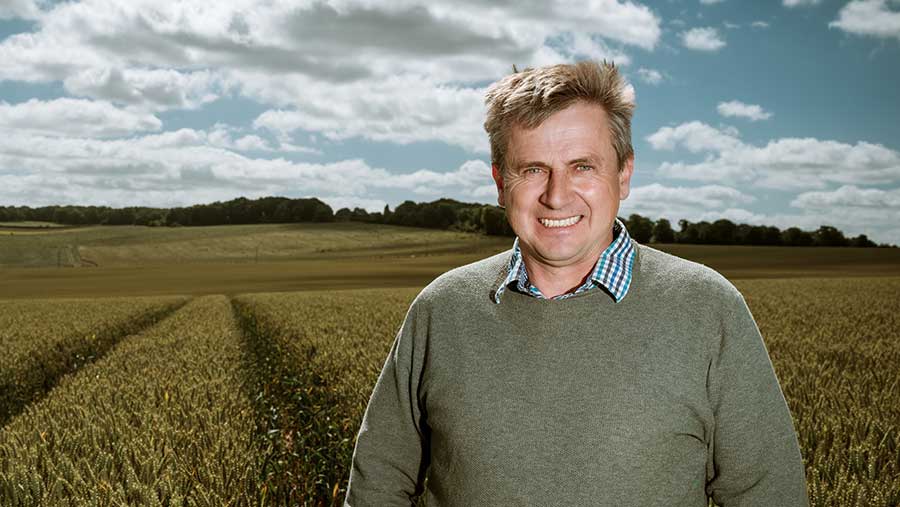
David Passmore © KWS
At Mays Farm in South Oxfordshire, farming 360 hectares, he says wheat variety choice plays a huge part in keeping his crops productive late into the growing season, which is where KWS Zealum comes in.
The farm has been in the family since 1959, operating a traditional mixed system where deep-rooted grazing leys are followed by combinable crops including wheat, oilseed rape, peas and spring barley.
Mr Passmore says: “We also run a flock of 200 Texel-cross breeding ewes and 170 Limousin cattle, with the livestock enterprise playing an integral part in the arable rotation’s performance and contributing to the YEN success.
“Grazing livestock allows us to incorporate organic matter with ease and build soil condition, support rooting and reduce pressure from blackgrass while giving flexibility to grow a range of high-quality seed crops.
“That’s one reason why our crops tend to do better than people would expect given our grade three, chalky loam over chalk soil,” he adds.
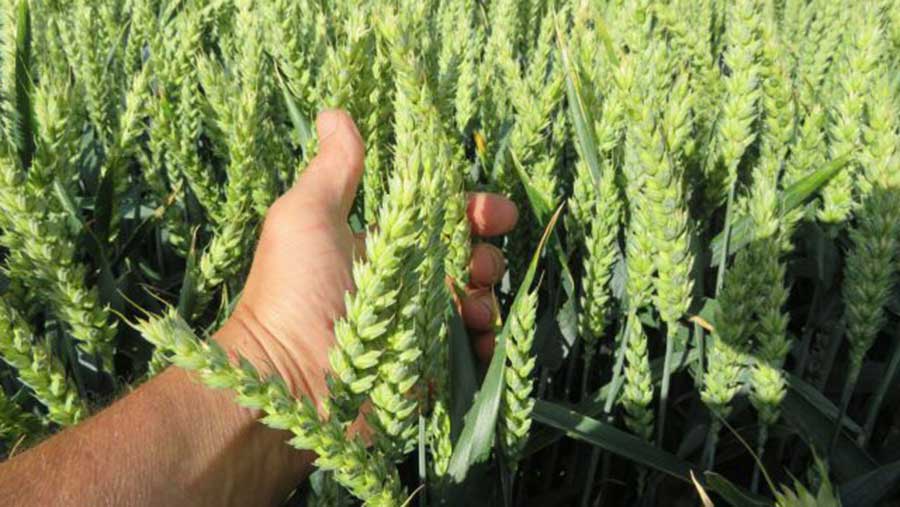
© KWS
A consistent variety
He says that after growing between 12 and 24 hectares of KWS Zealum for four seasons as a basic seed crop, it has consistently delivered, both in terms of yield and quality.
“It’s a good, stiff, disease-resistant variety, and that standing power matters in a system where crops are pushed on performance, which is why we’ve been able to place highly in the 2025 YEN Awards.
“If you want high yields while maintaining quality, a variety like KWS Zealum that can carry biomass without falling over is a great option.”
Crop management
Nitrogen timing is handled with the same practical mindset, typically applying a total of 200-240kg/ha of nitrogen across three splits, with timings adjusted according to conditions and crop requirements.
“The aim is to go early enough to avoid dry spells getting in the way of uptake, but still match total nitrogen to what the crop can realistically deliver.”
He says drilling dates are another area where variety choice comes into play.
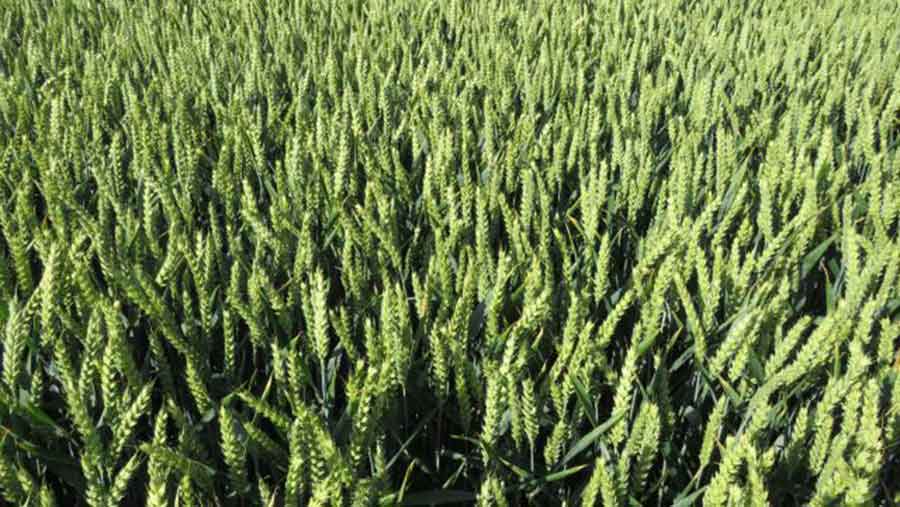
© KWS
At Mays Farm, wheat is generally drilled from late September into the first week of October.
“For us, this helps to avoid blackgrass pressure, while encouraging establishment to get well under way.
“KWS Zealum is especially well-suited to these timings because it can be drilled on the earlier side without turning overly lush or leggy; you can get in early without worrying about it.”
Disease resistance
For a crop prone to disease pressures, Mr Passmore says KWS Zealum’s natural resistance is another of the variety’s strengths, particularly when it comes to septoria.
“Septoria resistance in the plant is key as it’s much more difficult to control with fungicides than other diseases like yellow rust.”For Mr Passsmore, however, that does not mean cutting fungicide spend.
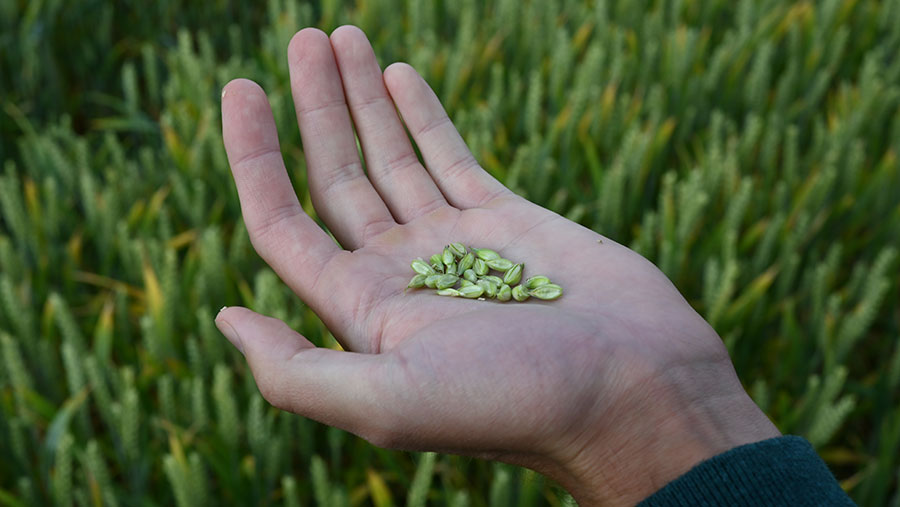
“We aim to use varietal resistance as the foundation and then support it with a robust fungicide programme, even late into the growing season.
“For us, this is when the focus shifts to keeping crops greener for longer, as this is where yield can still be won or lost.
“Just keeping the green a few extra days makes a huge difference to yield at that stage,” he adds.
Mr Passmore says the YEN result is a strong endorsement of the system as a whole, but also of the role variety choice plays within it.
“The most desirable features of KWS Zealum for me, is its growth strength paired with septoria resistance.
“In a season where resilience counts for plenty, that combination helped put us at the top of the tables.”
Provided by
KWS is one of the world's leading plant breeding companies combining 165 years of heritage with leading edge technology and a commitment to develop and deliver varieties with the best yields, disease resistance, physical traits and resistance to abiotic stress.