NFU president explains why UK farmers should welcome an end to set-aside

In the 15 September issue of Crops magazine, and ahead of EU ratification NFU President Peter Kendall set out his reasoning why set-aside should be set at 0% this season, and why environmental flanking measures were jumping the gun.
“Set-aside has well and truly outlived whatever usefulness it once had. With grain markets in turmoil and over-supply and mountains of grain a distant memory, the public would inevitably see farmers being paid not to produce as illogical and possibly even immoral.
The NFU has been working hard for the end of set-aside. It is one of our key objectives for the coming CAP Health Check. Therefore, the proposal by the EU Commission to set the set-aside rate at zero for this coming year’s harvest is a step in the right direction.
While most farmers agree set-aside should go, one or two are arguing otherwise, so I would like to set out my reasoning.
The original purpose of set-aside was to bring down stocks when there were mountains of intervention grain, which is no longer the case. With this in mind, it surprises me some cereal farmers think the point of set-aside is to keep grain prices higher.
Even leaving aside the difficulty of explaining that policy to livestock farmers and the public, the argument does not stack up. Set-aside did not prevent the diabolical prices experienced for most of the past 10 years.
Global grain production
If the EU was entirely isolated from the world market, such a policy might, from a purely selfish arable perspective, make some sense but we are not. The extra EU production brought about by 0% set-aside will only have a relatively small impact on global grain production.
But the continuation of set-aside would mean Europe being hamstrung in its ability to expand production to meet the growing demand for grain, and EU farmers carrying the cost of set-aside while our competitors reap the benefits of higher prices. That is why the USA has abandoned its set-aside policy.
Perceptions and public image also matter. With food demand expected to double in the next 50 years as a result of population growth and rising incomes, agriculture and land are becoming increasingly valuable.
In the same way the introduction of set-aside conveyed the image that production and land were no longer a priority, the elimination of set-aside will contribute to reinforce the message that land and agriculture are crucial.
Moreover, set-aside always had the overtones of “farmers being paid for doing nothing”. However unfair that may be, it’s a convincing sound-bite. We must be careful with our image given the public money involved and the importance of consumer perceptions.
In addition, I am certain that set-aside increases bureaucracy – something we can do without. One of the reasons for welcoming decoupling was it was meant to offer a simpler system, but while we can still achieve that, we have made a very bad start. Factors such as the absurdity of different types of entitle-ments contributed to this.
Thankfully, we have made some valuable progress with the abolition of FVP authorisations in England.
The abolition of set-aside would undoubtedly help simplify the system. Just think of all the ways farmers can be caught out, such as wrongly coding fields, setting aside the wrong amount or ineligible fields, splitting fields, forgetting to mow by the right date, etc.
Add to this the absurd situation where many livestock farmers who have never grown a crop are required to leave some of their fields ungrazed and vegetable growers to leave some of their valuable land lying idle. All these complexities create further work for the RPA, distracting them from doing more useful things like paying on time.
Defenders of set-aside point to its environmental contribution, and some groups, including Natural England, have lobbied DEFRA to bring in onerous “flanking measures” including a 5% “environmental” set-aside.
But set-aside is not the panacea for the environment that some want to depict. Of the 363,000ha of compulsory set-aside in England only 14,000 are identified by the government’s own Environmental Observatory as being “conservation value” set-aside. Most set-aside is rotational, sprayed off each year and, in many people’s view, of reduced benefit.
Moreover, some seem to forget that, if world prices stay high, and set-aside is not abolished, there will be a big expansion of industrial crop production in any case.
Even if world prices stay high and set-aside is zero, it will not mean all compulsory set-aside will be brought back into production. There will, of course, be an increase in planted areas – that is what decoupling and linking production decisions to market conditions are about.
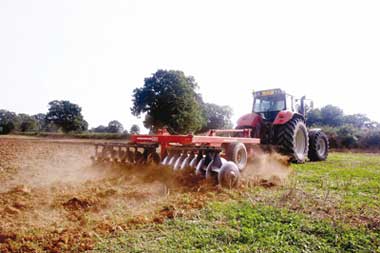
But we cannot forget there are over 200,000ha of fallow land in England this will be, in principle, the first land farmers bring back into production if the market signals are right, and it will happen regardless of what happens to set-aside.
The lateness of the decision by the EU Commission – the earliest it will be confirmed by is 24 September – will hinder farmers’ decision making for this season.
But there are other good reasons why the area of set-aside brought back into production will be limited. Some land will be marginal or difficult to crop and may have been out of production for a long period of time. It is this non-rotational set-aside (more than 80,000ha) that will not come back into production, at least not straight away.
Some 50,000ha of set-aside in England in margins under cross-compliance requirements or subject to agri-environmental schemes will not come back into production regardless of the set-aside decision. This is a reflection of the commitment farmers have made to the environment. To present a picture where farmers will plough out every available hectare of land is both inaccurate and misleading.
Commitments
In addition to these commitments, farmers may well decide to keep additional land in set-aside because of their own environmental, aesthetic or conservation values.
The obvious point sometimes missed is that ending set-aside is voluntary and not something farmers have to do. Thanks to decoupling, you can claim your SFP whatever you do, as long as you keep the land in good agricultural and environmental condition. Loose talk about getting out the glyphosate to kill off the botanist’s paradise will only help to persuade DEFRA it needs to take tough extra measures.
I firmly believe before rushing into ill-judged compulsory measures we need to assess environmental gains achieved since the introduction of set-aside through voluntary schemes. Agri-environmental schemes and voluntary initiatives are the way forward. Let’s calmly look at the evidence, see if any problems are emerging and, if there are, devise specific, targeted plans to tackle them.
Recent developments in the grain and dairy markets, hopefully to be followed by the rest of agriculture, clearly signal the growing importance of farming and the need to make the best of our land as a resource. A policy that penalises farmers and increases bureaucracy, fails to deliver targeted environmental benefits and can be harmful to the image of the sector and of the importance of farming is not only irrelevant but seriously damaging.”