Trial looks at how to make sugar beet more sustainable
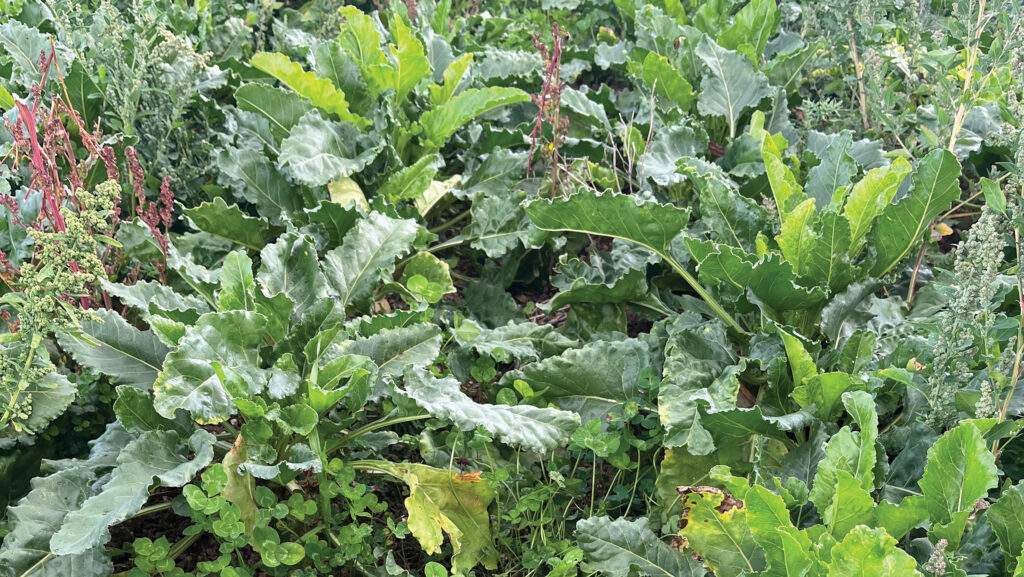
© Louise Impey
Growing sugar beet with a living clover mulch is being put to the test in a long-term trial at Elveden Farms in Suffolk to see if the crop’s sustainability metrics improve and farm margins rise.
The Syngenta-organised trial is also highlighting any agronomic challenges, as well as the financial implications of changing the way the crop is grown, at a time when arable farming is reeling from one of the hottest and driest years on record and low commodity prices.
If the results show that the clover understorey helped to retain soil moisture and release nitrogen, the case for including it as part of a more resilient production system will be stronger.
See also: Sustainability trial shows value of living mulch in building resilience
Taking part with interest is British Sugar, which acknowledges that its customers are interested in sugar produced by nature-friendly farming practices with lower emissions, but recognises that growers are cautious about taking on more risk or losing yield.
“As carbon footprints, water use and biodiversity metrics become part of the sourcing decision, we are participating in this trial to learn more about what is involved and to understand if it can work for the benefit of all,” says crop production manager Anthony Hagen.
“We are also interested in whether it is a way of putting more resilience into the farm rotation, to help farmers cope with climate extremes, market volatility and geopolitical shocks.”
Finding solutions for growers is the aim, he adds. “There has been huge interest in this work, from farmers and their agronomists, as well as all stages of the supply chain.”
Two regen systems
At its most extreme, the beet is being grown in two regenerative systems, following the use of an overwinter cover crop and within a long-term clover understorey, having been established by strip-till and then receiving a total of just 40kg/ha of nitrogen.
In comparison, there is also a conventional crop established following ploughing, with 120kg/ha of nitrogen applied, as well as a crop being grown using an integrated pest management (IPM) approach, with the same 120kg/ha of nitrogen fertiliser.
Fertiliser placement is also being scrutinised, while the nutrient and soil moisture contribution of the clover is being measured. Leaf samples taken during the growing season have confirmed a positive effect from the clover, even at the lowest nitrogen amounts.
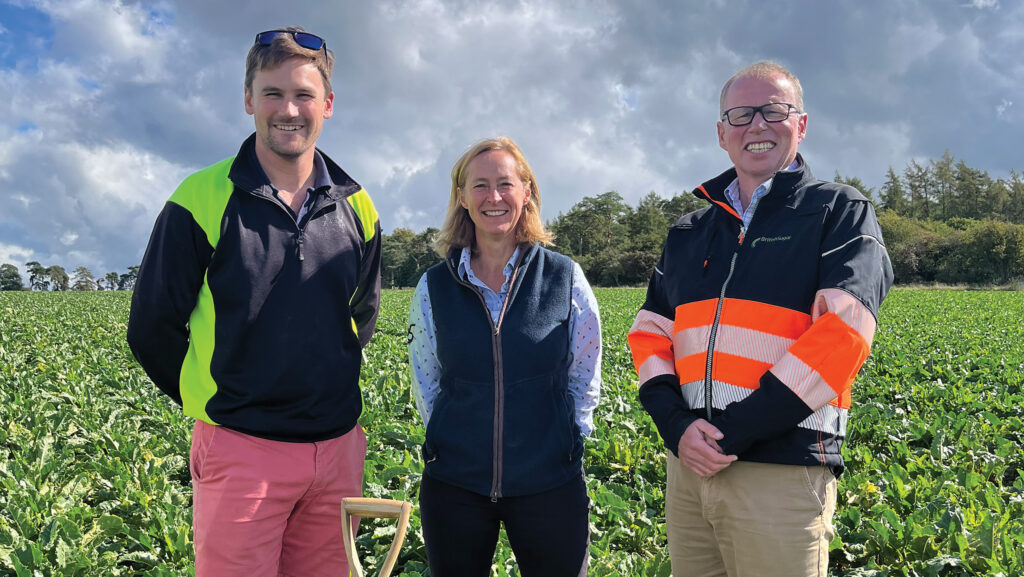
Nick Scantlebury (Elveden), Belinda Bailey (Syngenta) and Anthony Hagen (British Sugar) © Louise Impey
For Nick Scantlebury, senior farms manager at Elveden, implementing the regenerative system with sugar beet hasn’t been as challenging as he thought. He does point out, however, that the cultivations window is narrower and timing is key.
“For that reason, doing it at scale might be a different proposition,” he says. “We won’t know until we try – the first step is to have confidence that any new system will deliver.”
The clover understorey received 4 litres/ha of glyphosate in February and was then flailed in early March, before drilling took place on 23 March.
“With strip-till establishment, the drill matters, and so does precision,” adds Nick. “We had shaved the clover right down so that it didn’t interfere with our operations.”
Herbicide applications
Herbicide applications had to be made accordingly, with the farm’s Ecorobotix sprayer used after emergence and to within a 1cm buffer of the beet plants.
The openness of this year’s beet crop in such dry conditions has given some weed control difficulties, reports Belinda Bailey of Syngenta, while crops grew faster and are senescing earlier after the extreme heat experienced.
“Interestingly, it was the IPM approach that looked the strongest for much of the season,” she recalls. “We will be doing yield digs before harvest and then calculating a costing for each system.”
How much clover will be left behind after beet harvesting is an unknown, she admits. “Remember that it has been there for four years, as this is a rotational project.”
Nick notes that the trial site is building a weed bank by having the clover in place. “We don’t yet know how that will affect us, but we are aware of it happening.”
Funding/premiums
He also stresses that farm businesses need funding support or premiums to achieve the sustainability aims asked of them, especially where output is down.
“We can grow 100t/ha sugar beet crops on this farm. If our regenerative crop does 75t/ha, the cost savings on fuel and inputs are unlikely to make up the difference.
“We all need to ask what regenerative sugar beet is worth. Will it attract a 10% or 15% premium? More importantly, does the supply chain want it?”