Sustainability trial shows value of living mulch in building resilience
 © Louise Impey
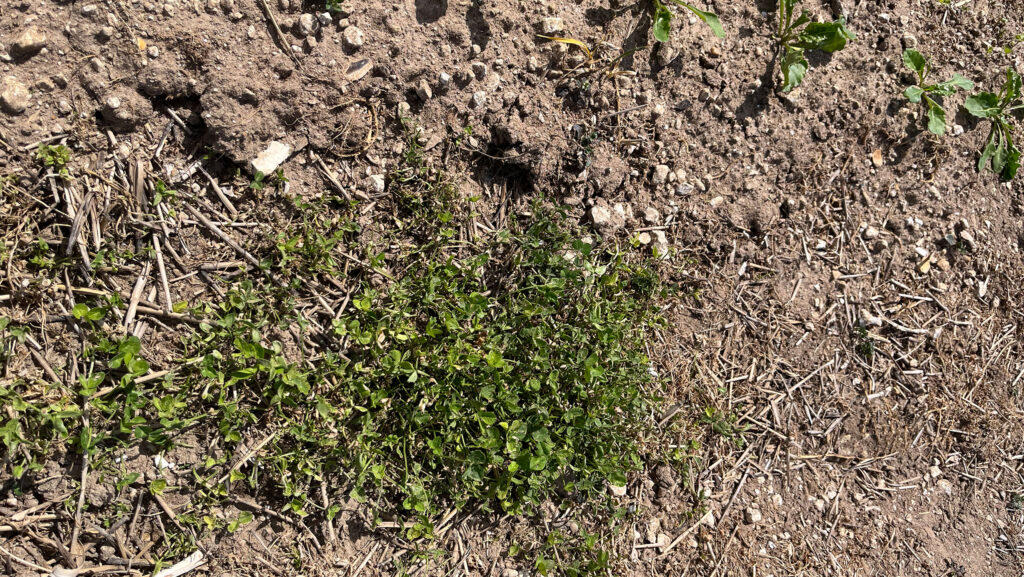
 A clover understorey is proving its worth in a long-term project by Syngenta at Elveden Estate on the Norfolk/Suffolk border, where its inclusion in a regenerative farming system is improving sustainability metrics.
Now in its fifth year, the living mulch used with a regenerative approach reduced greenhouse gas emissions by as much as 18% in spring malting barley compared with the conventional system last year, while also helping to improve soil health, moisture retention and biodiversity.
See also: How a lucerne living mulch is working on Danish arable farm
The emissions reduction came from a combination of lower fertiliser use and higher yields, leading to better financial returns where sustainable farming incentive (SFI) payments for environmentally friendly actions were received.
Belinda Bailey © Syngenta
Supply chain collaboration
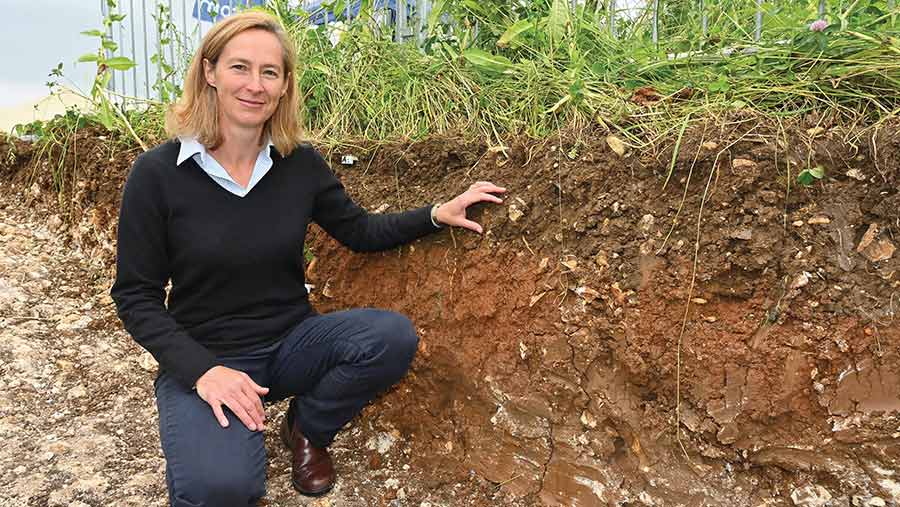
Bringing supply chain partners Crisp Malt and British Sugar into the work means the results are contributing to a continuing discussion on the way that crops are grown and how they are sourced, says Belinda Bailey, sustainable farming manager at Syngenta.
“Importantly, it’s highlighting the on-farm practicalities of making changes, especially against the backdrop of a changing climate.”
She adds that they are also emphasising the importance of public funding in supporting farm businesses as they adopt new practices and techniques that reduce environmental impact.
Belinda explains that in addition to yield, quality and profit, long-term resilience is being measured across the rotation, with 5ha plots of three different farming systems – conventional, integrated pest management (IPM) and regenerative (both with and without a clover living mulch) – being compared on the light land farm.
“The living mulch was established in the autumn of 2022 in some of the regenerative farming system plots and has been there ever since. Among other things, we’ve learned that small-leafed clover works best.”
Rotational considerations
In that time, winter barley, beans, winter wheat and spring barley have been grown with it, while this year’s focus is sugar beet.
Growing a root crop mirrors the farm’s rotation and has involved the use of novel techniques such as strip-till and band/spot spraying, so that the sugar beet can grow away strongly without coming under too much competition from the clover.
As Belinda notes, the work is showing that all farming systems have their challenges, many of which are likely to increase given the combination of pressures the industry is experiencing.
“The aim of this work is to understand more about these, look for ways to overcome them, identify where further solutions are needed and learn how biological and synthetic approaches can work together,” she says.
Being flexible is a key requirement, she adds. “The other relevant point is that it takes a while for soils to adapt and for meaningful results to be seen.
“Our supply chain partners are very aware of this – for them, any sustainable sourcing strategy has to reflect that.”
Farm systems
The three farm systems being put through their paces in the work are:
- Regenerative Described as a long-term view driven by sustainability and the environment, with minimum use of synthetic inputs and maximum carbon capture and biodiversity, even without payments.
- IPM Described as a sympathetic approach which balances economics and the environment, with synthetic inputs used where justified and environmental schemes incorporated if they break even.
- Conventional Described as a short-term “yield is king” approach, driven by economics and with inputs used for maximum output. Environmental schemes only feature if profitable.
Spring barley results
A greenhouse gas emissions reduction of 18% per tonne of spring barley grown for malting was recorded in 2025, where the regenerative system with a clover understorey was in place.
For Ellie Wood, sustainability manager at Crisp Malt, the findings are very encouraging as they came from a combination of lower fertiliser use and higher yields, showing that improvements can be made without affecting output.
“Sustainable sourcing can only be achieved by working with our growers and sharing our knowledge,” she says.
“Nothing about what we are doing with our grower groups is prescriptive; it has to retain enough flexibility to work in the field across a range of conditions.”
Ellie points out that while carbon footprint is important to malt customers, there’s increasing interest in the wider implications of crop production and in developing long-term resilience.
As a result, other metrics such as the higher earthworm numbers, along with better soil structure and function recorded in the trial last year, are of interest, she adds.
The company’s Field Forward initiative is collecting data from four impact areas – soil health, water usage, biodiversity and climate – to understand where there are barriers.
Its ABC grower group’s willingness to adapt helps to keep Crisp Malt as a supplier of choice, with realistic targets being set in collaboration with the 200-strong group to demonstrate continuous improvement.
Spring barley (Laureate) results 2025 |
||||
|
|
Regen + clover |
Regen no clover |
IPM |
Conventional |
|
Yield (t/ha) |
5.79 |
5.34 |
4.18 |
5.32 |
|
Grain N (%) |
1.80 |
1.70 |
1.78 |
1.81 |
|
N applied (kg/ha) |
105 |
105 |
120 |
120 |
|
GHG reduction/ha |
-10.8% |
-10.2% |
-3.0% |
– |
|
GHG reduction/t |
-18% |
-10.5% |
+23.5% |
– |
|
SFI Income (£/ha) |
234.80 |
179 |
134.80 |
5.80 |
|
Return (£/ha)* |
324.11 |
85.94 |
-126.19 |
121.02 |
| *Return over input and operational costs | ||||
Farm view
Nick Scantlebury © Louise Impey
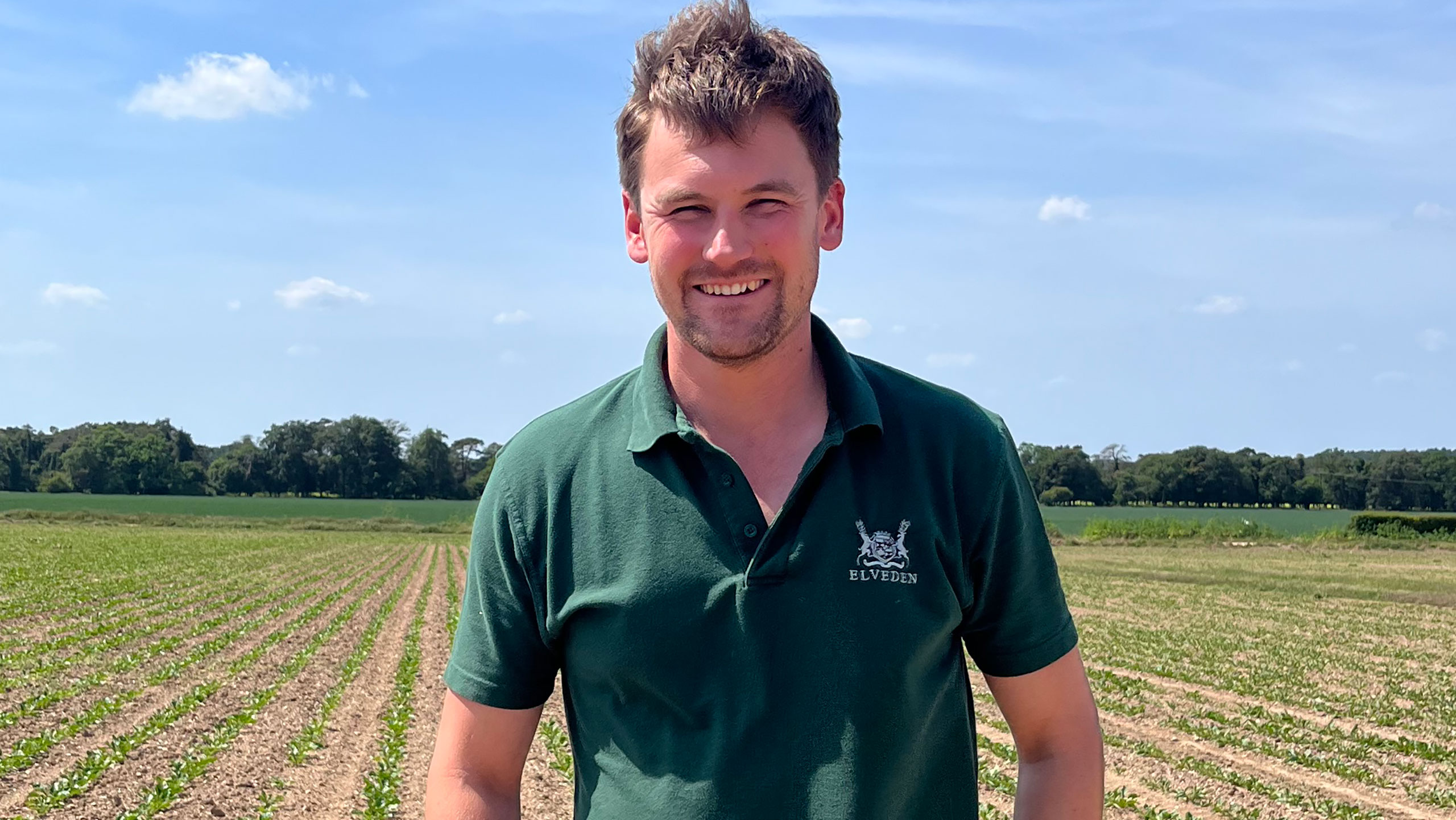
Nick Scantlebury, senior farms manager at Elveden Estate, points out that long-term trials have far more value to the business than one-year projects as the findings tend to accelerate after the four-year mark.
As a long-term supplier to Crisp Malt and a member of its grower group, he was most interested in whether grain quality would be affected by different field practices and if a clover understorey is practical to achieve at scale.
“The spring barley did hit specification in the trial last year,” he confirms.
“The nitrogen rate was adjusted according to the SMN results and the micro malting tests done by Crisps were positive.”
The clover is managed with glyphosate and mowing in early spring to allow the cash crops to establish, he continues, while the impact of the weather is another variable that he has to navigate.
“Irrigating the spring barley crop on the farm improved yields by 3.5t/ha last year.”
Growing cereals and vegetables across 3,850ha, Nick is confident that he is already doing much of what Crisp Malt looks for from its growers in terms of sustainable barley production, but recognises that supply chains are now looking for more than carbon reporting.
“Soil health, biodiversity and water use are all on their radar now,” he says.
“Our farm system has to show improvements in these areas, as well as how it is moving towards net zero, so it’s about using all the tools in the box to understand what we’re seeing and build resilience.”