Tips on tackling this autumn’s weed flush in OSR crops
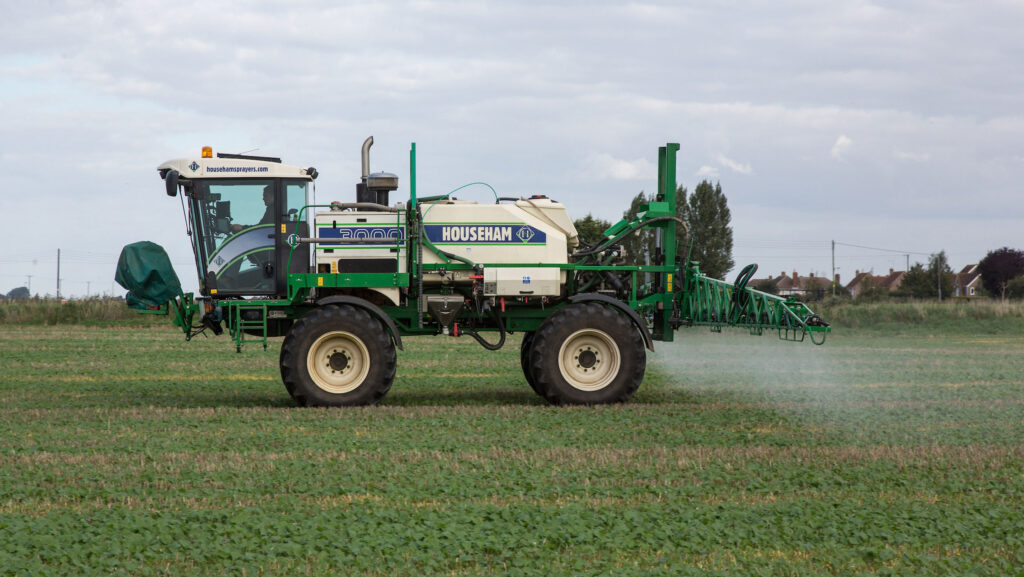 © Tim Scrivener
 Recent rain in many parts of the UK has provided a welcome boost for newly establishing oilseed rape crops, but it has also sparked a flush of weeds and cereal volunteers that must be tackled promptly, according to one agronomy company.
“In many areas, conditions were so dry prior to drilling oilseed rape, growers simply didn’t get a chance to spray off any chit of weeds and volunteers with glyphosate, but since then, we have seen a surge in growth, which must now be tackled within the crop,” says Hutchinsons technical manager Dick Neale.
See also: Why grassweed control is vital in oilseed rape crops
Fortunately, there is a good range of herbicides available for use in oilseed rape to tackle grassweeds such as blackgrass and ryegrass, as well as cereal volunteers, and broadleaf weeds, however careful product selection, timing, and sequencing of actives is crucial, he says.
“Generally, it’s best to take out the first flush of cereal volunteers once they’re at the one leaf stage.
“Try not to leave it much longer, particularly where soils are still quite dry, as volunteers will be competing with the crop for valuable moisture.”
Graminicides based on actives such as propaquizafop or fluazifop-P-butyl are good options to consider for volunteer cereal control, however, they offer little activity against blackgrass and ryegrass, he says.
As with volunteers, Dick says grassweeds also need controlling while they are still small and actively growing, in order to give chemistry the best chance of success.
“A good option is to follow up your graminicide with more dedicated grassweed chemistry, such as clethodim, which will also take out any later-emerging volunteers.”
Clethodim must be applied before mid-October, but where it is to be used, he reminds growers that no other chemistry can be applied to that crop within a window of 10 days before, and 14 days after application.
These restrictions could therefore influence the timing of any earlier and later-applied chemistry, hence the need for careful planning and product selection across the herbicide programme.
Later-emerging weeds
If necessary, any later-emerging grassweeds can then be taken out with a propyzamide-based product, such as Kerb or Astrokerb (aminopyralid + propyzamide), which can be used up until the end of January.
However, again, Dick says weeds should be controlled while they are small and actively growing, and before ground conditions become too wet.
“Don’t assume you’ll just be able to rely on a late application of propyzamide for all of your grassweed control; it’s got to be part of a carefully planned programme,” he adds.
Propyzamide works within the top 50mm of soil, where it shuts down roots of weeds growing within that zone.
If weeds have become too large (such as where applications are delayed too long, or growers missed earlier sprays), there is a risk that their roots will extend beyond this layer, making them harder to control, he explains.
Because propyzamide shuts down the root system, rather than immediately killing above ground foliage, care is also needed when assessing the effectiveness of applications, he says.
“You’re looking for stubby roots, often with a rounded, bulbous tip. If there’s plenty of moisture around, those plants may well survive through November and December, but once soils start to dry out in early spring, weeds soon desiccate and die back.
“So, don’t assume the product hasn’t worked if there are still grassweeds present after treatment – pull up a few plants and look closely at the root systems to see what’s going on.”
Contact material, such as Belkar (halauxifen-methyl + picloram), is also very effective in oilseed rape, either as a single application or split dose, he says.
The addition of aminopyralid in LaDiva makes a go-to option if a plethora of weeds have emerged within the crop.
However, he points out this formulation has a cutoff of nine leaves of the crop, plus rate caveats relating to period of use, and cannot be sequenced with Astrokerb, which also contains aminopyralid.