Grower reveals top wheat and OSR contenders for autumn 2026
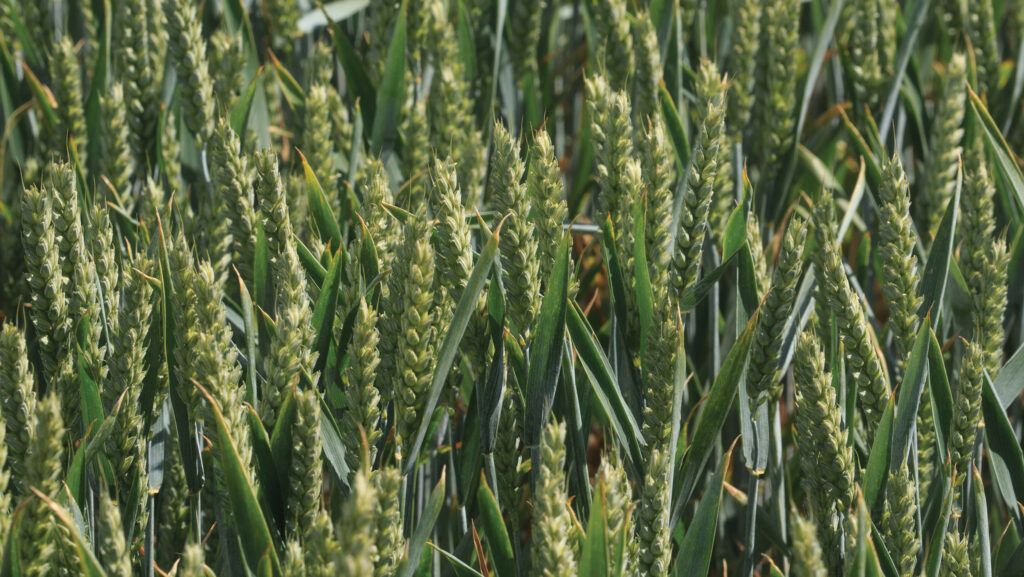 Arlington wheat variety © Tim Scrivener
 Bedfordshire-based farms director Andrew Robinson of Heathcote Farms is a dedicated milling wheat grower so finds himself in a good position on variety choice, given the recent Group1 additions.
He is likely to be growing Vibe, Arlington and Arnie for harvest 2027, while two candidates – potential breadmaker Melesie and feed wheat Checkmate – have also caught his eye in the trials he hosts at Herne Manor Farm.
“They’re very clean, which is a good sign at this stage of the season.”
See also: How yellow rust threat is reshaping wheat choices for 2026
Andrew’s commitment to running independent on-farm trials – something he has done since 2014 – means he gets advance knowledge on the latest varieties, seeing how they suit the farm and learning more about how they should be grown.
Trial plots
This year, he has 18 wheat varieties in trial plots, both treated and untreated. All will be taken to yield and the results added to the data he has on the 1,200ha farm.
“The Group1 varieties have always performed better here than the feed wheat varieties,” he says.
“We’ve also tried growing variety blends, but they have been inconsistent so we’ve moved away from them.”
Dealing with greater weather extremes is something he is coming to terms with on the farm, as he considers rotations and cropping plans.
“Inputs have always worked very well here with good responses seen to them.
“Different rainfall patterns and more dry springs might change that, of course, so we will keep interrogating the data.”
No barley
Alongside blends, another crop he won’t be growing next year is hybrid barley.
The volunteers are causing issues in the following oilseed rape crop, being too competitive and extracting nutrients from the soil.
“This will be our last year of growing barley for a while,” he confirms.
Otherwise, he will be planting more oilseed rape this autumn and reducing the area of winter beans.
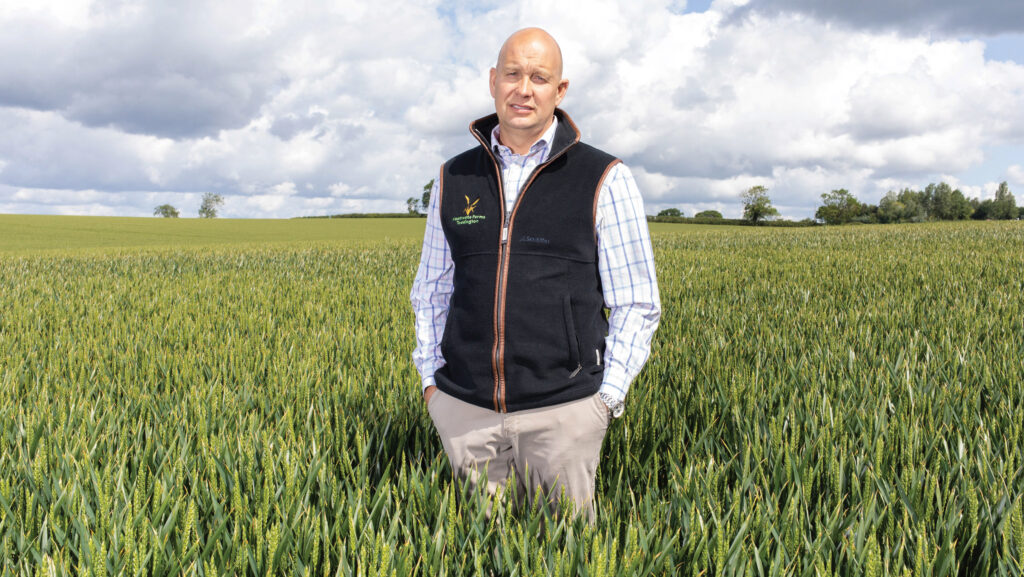
Andrew Robinson © Tim Scrivener
A trial with winter oilseed rape varieties has shown up their various strengths and helped him to differentiate them.
“I’m looking for early vigour, disease and lodging resistance, plus pod shatter,” he says.
OSR varieties
The oilseed rape that really hit the ground running this year was newcomer Dompteur, he reveals.
“I’m probably going to opt for that as well as some Avenger for this autumn.”
The NPZ varieties are also of huge interest, as he favours the plant architecture they produce.
“The only thing missing in them is pod shatter.”
How to manage volatility
Andrew Robinson has developed a plan for managing volatility and risk in the business, which he has divided into agronomic and financial actions.
On the agronomy side, Andrew has six key actions:
- Continue zero blackgrass tolerance – it allows early drilling and the bigger roots and biomass resulting from that helps crops to withstand drought and waterlogging.
- Drilling – seed rates will be increased in certain situations and seed depth is increasing from 30-40mm to 40-50mm, to safeguard crops against any pre-emergence herbicide damage.
- Seed quality – where home-saved seed is being used, all mother crops will be treated with prothioconazole to help reduce disease and T6P to increase early vigour and growth in the daughter crop.
- Water management on heavy soils – continue the programme of mole ploughing, drainage schemes and field-specific cultivations to help with water infiltration and provide resilience against extreme weather events.
- Variety choice – consider end-market and opt for crops that suit the farm’s soils, along with varieties that are robust enough to help withstand weather extremes.
- Straw management – go back to straw chopping to help increase organic matter and support soil health.
Andrew is also testing some new technologies on the farm, with a Paul-Tech ground monitoring station, Optigene DNA testing for early disease detection and the Senseen portable crop sensor all being put through their paces.
“There is always a cost to consider with innovation, but they have to be practical, too,” he says.
In addition, almost all inputs are now applied with variable-rate technology, to give better targeting of expensive inputs.
“We’re confident enough now to use it across the farm, having started with lime, seed and P and K applications, before extending it to nutrition, plant growth regulators and fungicides,” says Andrew.
The only caveat is yellow rust, he stresses, as the disease is not biomass driven.
Last autumn, he did the pre-emergence herbicides in the same way, with good results.
“We don’t want to apply a pre-emergence to sandy soils, for crop damage reasons, so variable-rate application reduced our herbicide use by 70% in one field.”
What can AI offer?
Andrew Robinson is looking at what AI can offer and whether it can help with complex decision-making and data analysis.
Having put all the necessary information into Microsoft Copilot, he is comparing the fungicide programme it recommended to his farm standard.
“The AI plot is cleaner,” he admits. “The programme cost £167/ha, while the farm programme is £136/ha.
“We will see what yield and quality are when it is harvested and whether the extra spend was justified.”