Why sap-feeding planthoppers are a threat to UK arable farms
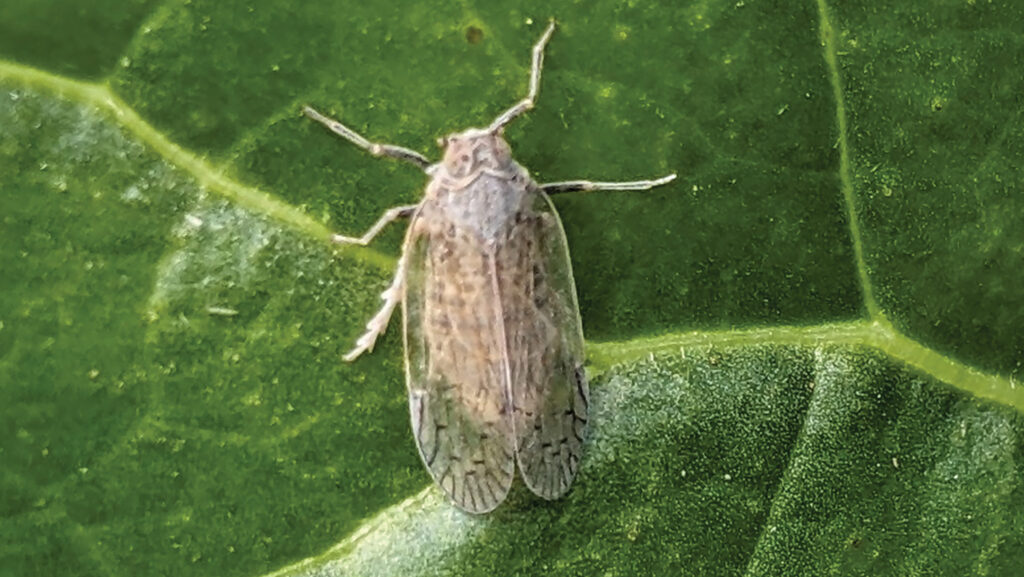 © Mark Zepp
Crop diseases spread by sap-feeding insects known as planthoppers are a growing threat to UK arable systems. These pests can spread bacterial plant diseases and are already affecting crops across parts of continental Europe, causing reductions in quality and yields.
Although these planthopper species are present in the UK, the diseases themselves are not currently believed to be established.
See also: Earthquake technology helps farmers map soil compaction
Scientists say this provides an opportunity to improve preparedness and reduce future risks.
This is the drive behind a major new research project to help protect UK food security from bacterial plant diseases, led by Keele University.
What planthopper species does this refer to?
The native reed planthopper (Pentastiridius leporinus) is the main vector of a disease known as Syndrome Basses Richesses (SBR) that affects a number of crops including sugar beet.
What is SBR?
The disease is a complex comprising of a phytoplasma and a bacteria (Candidatus Phytoplasma solani + Candidatus Arsenophonus phytopathogenicus).
Although not currently present in the UK, data from the Continent suggests a reduction in sugar beet root yields by 30% and a 5% loss in sugar.
What is its lifecycle?
The native reed planthopper transmits bacteria when feeding on the plant in the spring. Female planthoppers lay their eggs nearby.
Planthoppers have a reproductive potential that allows for rapid population growth. Once hatched, nymphs continue the transmission of the disease by feeding on the parts of the plant that are underground until harvest. After harvest, nymphs overwinter in winter crops, particularly winter wheat.
The reed planthopper is not thought to cause major damage to winter wheat crops despite its larvae overwintering underground in wheat fields.
However, scientists note the situation is rapidly changing on the Continent, so it’s important the industry remains open minded and aware.
What will the project involve?
Project lead Professor James Bell of Keele University highlights how the joint government and UK Research and Innovation (UKRI)-funded project will help farmers prepare for potential future outbreaks before the diseases become established in the UK.
“Novel combined bacterial plant infections are compromising crops on the Continent but are currently thought to be absent from the UK. We have an opportunity to prepare for this potential epidemic threat by developing tools to better understand both the insect vector – a planthopper – and the disease complex it carries,” says James
“One of the major challenges we have is communicating this complexity. Farmers and growers are very aware of viruses and aphids, but few know about planthoppers, phytoplasmas and bacteria,” he adds.

Prof James Bell © Keele university
The project brings together experts from eight leading research organisations, to investigate emerging bacterial diseases that threaten crops such as potatoes, sugar beet and carrots.
Researchers will examine a disease system involving two species of planthopper – one being the native reed planthopper – that can transmit five bacterial diseases between crops and wild plant hosts.
The project will explore these threats and develop tools to improve understanding. The project will engage with Defra to support plant health policy development and risk assessment.
Dr Trisna Tungadi, co-project lead and lecturer in Plant Health at Keele University, says: “The significance of this project is that insect-vectored bacterial plant diseases are much less well understood than insect-vectored viral diseases.”
The consortium will generate new scientific knowledge and practical tools to help industry stakeholders and policymakers respond to emerging plant health threats before they become established in the UK.
When will the project start?
The project starts in November and is one of 18 new research and innovation projects receiving a share of more than £54m in public investment.
The research is co-ordinated through UK Research and Innovation (UKRI), with co-funding from partners including Defra.