

Eagle vows to fix SFI first-come system
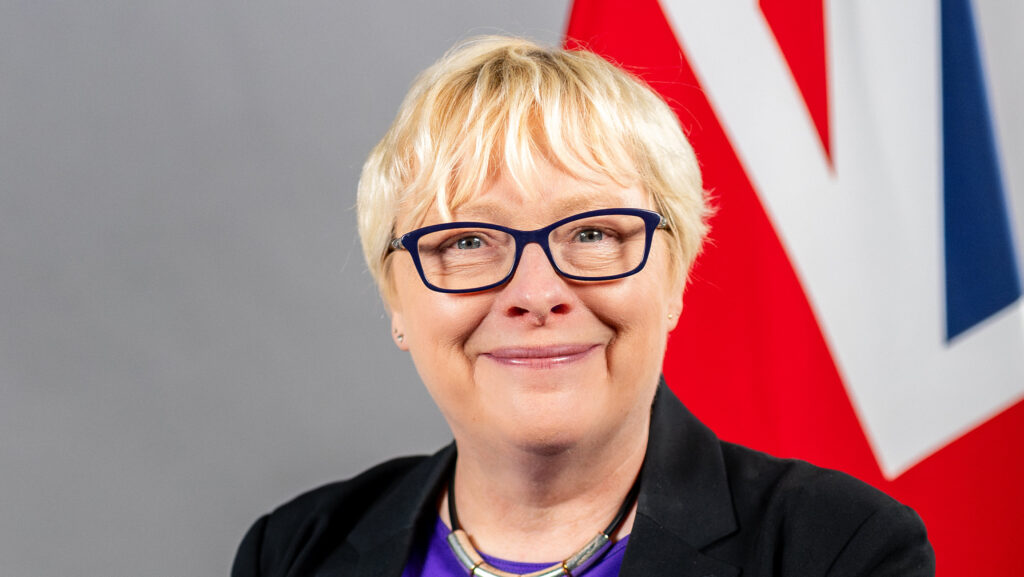 Dame Angela Eagle © Andy Taylor/Home Office
 Dame Angela Eagle has acknowledged the “frustration and anger” caused by the government’s handling of the Sustainable Farming Incentive (SFI), pledging to work with the NFU to reform the scheme’s first-come, first-served approach.
Speaking at the NFU’s breakfast event at the Labour Party conference in Liverpool on Monday 28 September, the Defra secretary said she understood the distress caused when farmers were unable to secure funding after the scheme reopened.
See also: Opinion: Defra’s handling of SFI26 is an absolute ‘shambles’
“We have heard from farmers who were out working on farm when the window opened and were unable to apply, as well as those who were trying to submit applications on behalf of family members and neighbours who were left feeling guilty and distressed when they couldn’t secure a place,” Dame Angela said.
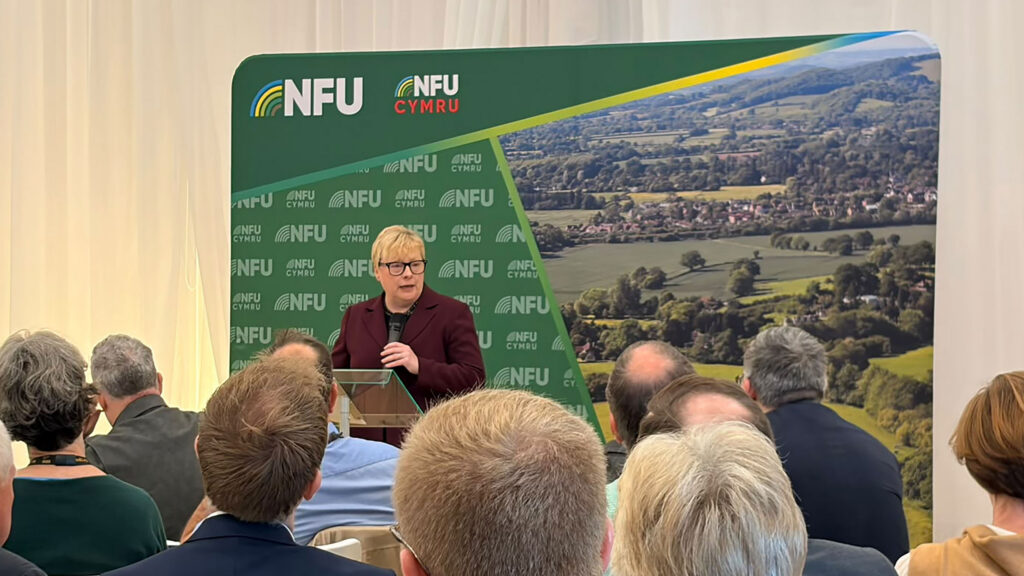
Dame Angela Eagle speaking at the event © NFU
“I do understand the frustration and anger that that has caused. It’s real. It’s being heard.”
She added: “Before the scheme opens again, we’ll sit down with the NFU – I think we’ve already organised that – and work together to put it right. In particular, the first-come, first-served approach.”
Dame Angela also defended the scale of SFI funding, saying the £310m allocated across both windows would ultimately represent £930m of support over a rolling three-year period.
“For those who haven’t got it, I understand that you’re frustrated,” she said. “But there’s still going to be a lot of good done with the SFI money.”
SFI26 budget exhausted
Speaking before the minister, NFU president Tom Bradshaw delivered a stark warning over the future of farm businesses after the SFI26 budget for Window 2 was exhausted in less than six hours on 22 September.
The farm leader cited several examples of NFU farmer-members who had missed out on SFI funding and were left facing severe financial pressure, amid the ongoing challenges posed by drought and bluetongue.
With Basic Payment Scheme support almost gone, poor harvest yields and soaring costs, Mr Bradshaw said some farmers were depending on SFI funding to stay afloat.
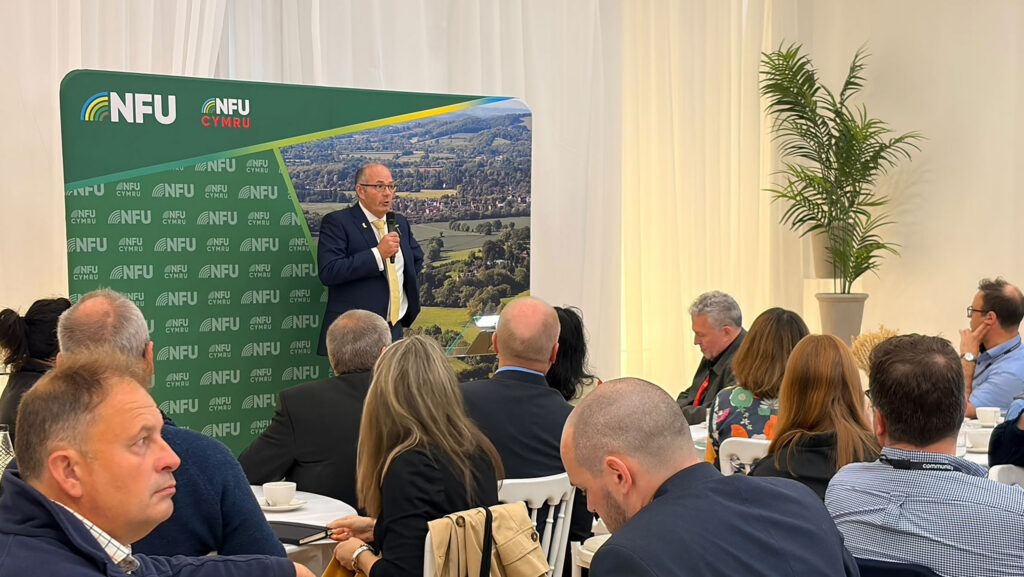
NFU president Tom Bradshaw addressing the briefing © NFU
One farmer had told the NFU: “Now we are genuinely terrified that we will not survive this winter or be able to keep our children’s home.”
Mr Bradshaw said the NFU had warned for months that demand would far outstrip available funding.
“Farmers want to deliver for the environment and embrace more sustainable farming, but the budget did not match that ambition,” he said.
The industry had now arrived at a position of SFI “haves and have-nots”, he added, “based purely on the speed of pressing the button”.
Mr Bradshaw said the NFU was calling on the government to open the next iteration of SFI early in 2027, with agreements starting from 1 April.
“We cannot go on like this,” he told delegates.
Three key asks
He called on chancellor John Healey to take three steps in the upcoming Budget on 30 October.
First, the NFU wants a temporary programme of interest-free, government-backed loans for farms facing acute cashflow pressures.
Second, it wants the Annual Investment Allowance to increase from its current permanent cap of £1m to at least £5m and be extended to farm buildings and infrastructure.
Third, Mr Bradshaw renewed the NFU’s opposition to changes to inheritance tax, saying that while the union welcomed an increase in the threshold to £2.5m, it remained “absolutely clear that this policy is wrong”.
He said prime minister Andy Burnham had understood the impact of the policy on farm investment when he met him during a farm visit in Cornwall in August.
“I’m convinced that he understood how the family farm tax is stifling investment,” Mr Bradshaw said.
Confidence call
The NFU president ended with a broader warning over the state of domestic food production – and a call for greater certainty from government.
“British farmers are ready to grow. We are ready to produce more of the food this country needs, create skilled jobs and invest in resilient, productive businesses,” he said.
“What we need from the government is confidence, certainty and a fair chance to do it.
“There is a huge opportunity to be the government that unlocks the ability to feed ourselves.”
Explore more / Transition
During the series we follow our group of 16 Transition Farmers through the challenges and opportunities as they seek to improve their farm businesses.
Transition is an independent editorial initiative supported by our UK-wide network of partners, who have made it possible to bring you this series.
Visit the Transition content hub to find out more.
