20,000gns Texel tops record £3m Builth ram sale
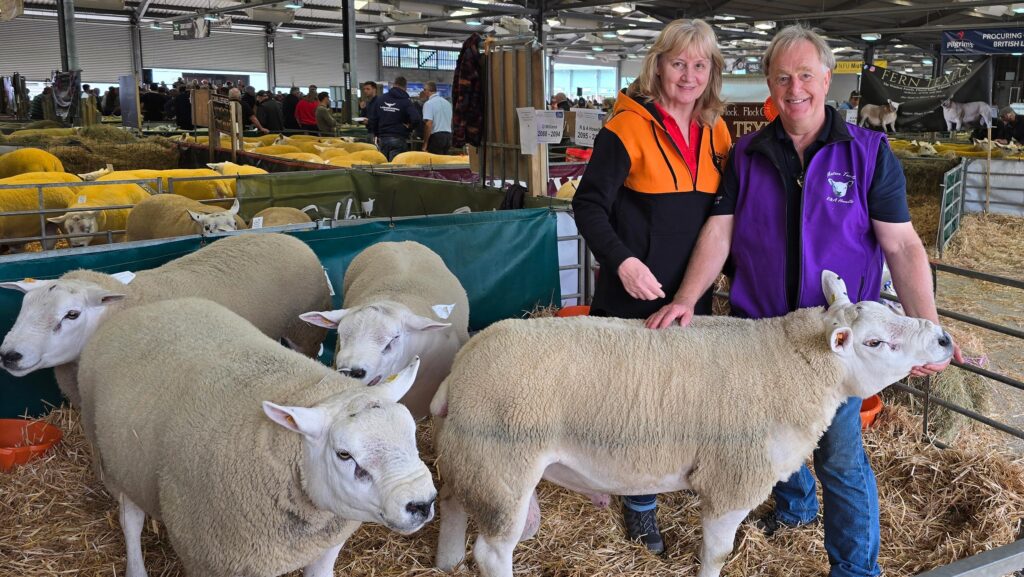 Robert and Amanda Howells with top Texel shearling Montana © MAG/Anne Dunn
 A 20,000gns Texel shearling led a record £3m-plus trade at the National Sheep Association (NSA) Wales and Border Main Ram Sale at Builth Wells on Monday (21 September).
Some 2,857 sheep were put forward, with 2,603 changing hands for a 91% clearance.
Numbers sold were about 8% higher than the 2,411 recorded last year, while the overall average price rose 11% from £1,044 to £1,162.
See also: Breeding sheep set new records at Thame summer sale
Turnover reached a record £3.02m, up about 20%, from £2.51m in 2025.
NSA Wales & Border chairman Geoff Probert said the figures reflect an outstanding day’s trading.
“The vendors are very happy, and buyers will be pleased with the quality of their purchases, reflecting the buoyancy of the sheep industry at the moment.”
Mixed breed trade
- Texel shearlings recorded one of the strongest year-on-year gains, averaging £1,638 – up 27% from £1,293 in 2025 – and topping at £21,000
- Texel ram lambs moved the other way, averaging £863, down 17% from £1,045, and reaching £2,835
- Suffolks averaged £1,401 and peaked at £3,990
- Bluefaced Leicester shearlings were virtually unchanged year-on-year at £1,306 and topped at £11,550
- Beltex rams averaged £951 and reached £998.
Texel shearling success
The sale-topping Montana Texel at 20,000gns was sold by Robert and Amanda Howells of Court Farm, St Mary Hill, Vale of Glamorgan, who run 65 pedigree Texel ewes alongside 200 commercial sheep.
Mr Howells said the result marked a high point in breeding Texels.
“It’s an achievement of a lifetime for us,” he said. “We’ve been in it for coming up to 40 years, and this is like the highlight of those years.”
The ram was bought by the Ellis family for their Cressage flock near Shrewsbury, with stockman Will McCaffrey picking him out for his correctness and width.
“The biggest attraction to him was he’s so correct all round,” Mr McCaffrey said.
“He’s got a brilliant top, the best top in the market for me by a long way.”
Commercial demand
Auctioneer Ashley Symonds, of Clee, Tompkinson & Francis, sold Ring 13, containing 350 Texels – 349 one-shear rams and one older ram.
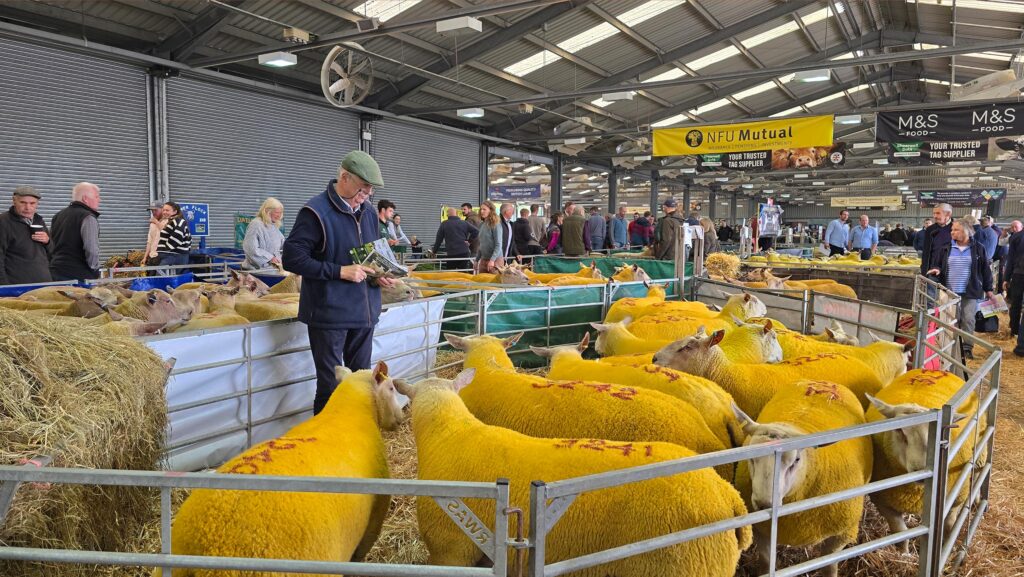
NSA ram sale sheds © MAG/Anne Dunn
He described “cautious confidence” among buyers, with bigger, more powerful sheep attracting the strongest demand.
Commercial buyers were generally prepared to spend £1,050-£1,575 a ram.
“The fat lamb trade to me seems stable enough, and it’s been propped up again now by store lambs,” he said.
McCartneys auctioneer Clive Roads reported a “very competitive trade” in Ring 9, where a Suffolk yearling topped at £3,990.
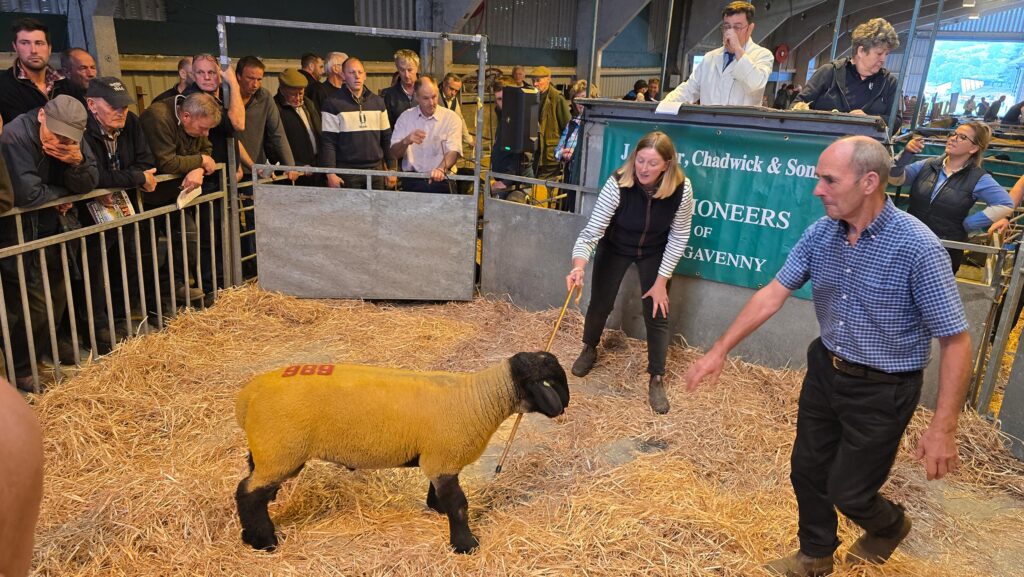
Suffolk sales © MAG/Anne Dunn
“When you get a good level trade with some good highs, it drags everything up,” he said, rating the sale among the “top 5% of years” he had experienced there.
Bluefaced Leicester high
Bluefaced Leicesters peaked at 11,000gns for Aled Jones, Craig yr Orsedd, Tal-y-Cafn, selling to the McClymont family’s Kirkstead flock in Scotland.
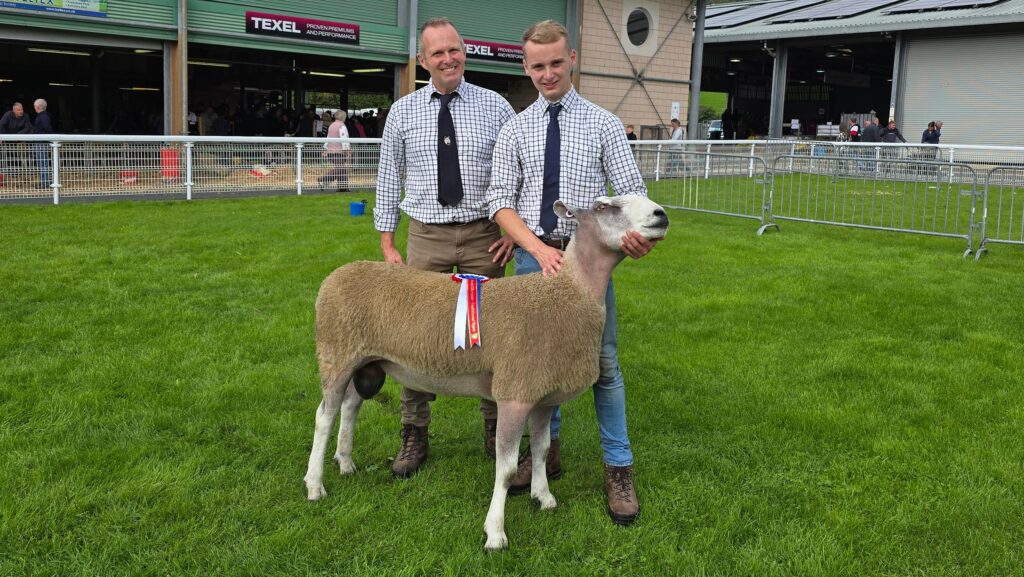
Aled and Aron Jones with top Bluefaced Leicester shearling © MAG/Anne Dunn
“For me, this sale is home, and when you’re in Wales and you top it, you’re very, very pleased,” Mr Jones said.
Auctioneer Jack Walton, M Walton, said good commercial Bluefaced Leicester shearlings were typically attracting £1,050-£2,100.
“Ewe lamb sales have been very, very good down here, so that’s given a bit of confidence to these men to go out and buy the tops,” he said.
Bluetongue vaccinated stock
© MAG/Anne Dunn
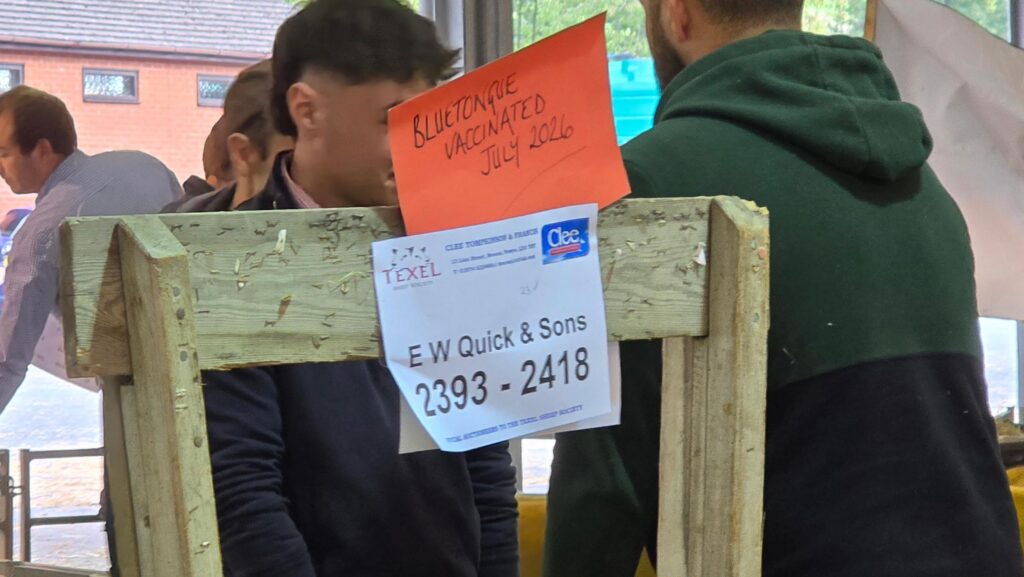
Bluetongue remained a significant consideration for buyers, with vaccination status widely highlighted and some breeders also semen testing rams before sale.
Mr Howells, who had vaccinated his entire flock, said the disease had been one of breeders’ biggest concerns this year and may also have supported demand for replacement rams in affected areas.
He said he would not personally buy an unvaccinated ram, while Mr McCaffrey confirmed vaccination status had been important when buying the 20,000gns Texel because of concerns over potential effects on fertility.
However, vaccination did not appear to command a clear price premium.
Mr Walton said there had been no significant difference between prices for vaccinated and unvaccinated sheep, with most vendors having already vaccinated.