All Welsh abattoirs need support to secure sector’s future
 © Adobe Stock
Abattoirs of all sizes across Wales need greater industry support to remain financially viable, with livestock numbers, processing capacity and rising costs presenting major challenges to the sector.
The need for a balanced approach to supporting Welsh abattoirs was highlighted at Hybu Cig Cymru’s (HCC) conference last Thursday (12 November), with speakers stressing the importance of both small local processors and larger facilities to the long-term sustainability of the supply chain.
See also: Wales food strategy must turn ambition into action
HCC chief executive José Peralta said Wales needed to retain more of the value generated by its livestock industry by increasing the amount of stock slaughtered domestically.
Of the estimated 4.5m sheep available for slaughter in Wales each year, only about 2.4m are currently processed within the country, despite existing abattoirs having capacity to handle significantly more.
The proportion of Welsh cattle slaughtered in Wales increased slightly over the past four years, although many animals, particularly from south-east Wales, continue to be sent to England for processing.
Mr Peralta said a sustainable industry required facilities of sufficient scale to compete internationally, but smaller abattoirs also played an important role in local communities and needed support.
“The cost differential per head between small and large abattoirs is significant. Smaller facilities still need to employ a vet and maintain minimum staffing levels, but might process in a week what larger abattoirs handle in an hour,” he said.
Industry-wide support
HCC board chairman Catherine Smith said support must extend across the sector rather than concentrating on one end of the market.
“We have to look after all our abattoirs, large and small. We need a livestock industry that supports them, alongside interventions that ensure processors of every scale feel valued, supported and financially viable,” she said.
Ms Smith added that smaller, often family-run businesses faced additional challenges around succession, regulation and the complexity of running multiple parts of the operation.
Livestock supply also remained fundamental to the future of processing facilities, with the national herd continuing to decline, said Mr Peralta.
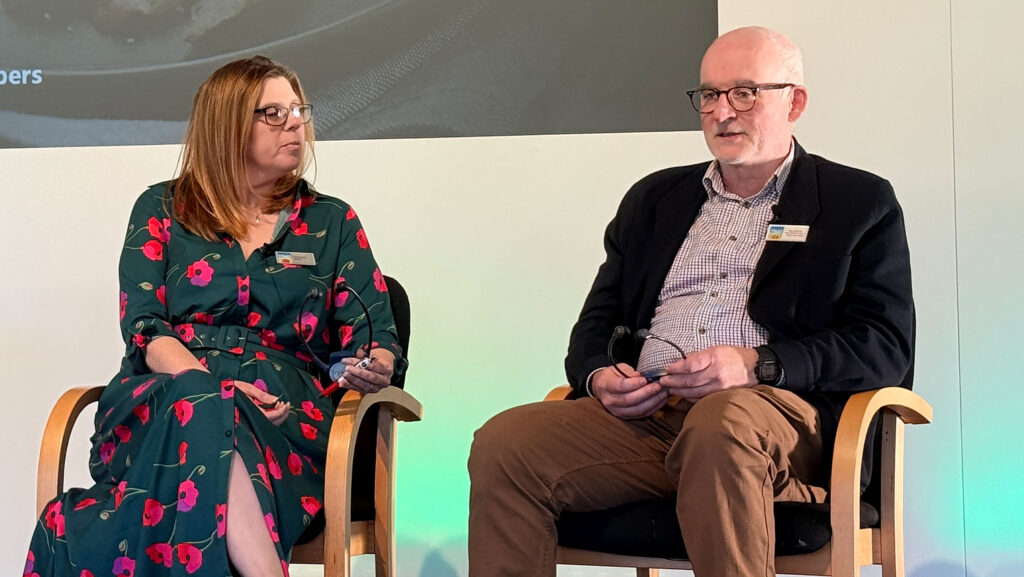
Catherine Smith and Jose Peralta © MAG
“An abattoir needs four things to make a living: capital, livestock, people and infrastructure. Without livestock, none of the other three are relevant.”
However, he warned that increasing stock numbers alone would not provide a solution, and instead could cause prices to plummet and farmers to lose money.
“We need a more balanced approach that allows us to have more livestock with higher productivity, lower costs and increased demand,” he said.
Mr Peralta said HCC would continue to raise concerns with government and support processors’ routes to market, adding that greater attention was also required on medium and larger abattoirs, where available capacity was not being fully used.
“Small abattoirs fulfil a very important role and are fundamental to the supply chain, but we are paying a lot of attention to them when in the long-term the industry needs to focus on medium and larger businesses so it can achieve its throughput capacity,” he added.