Calf prices stay strong as buyers chase depleted numbers
 © Tim Scrivener
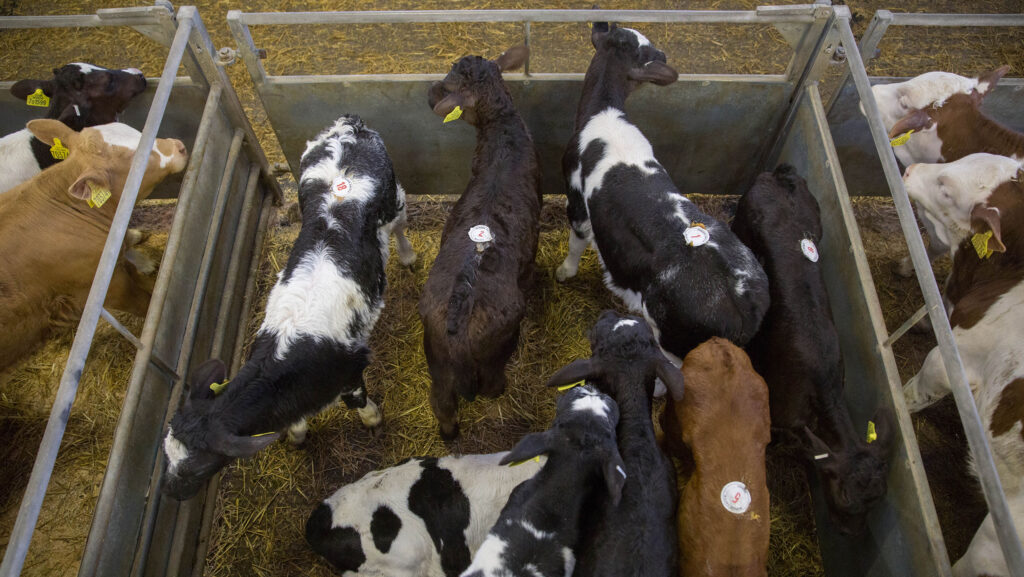
 The UK calf market continues to be in a strong position for farmers, with the Livestock Auctioneers Association (LAA) reporting “incredible” prices in some areas, driven by a shortage of stock and increased demand.
“We have had some reports of calves fetching as much as £1,000 each, which was previously unheard of,” said Alastair Brown, LAA policy and strategy officer.
See also: Breeding sheep set new records at Thame summer sale
Demand is being driven by several factors. “The current prices are encouraging to many.
“There is a greater interest in calves [over more costly store cattle] as well as increased demand from contract rearers who are short of stock on farm,” Mr Brown explained.
At Bakewell Market in the East Midlands, calf auctioneer Ivor Lowe said all calves had seen a good jump in prices, with the best continental bulls averaging more than £800/head, while the best continental heifers averaged above £600 in recent sales.
“Calf prices are good across the board – even with the easing of prices for fat and store cattle, there has not been a knock-on effect,” Mr Lowe noted.
“The quality of calves coming through the mart has been good. At the moment we are seeing 50-100 calves forward and we don’t see that changing in the autumn.”
Ian Tanner, calf auctioneer at Southern Counties Auctioneers near Salisbury, Wiltshire, shared a similar picture.
“Prices are fantastic at the moment, which is great news, especially for the dairy industry – we have seen some dairy calves going for £400-£600 a head, with the best calves helping to draw others up in price.
“The quality has been very good – there hasn’t been much change there, but the fact that numbers are tighter has helped to hold prices.
The good return on prices we have seen in the past 18 months has instilled confidence in buyers to invest.”
Mr Brown added: “With the decline in dairy herds and suckler cows, it will take a long time for there to be a significant recovery in numbers.
“In the short-term, demand will be there, but going forward into the winter, it will be a question as to how the impact on food cost and availability from the current heatwaves could play out.”
Bluetongue may also start to affect calf numbers forward, particularly in the south-west of the country.